Categories
Chuseok First Trip Home KAD experience KAD Life Korean Culture korean food Personal Update

KAD Life: First Return to Korea – Part 2 – Seoul and Chuseok

Hello everyone! 안녕하세요 여러분.

After arriving in Seoul on September 19, 2021 I spent the day meeting my birth mother, sister, two aunts, and my uncle after when I stayed with my birth mom and sister at their home Nowon-Gu. ( Nowon-Gu 노원구 is a residential district in northeastern Seoul).

The next day, September 20, 2021, was the official start to the public holiday for Chuseok 추석, which is one of the largest holidays celebrated in Korea. Chuseok is a mid-autumn harvest festival with a major focus around family and ancestors. For this holiday, Koreans often gather with their families, perform Charye 차례 (ancestral memorial service), Seongmyo 성묘 (visit to ancestral graves), and eat a large feast (which is prepared as an offering to the ancestors).

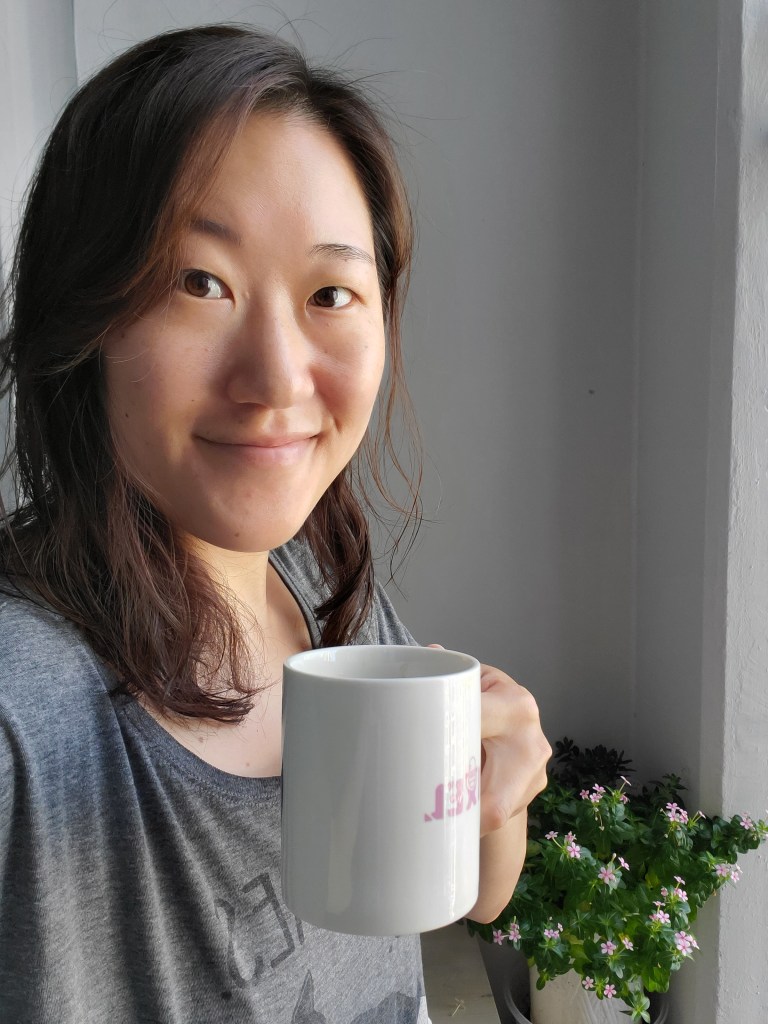
I started my day with a nice, quiet cup of coffee that my birth mother (whom I will just refer to as “eomma” 엄마) prepared for me. She noticed that I went out on the deck and was standing and wanted me to be comfortable. So she gathered a little pot of flowers and a chair so I could enjoy the coffee outside. Super sweet of her. 🙂

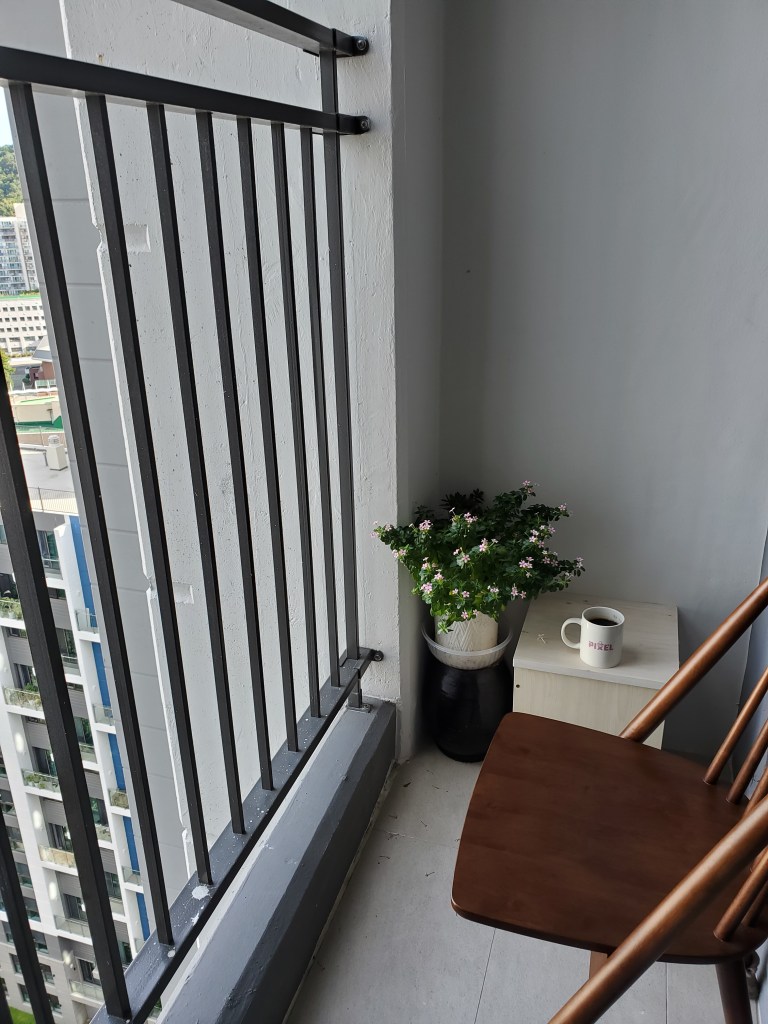
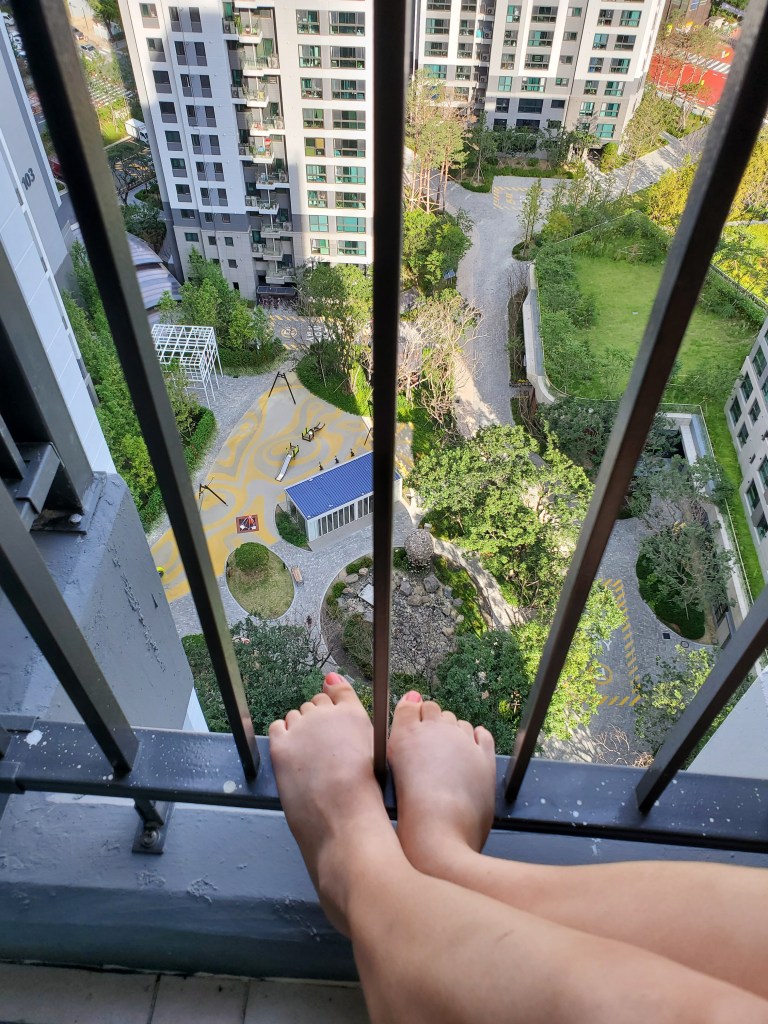
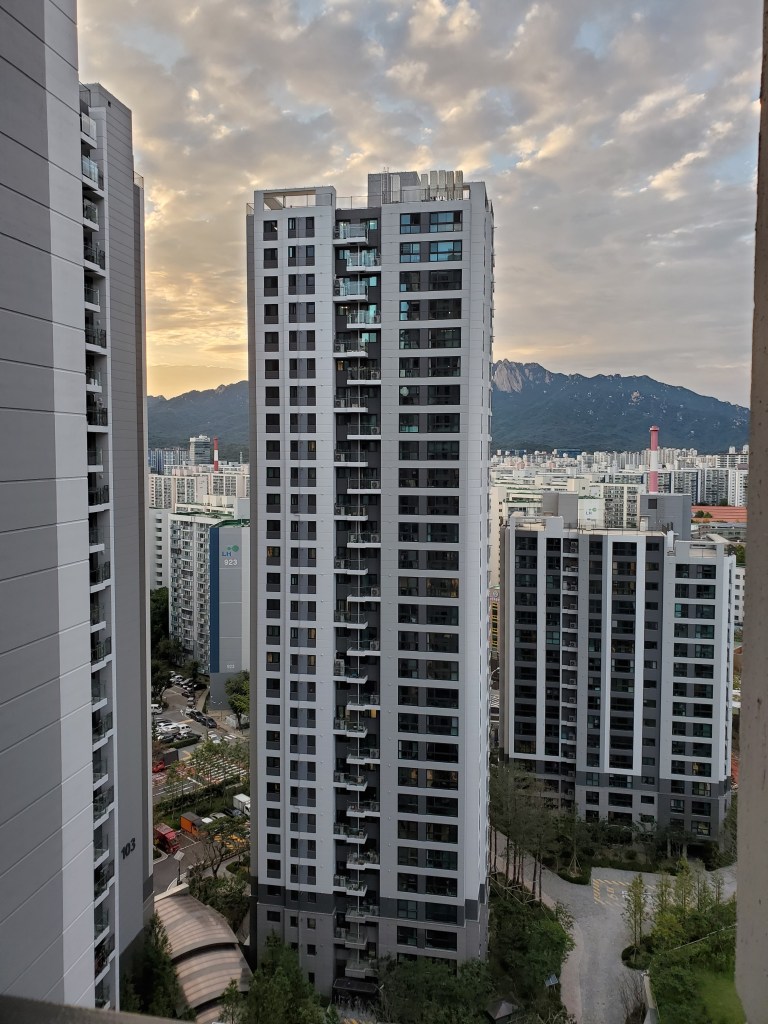
View of Nowon-Gu from eomma’s deck

Because I’d gotten quarantine exemption, and had taken another Covid test in Nowon-Gu the day I arrived which showed I was negative for Covid, I was free to travel around.

Eomma wanted to take a walk with just me and show me around. It is worth noting, she didn’t understand or communicate in English (the same for many older people in Korea). So, we mostly held hands or arms, and if she spoke I would do my best to understand, and would ask questions/respond to her using Papago as a quick translator if I was unable to adequately express myself in Korean.

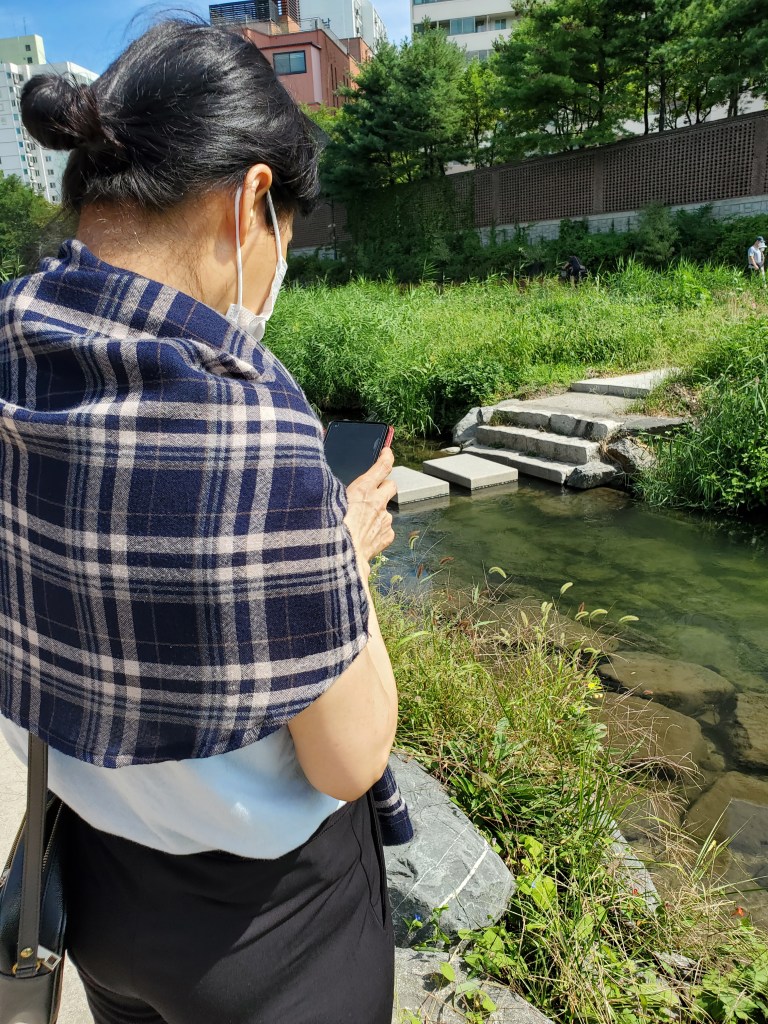
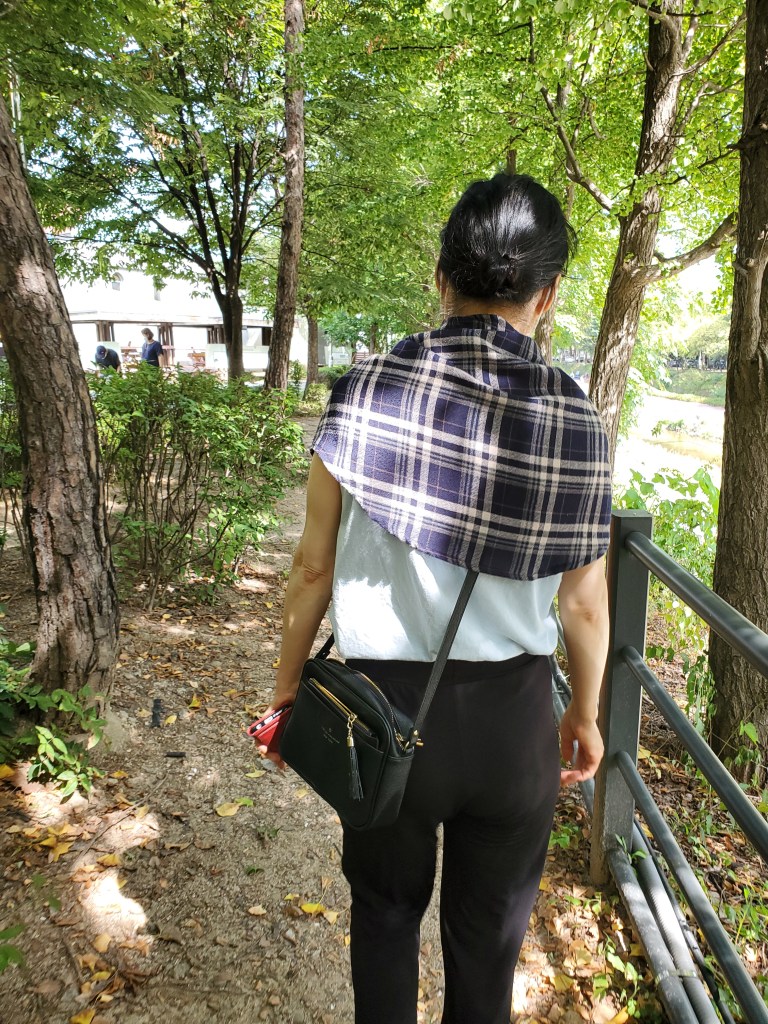
We walked around the neighborhood and she pointed out all of the places that she usually goes, including the walk she makes 6 days a week to travel to and from the salon that she runs in another part of Seoul.

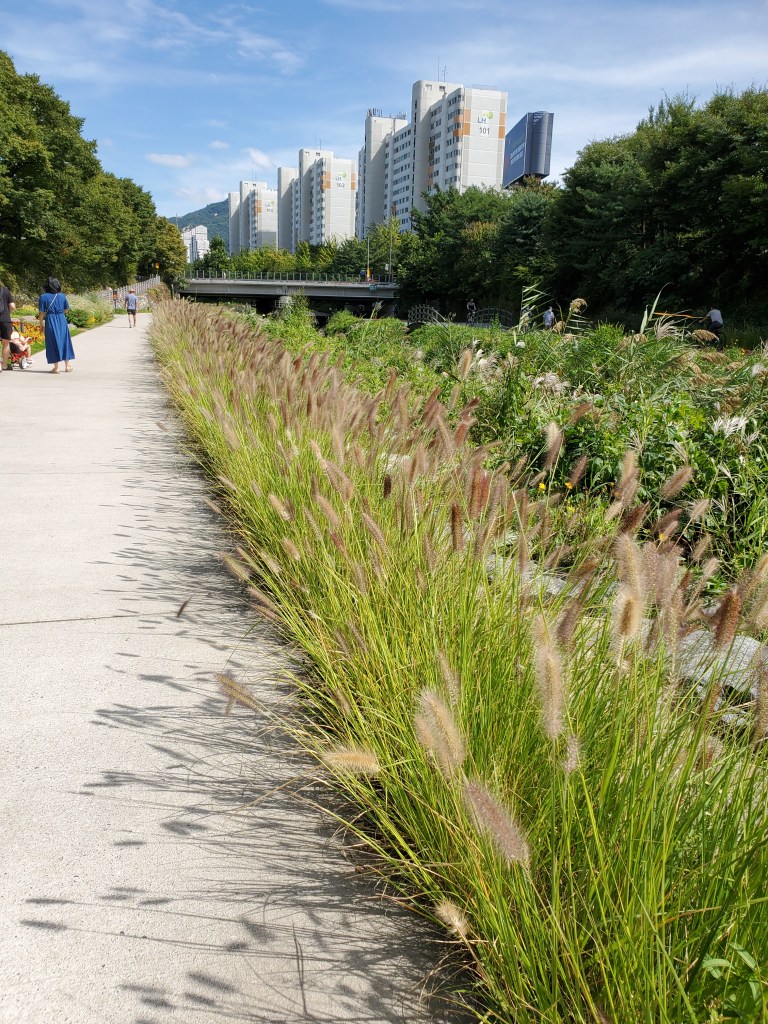
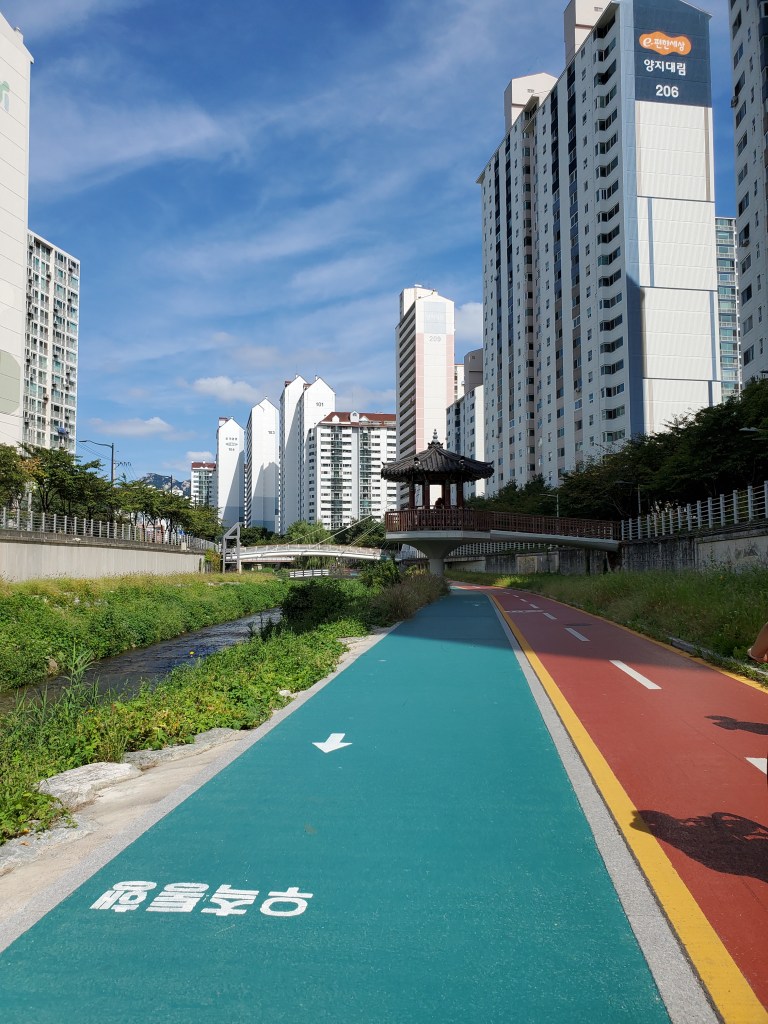
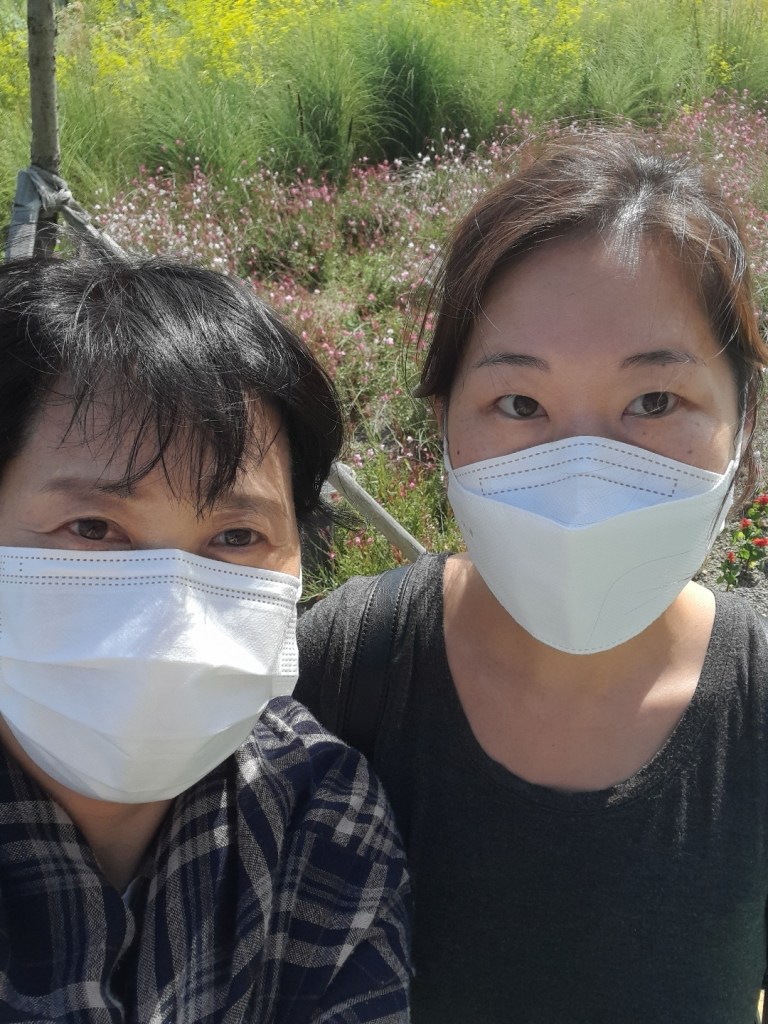
We walked quite a bit, ending up along a popular walking path that runs along a river. We took breaks along the way and sat together on benches, just quietly communicating as best we could. I felt that she just wanted to spend time with me, be near me and have me be near her, getting to know about each other despite our giant communication gap. She pointed out the names of a lot of the plants and flowers as we walked (something I learned she had a real knack for. In fact, this characteristic inspired the tattoo I got in Seoul, which I’ll talk about in a future blog post). 🙂

While impromptu and “simple”, this time spent together ended up being one of the most lasting and intimate memories I have of my eomma from my time in Korea.

After our walk, we returned to eomma’s home, showered (something that I found Koreans seem to do a LOT, my birth family seemed to bathe 2-3 times a day), and prepared to be picked up by my uncle for Chuseok.

Something that I hadn’t been aware of is that my uncle would show up with my grandmother, fifth aunt (who met me at the airport), and fifth aunt’s daughter (my younger cousin). With my uncle, eomma, sister, and I included, plus everyone’s overnight bags, the vehicle was very cozy! That said, I really loved feeling what a “family” trip to visit an uncle for a holiday felt like.

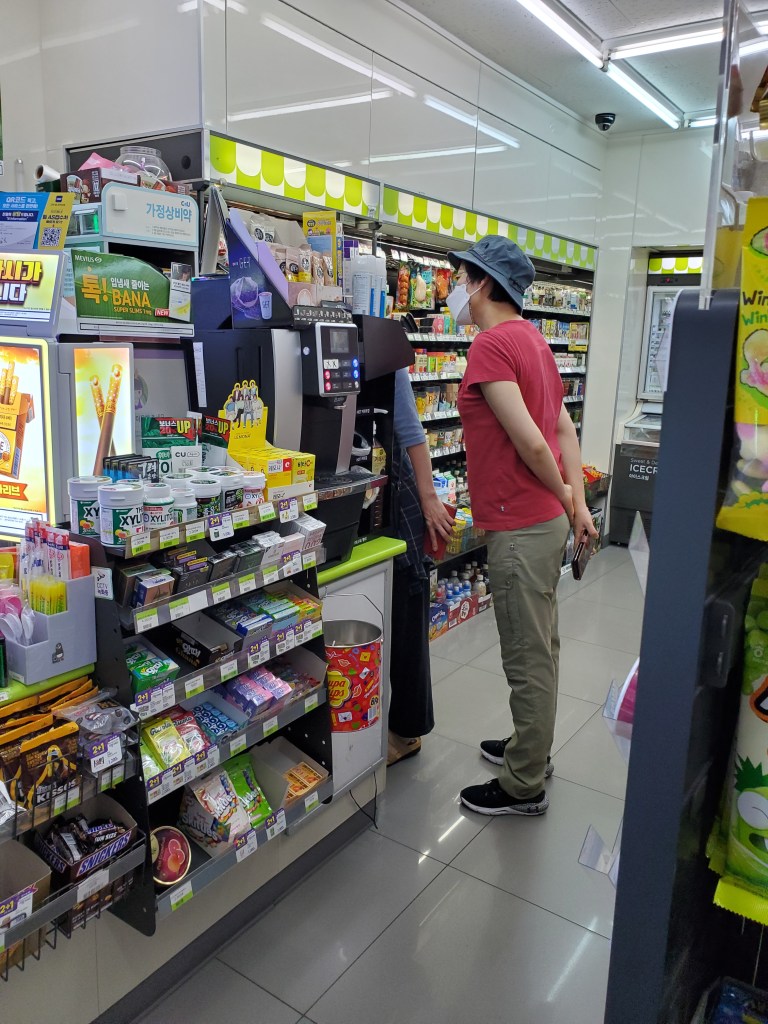
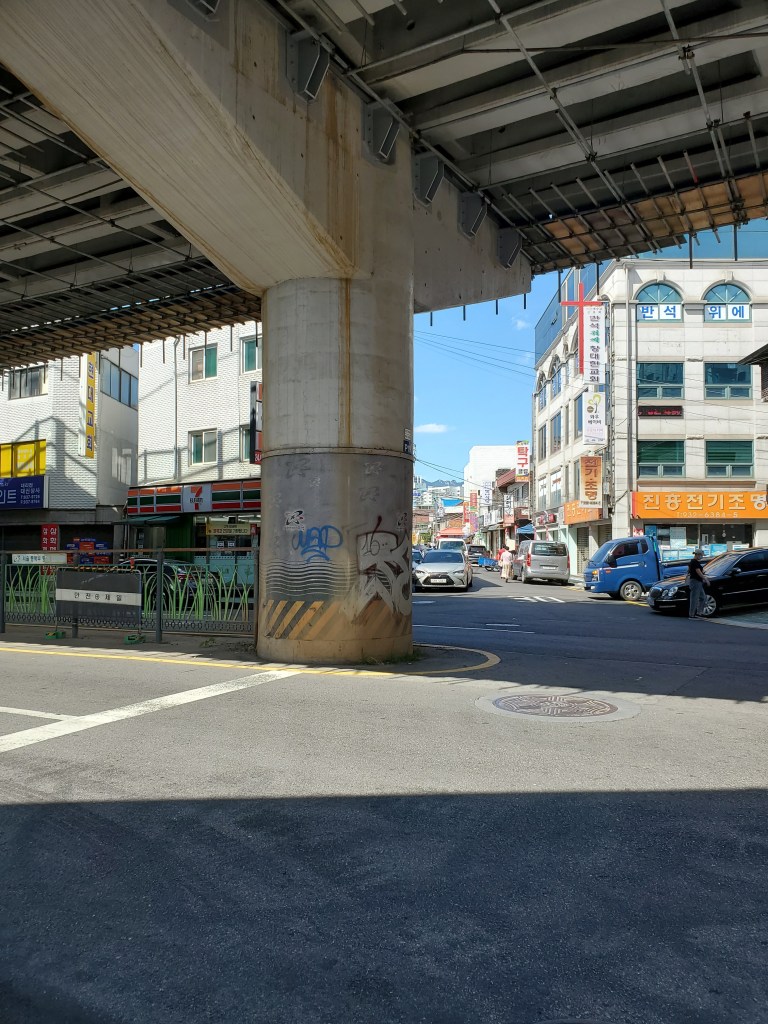
On the way we stopped at the pharmacy as well as the CU (very common convenience store) to see if we could find some medicine for my grandmother, whom suffers from digestive issues related to her age. While pretty mundane, I included some photos of the CU below.
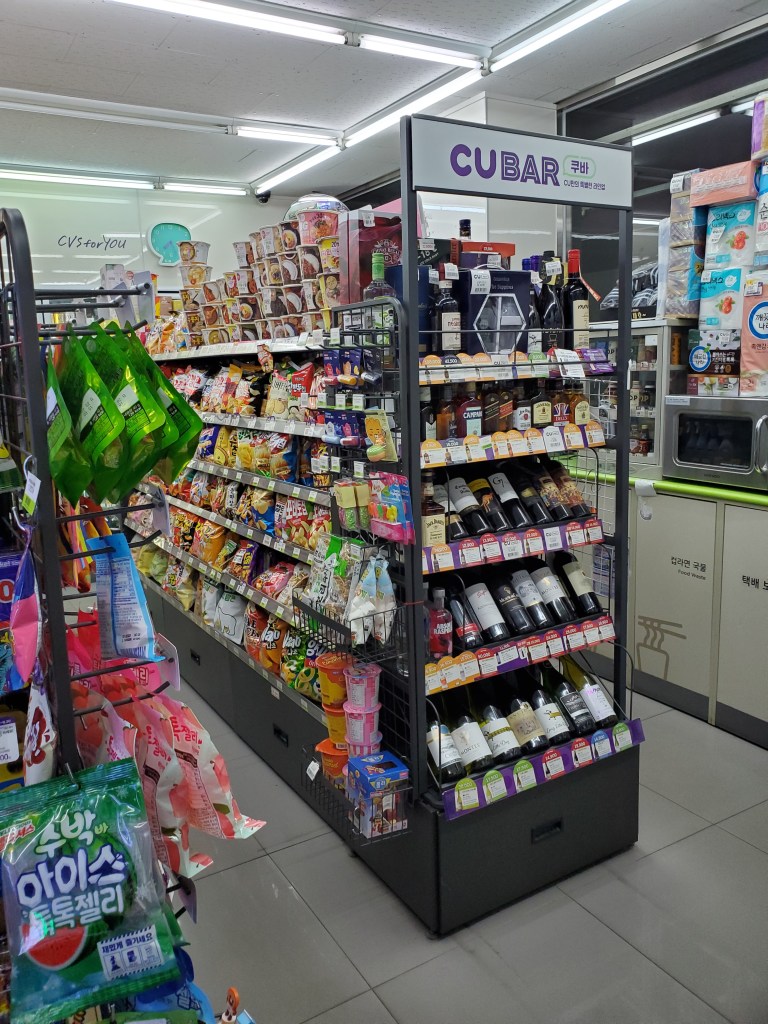
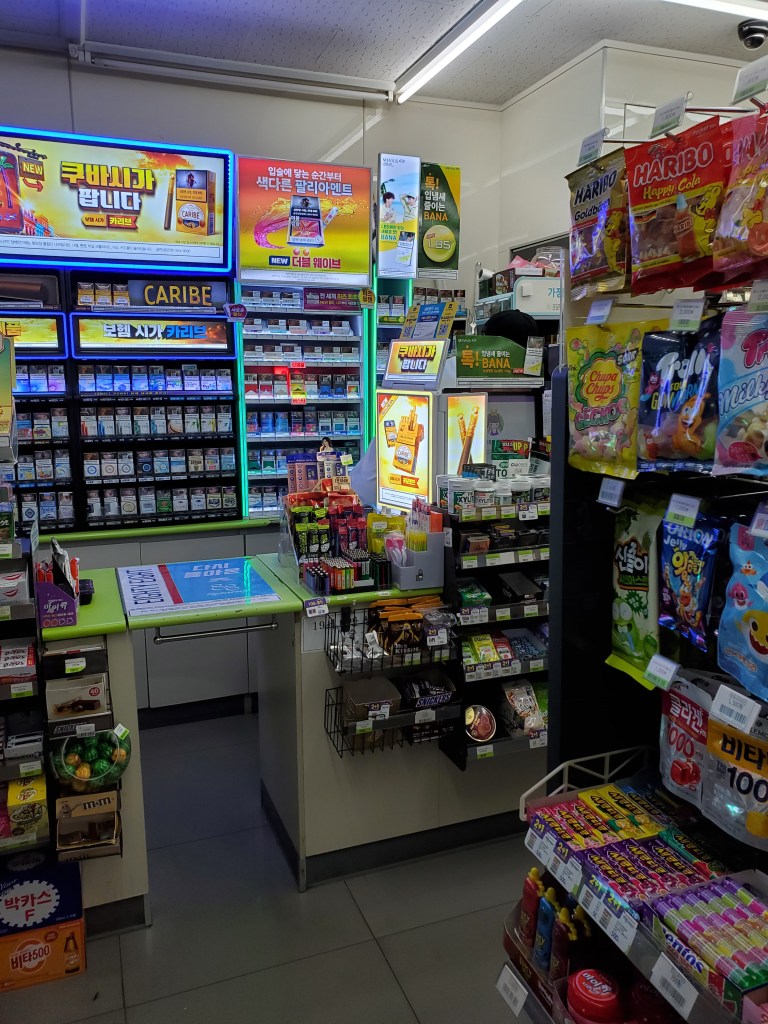
One funny anecdote, fifth aunt’s daughter kept exclaiming how surprised and amazed she was at my English skills during the car ride to my uncle’s home.

While in Korea, I found that many Koreans don’t understand how international adoption works, or much about adoption or adoptees at all. So, to her it was amazing that eonni (meaning “older sister” and the proper way for a younger woman to refer to a woman older than her) had such fantastic English! It took some explaining that I spoke English so well because it is actually the language I was raised with, despite being born in Korea and being ethnically Korean, haha. ❤ If only language transferred so easily and I’d retained Korean language skills from my infancy!

Once we arrived at my uncle’s home, I met his wife and daughter. Everyone puttered around, mingled, and prepared dinner. I was told to sit and relax because nobody wanted me to lift a finger to help (something I’m not used to that became a recurring theme during my visit). So, while feeling guilty for not being helpful, I got to bond a little bit with my grandma as we sat together on the couch and watched a popular singing show.

During this quiet time, I learned that eomma (and my younger sister) had not been to the family’s Chuseok celebrations in years. Apparently, eomma had not felt good going to them knowing that I was not there. Chuseok, and the winter holidays, had remained very hard on her since my birth and disappearance. Not knowing what happened to me, combined with family gatherings and holidays to recognize ancestors and familial ties, had been something she had avoided. So, our attendance at Chuseok together was a very meaningful to her as well as to the family. I felt extremely lucky and grateful to be able to share that experience with her.

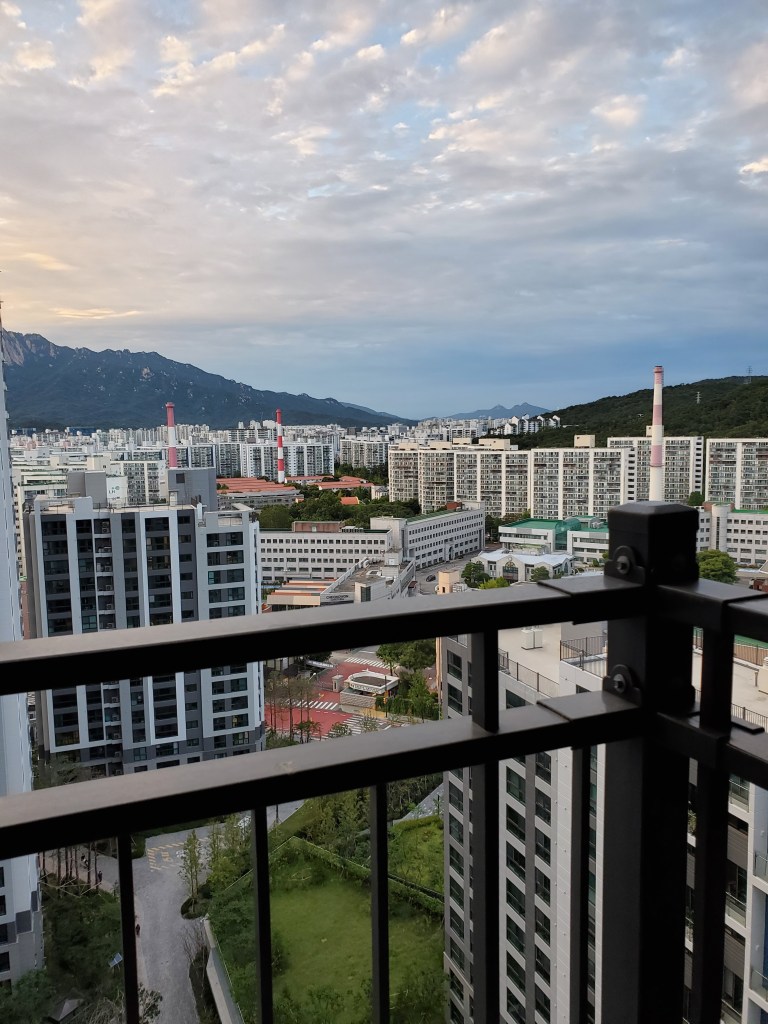
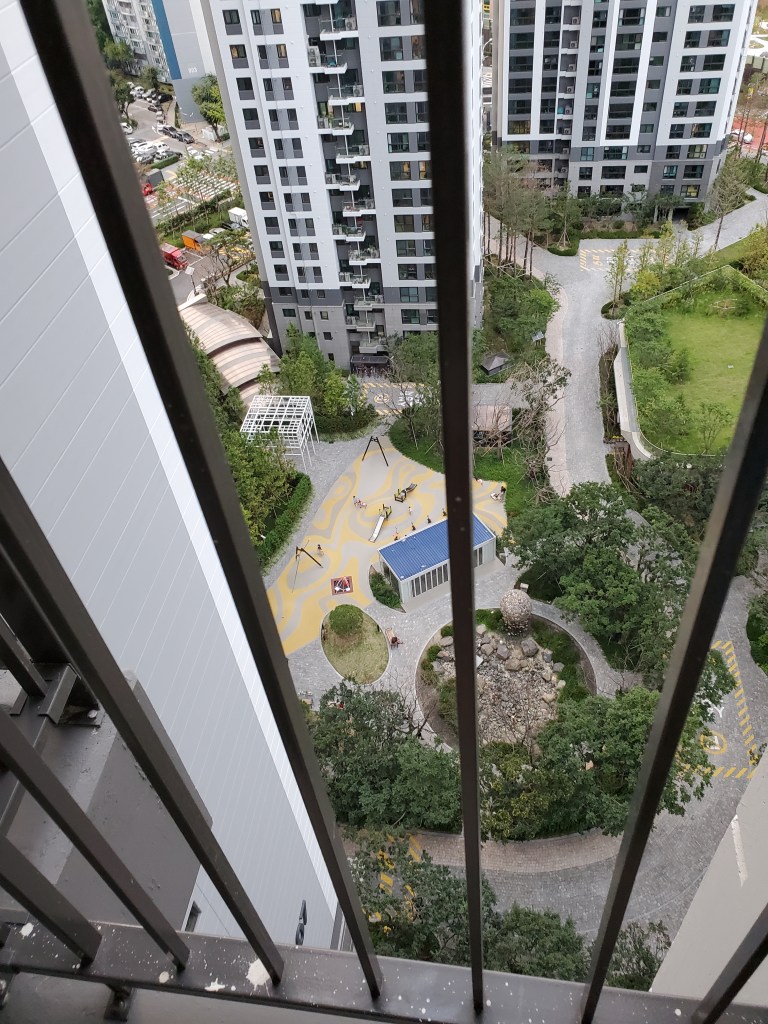
View in Byeollae-Dong from uncle’s window

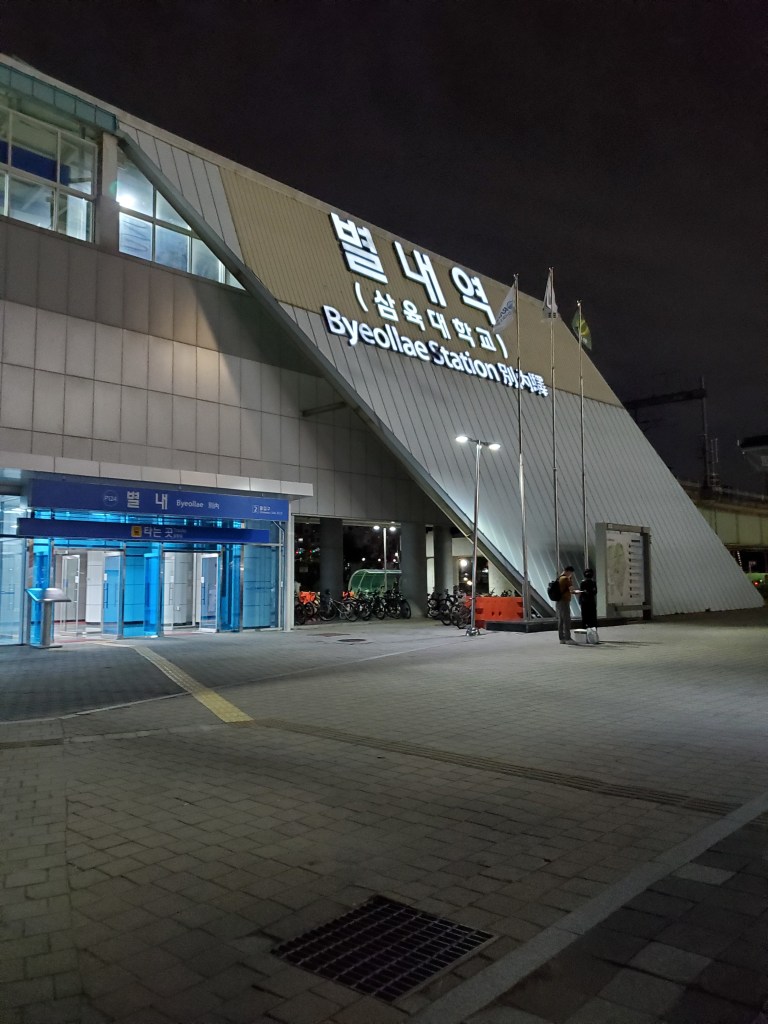
While we were hanging out I got word that another KAD friend of mine (an absolutely lovely younger woman who reached out to me when we were both in the USA before coming, right around the same time, to Korea for our first times) would be able to accept the invite that my birth family had made to have her join us for Chuseok. I was very excited, as was my birth family, that she could join us. So, my aunt, eomma, and uncle made a trip to the nearby Byeollae Station to pick her up and bring her to my uncle’s house to spend the night.
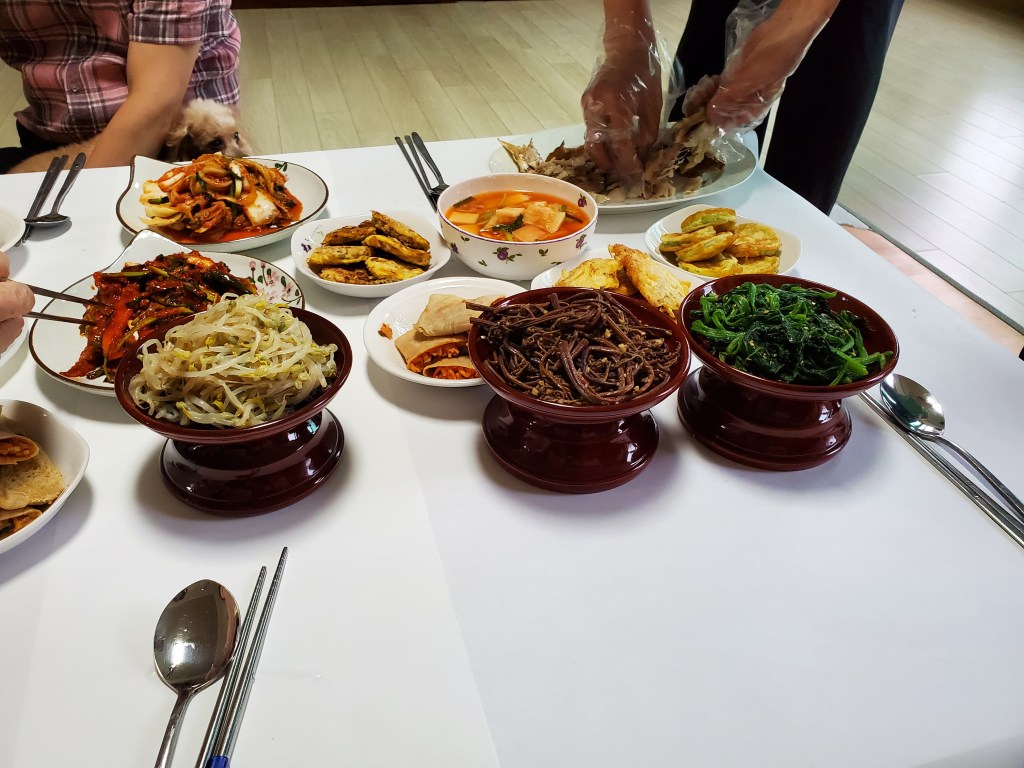
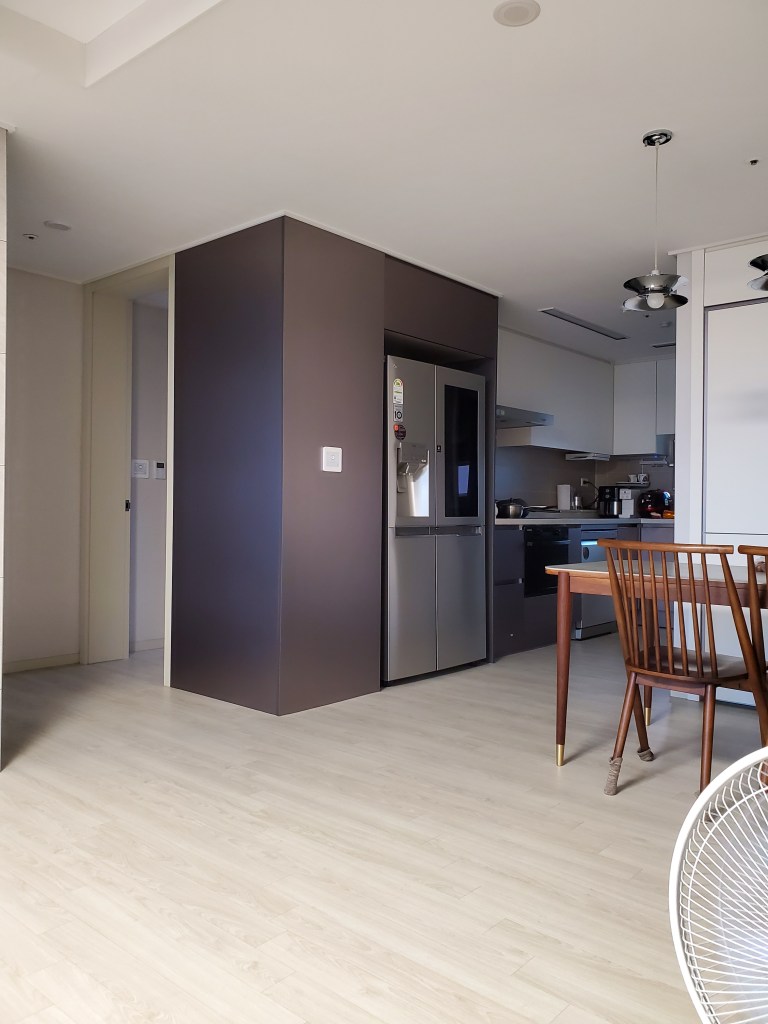
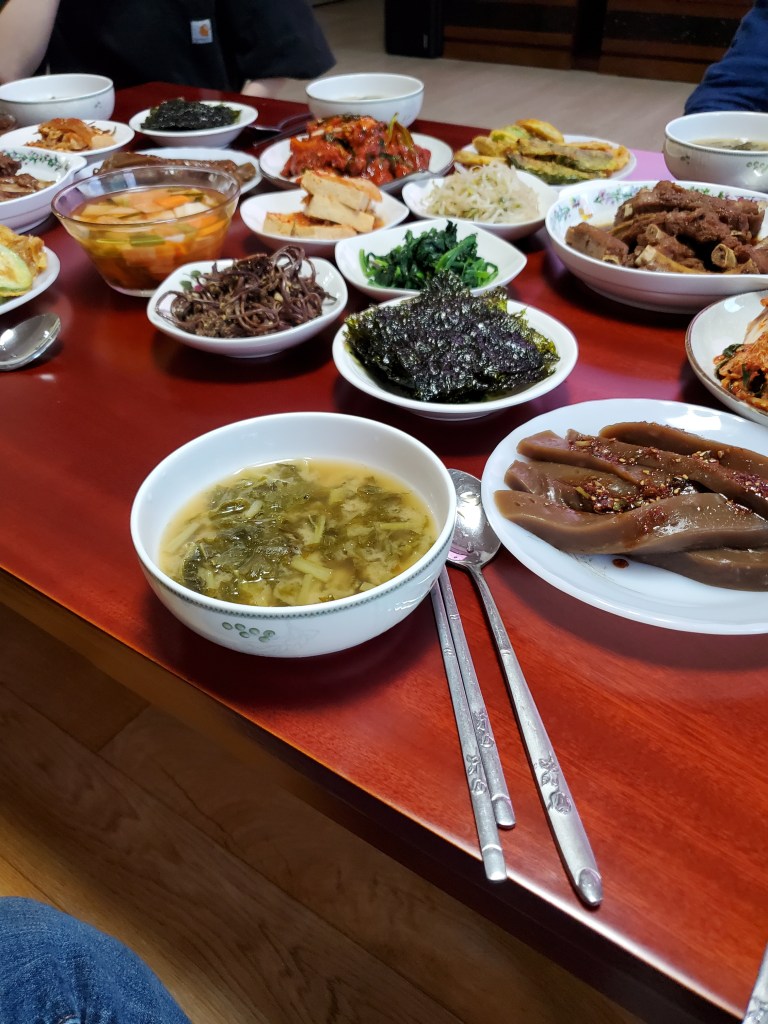
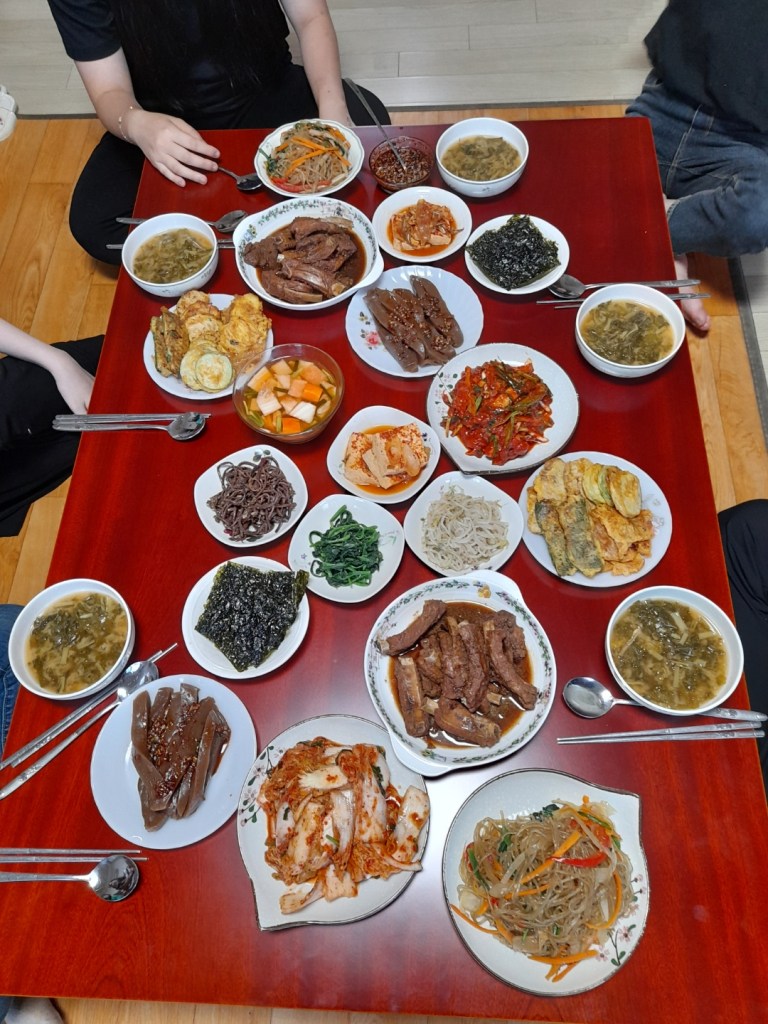
After returning to my uncle’s home we had a delicious dinner. As you’ll see in the photos below, there were many side dishes (banchan 반찬), soup, and rice on the table. This is very typical of a Korean meal.

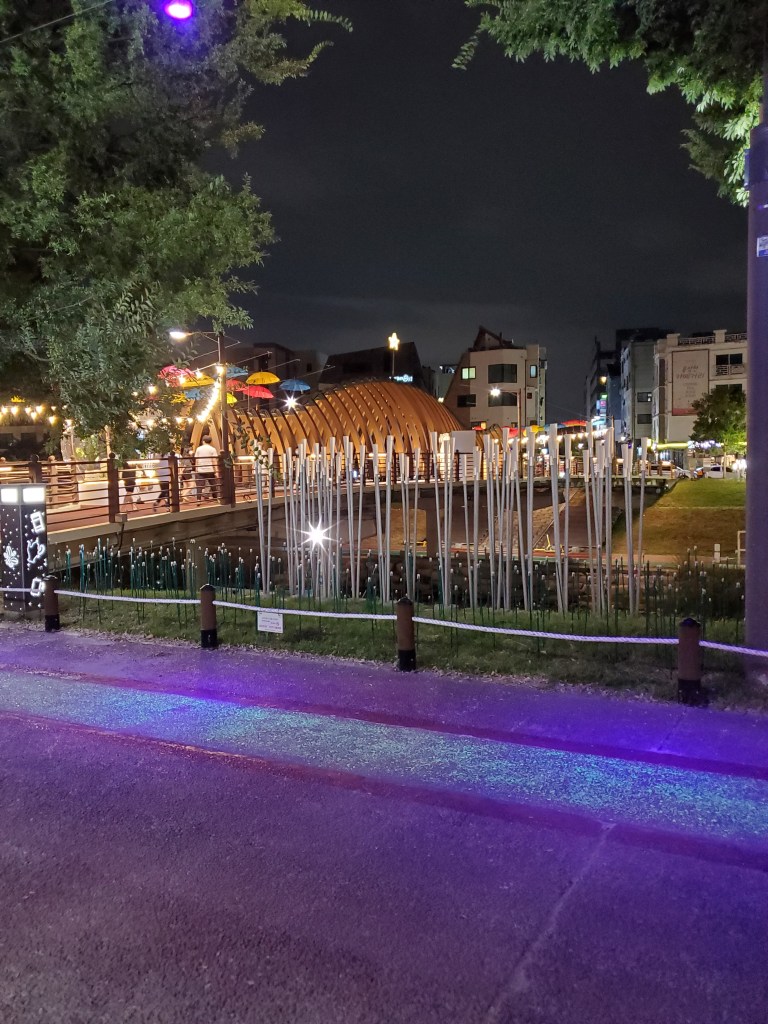
After dinner, we enjoyed a walk around Byeollae-Dong, visiting the popular “cafe street” nearby.
After returning to my uncle’s home we all retired fairly quickly, after showering and preparing for bed. My uncle and his wife kindly let my friend and I share their room.

The next day the family got up early in order to prepare for Chuseok. Unfortunately it was raining, so we were unable to do Seongmyo 성묘 (visit to ancestral graves. However, there was plenty of things to do to prepare for Charye 차례 (ancestral memorial service) including the feast to set on the table for the ancestral offering. Because of how complex and long the proceedings are for Charye, it is common for families to start very early.

Traditionally, Korean families pass the ceremonies through the eldest living male. In this case, my uncle performed the ceremony and we provided the offering to my deceased maternal grandfather. He performed gangsin 강신 which involved lighting incense, pouring liquor, and bowing.

Next we did chamsin 참신 to greet our ancestors. My uncle invited eomma and I to perform that step with him, which was very cool and I felt extremely honored to be included. Keeping our left hands atop our right, we bowed together twice. As my ancestors and my birth family had never really gotten to know me, and didn’t necessarily even know of my existence, this inclusion was especially meaningful. It was like I got to greet our ancestors, with my uncle and eomma introducing me to them.

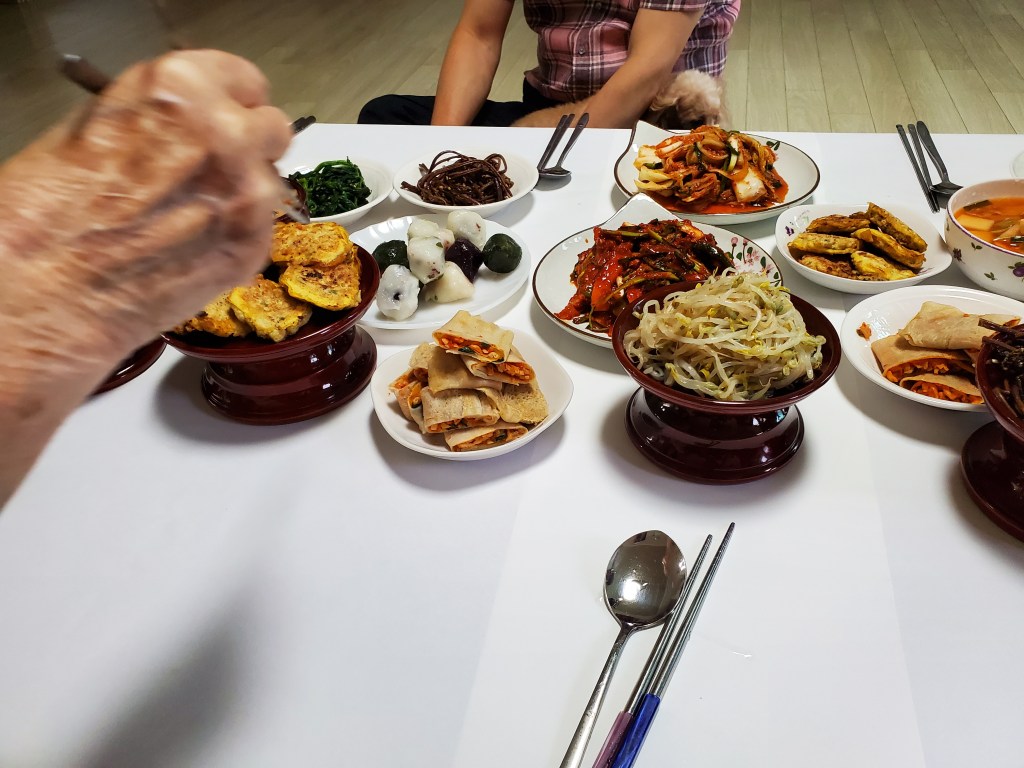
After all of the proceedings were through and the ancestors had received the offerings, we all partook in the feast. Similar to dinner the previous night, there were many dishes, soup, and rice. Some of the foods, however, were traditional to Chuseok. Everything was delicious. It also happened to be my uncle’s birthday, so we included a little celebration for him.
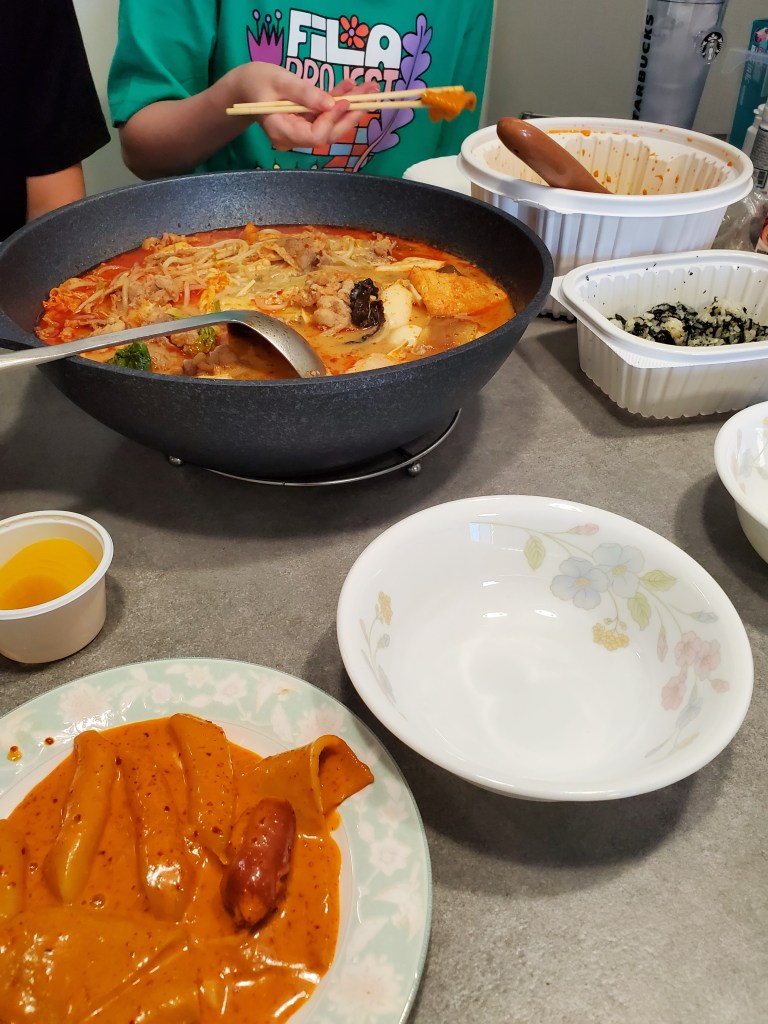
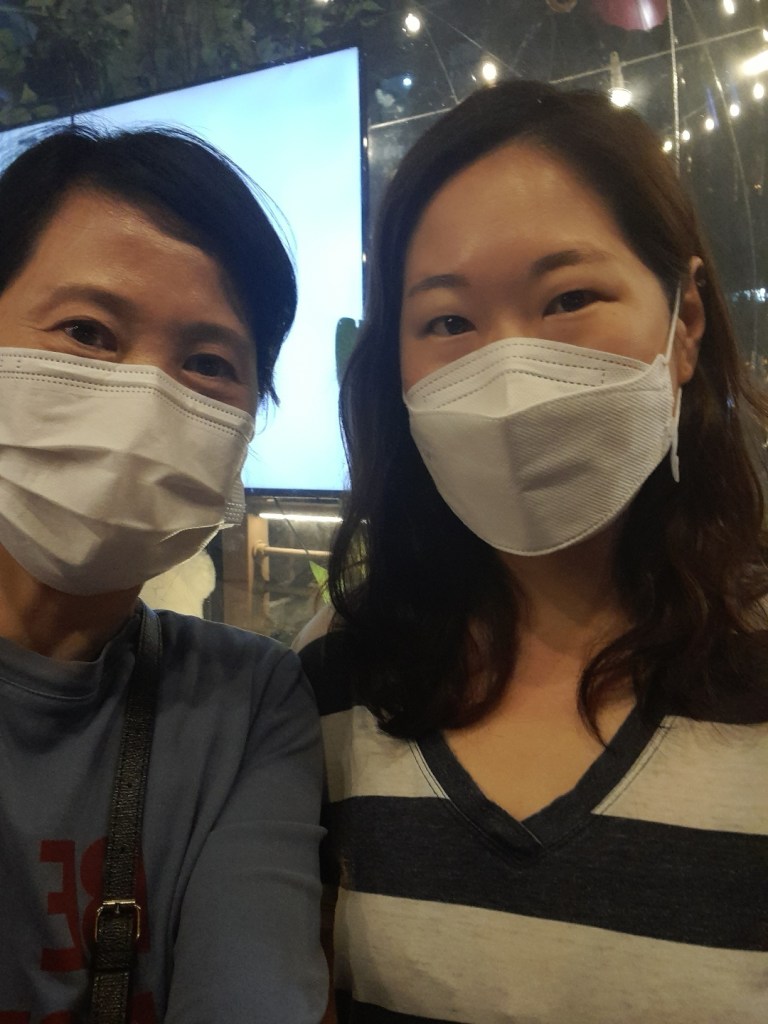
Similar to the previous day, we went back down to cafe street and walked off some of the meal. Afterwards, eomma, my younger sister, fifth aunt, fifth aunt’s daughter, my KAD friend, and I returned to eomma’s home in Nowon-Gu to relax, to enjoy even more food (rose tteokbokki, which is a cream and cheese version of tteokbokki), is ridiculously tasty and popular in Korea right now).

Anyway, this turned into a rather long post! I didn’t capture everything here, but wanted to share as much as possible about how I spent Chuseok.

I consider myself very lucky to have been given the opportunity to participate in Chuseok, to be able to share the experience with my KAD friend, and for my birth family to embrace me as family in the way that they did. It was all a bit overwhelming since I’d just arrived in Korea the day before, hadn’t yet gotten my bearings, and was still in the fledgling stages of being physically with my birth family. I think, too, because of how “fast” everything was proceeding, I didn’t have time to balk or even process (something which caught up to me later, which I might touch on in this blog). But, because everyone was so open, caring, and willing to try, the challenges (physical, emotional, communication, culture) were surmountable.

I was, and am, starkly aware of how fortunate I was to be one of the few KADs to not only “find” or “be found by” birth family, but also to be able to come to Korea and, furthermore, to be embraced and included by everyone in the way that I was.

For those KADs whom embark on a similar journey, or just folks interested in visiting Korea as a tourist regardless of Korean heritage, I suggest that you accept any opportunity that comes to you if someone invites you to participate in Chuseok if you are able (physically, mentally, emotionally).

Thanks all for reading! Next up, I will be talking about my continued journey, visiting more maternal birth family in Daejeon with my eomma and fifth aunt.

Until next time, 사랑해요. I love you.

Learning to be Korean ❤

Categories
First Trip Home KAD experience KAD Life Personal Update

KAD Life: First Return to Korea – Part 1 – Flight and Arrival

Hello everyone! 안녕하세요 여러분.

It has been a while since my last blog post about the paperwork required when planning a trip to Korea (at least during pandemic times). You can find that post here KAD Life: Planning a Trip to Korea – Part 2 – Paperwork.

Since then, I have successfully traveled to Korea, lived in Seoul for about a month and a half, and returned to the USA. I had an amazing experience and, despite all of the ups and downs, I feel it was a pinnacle life experience as a KAD and as myself individually. So, I want to do what I can to document and share my journey with all of you.

I did a lot while in Korea and have tons of material to cover. So, I’ll be slowly updating the blog and Instagram (@learningtobekorean) as I find time.

For this first post, I am focusing on my experience flying and arriving in Korea!

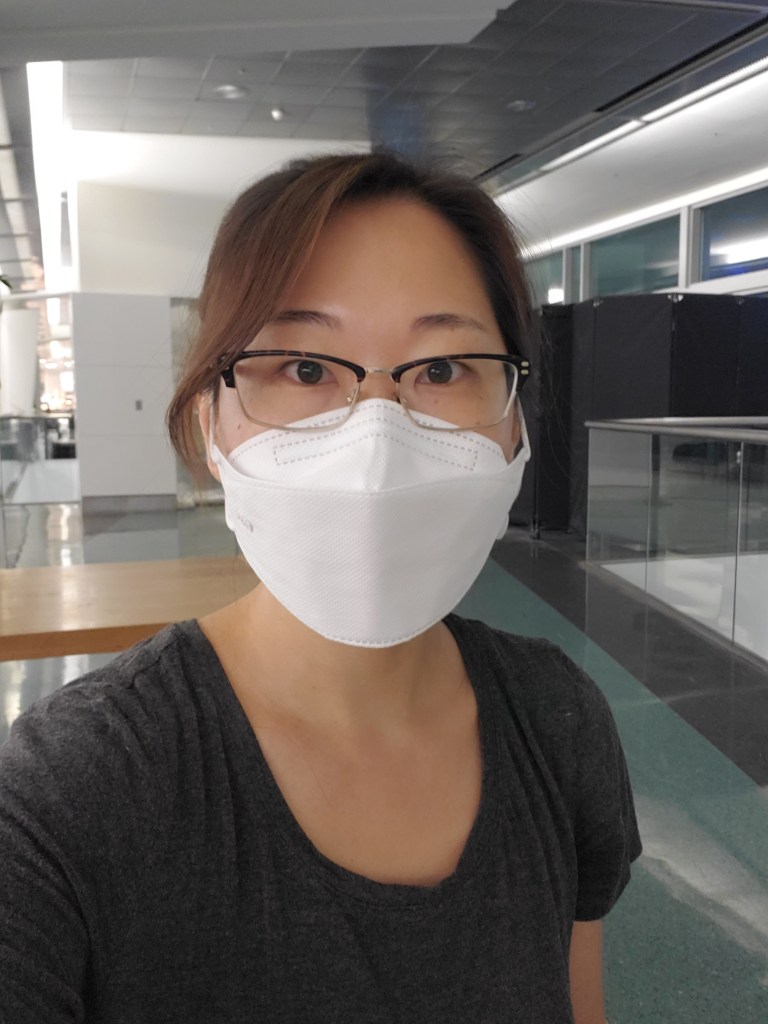
I flew out of SFO at 11:55pm on September 17, 2021 on Korean Air. I was super paranoid that I’d forget some important piece of paperwork or that things would go wrong because of flying internationally during Covid, so I arrived multiple hours early. Thankfully, the airport was not overly busy and, because all my paperwork was in order and I had taken the extra step of getting TSA PreCheck approved, I whisked through security ridiculously quickly. 대박이야! Awesome!

Because I didn’t want to have terrible jetlag, I pretended like it was already Korea time. (Korea is 14 hours ahead of the Pacific Time Zone in the USA, so my 11:55pm flight time was 3:55pm Korea Time). Since I had a few hours to wait, I had a small meal and a coffee (like it was lunchtime), did some laps around the airport, practiced a little Korean, and generally tried not to think too hard about things, haha.

If anyone is worried about jetlag, I recommend the app Timeshifter (https://www.timeshifter.com/the-jet-lag-app). I used it and found it helpful. I was recommended serotonin as well, but did not take them for my trip to Korea from the USA.

Boarding was reasonably quick despite most of the process being in Korean. Everyone’s negative Covid tests results were reviewed before they could board the plane, which added a little time.

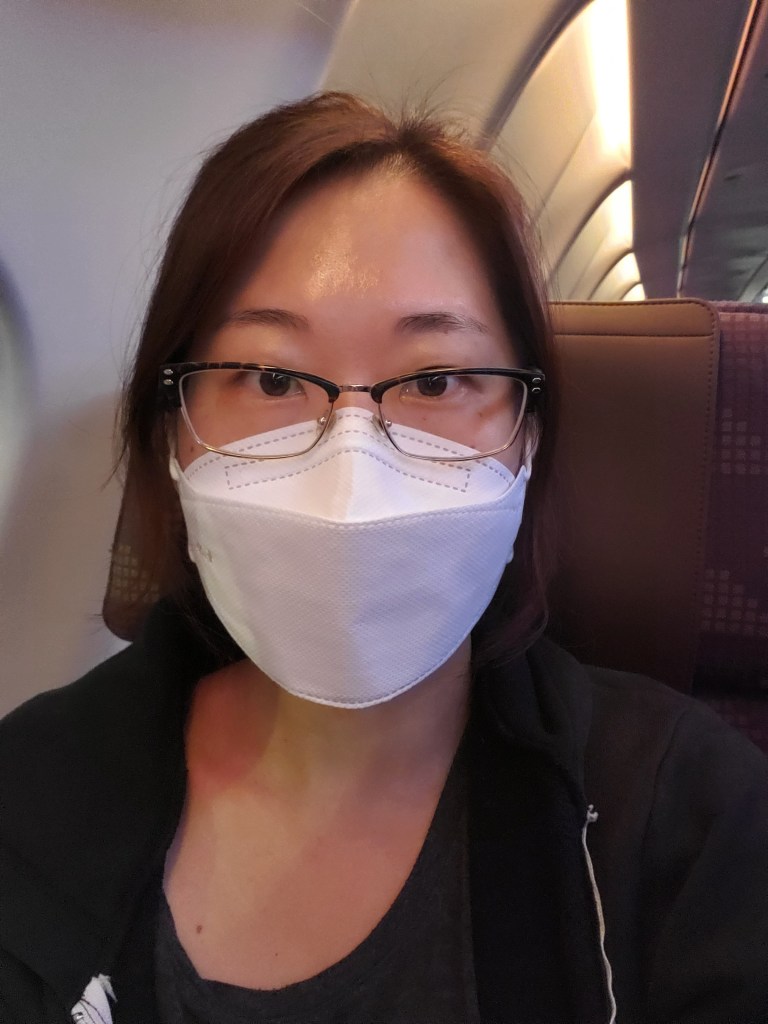
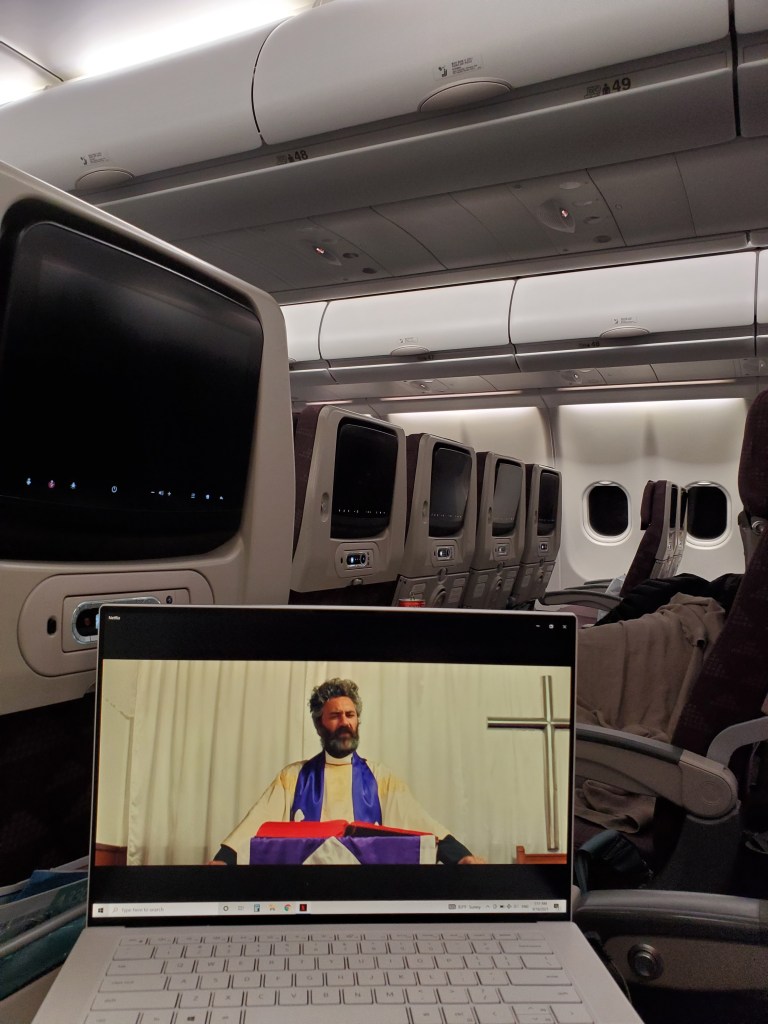
The plane itself was pretty empty. Some people had entire middle sections to themselves and could fully stretch out and sleep. There were bottles of water, blankets, pillows, some minor toiletries, earphones, and slippers provided on each seat. Everyone pretty much took off their shoes immediately and stored them, wearing only their socks if their feet were up or wearing the slippers to travel in the cabin or anywhere their feet would touch the ground.

There were a couple of food and beverage services during the flight. There seemed to be both Korean and American/Western food choices. I didn’t eat or drink much as I did not want to potentially impact my jet lag or intake too much sodium over the long flight. But what I did eat (the Korean choices) were tasty.

It is worth noting that while there were options for everything in Korean and English, most things on the flight to Korea were Korean first, with English second. This included how the pilot and flight attendants would communicated. Most of the folks on my flight appeared to be Korean speakers and followed Korean etiquette. The flight attendants understood and spoke English, so if you cannot communicate in Korean you will still be okay. 🙂

I tried to sleep on the flight for the last handful of hours so that I’d be reasonably rested for the 5am arrival on September 19 at Incheon. That said, all of the things I thought I’d do on the flight (practice Korean, watch Korean shows, get some sleep etc.) I actually did very little of. I think I was too anxious, excited, thoughtful to do anything productive.

I hadn’t realized how important or meaningful the trip was to me, despite all of the lead up and work I’d put in. The relationship with my birth mother over the preceding year, the studies in Korean language and writing, continued discovery and integration of Korean culture in my life… . I feel like I was so focused on the action and task requirement in getting everything set up that when I got on the plane, and had nothing to do but sit and wait, the magnitude of the trip snuck up on me. The unspoken hopes I had for the visit, the meaning of rediscovering the land and the culture where I was born, the opportunity to explore a missing part of myself and who I might have been or could possibly still be, meeting biological family, wanting to be as open minded, accepting and explorative while still caring for and supporting myself and my journey… . All of these latent thoughts, either intentionally suppressed so as not to give them too much weight, or overridden by the needs of “tasks” and “to-dos” had space to rise up during the flight. I had not expected it. Ultimately, I slept terribly hahah.

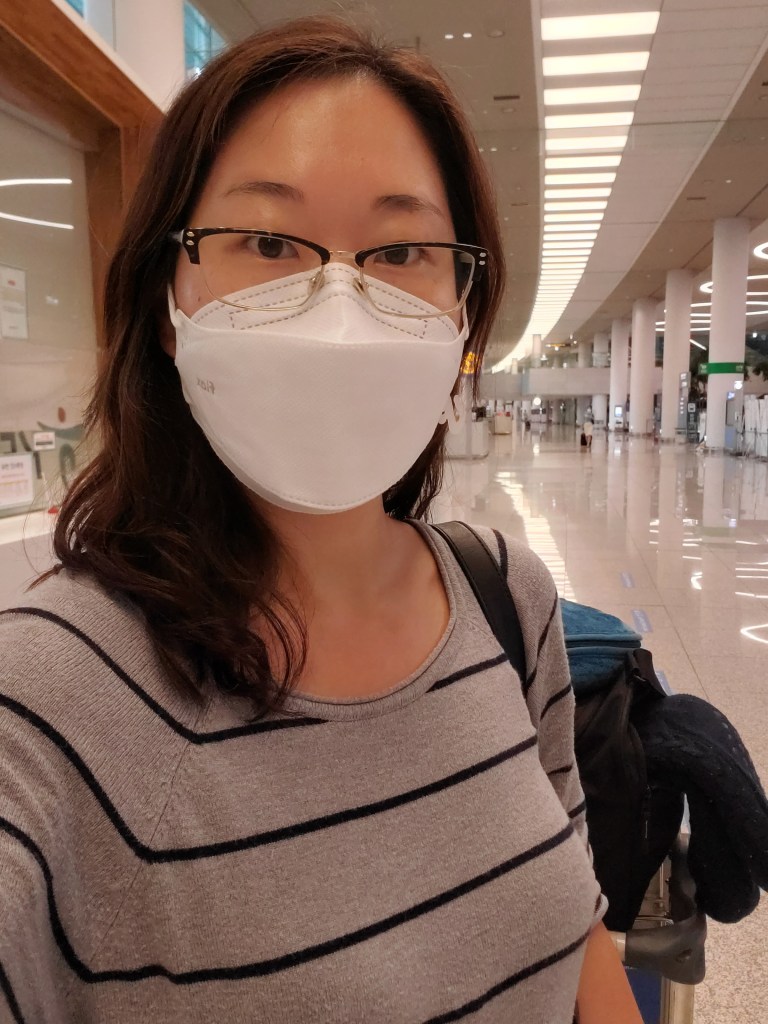
Thankfully I planned ahead and, knowing that my birth mother and some of the family were planning to greet me at the airport when I arrived, I packed a light change of clothes, toiletries and makeup and made myself presentable before we descended and landed in Incheon. Because of how spotty the experiences and stories about what happens to people arriving in Korea from an international flight during Covid, I didn’t want to assume that I’d be able to find a bathroom or stretch my legs after deplaning.

I am glad that I thought to get ready on the plane rather than waiting as the process after deplaning to get through multiple checkpoints (Covid, immigration, customs) was extremely long, confusing, and did not allow any breaks.

Before you descend and deplane, you should be given paperwork to fill out that you will need for your first checkpoint at Incheon. However, if you do not get the paperwork (which happened to me), you have to wait in line to get to the first security checkpoint, realize you don’t have the paperwork, go find the paperwork (nearby but out of line at the front), and then get back in line to get to the first security checkpoint again. What a pain!! So, GET THE PAPERWORK and fill it out (on the plane or get it from the first checkpoint) before getting in line and save yourself some hassle. It is likely that the line you find yourself in will be extremely long, so plan accordingly.

During this time you also have to download and install the Korean Self-Check app. There will be signs throughout the halls at Incheon which you will see as you wait in line to the first checkpoint with information (although it will be in Korean).

Once you get to the first checkpoint there will be someone who does a quick look at your paperwork, waves you on to another person who will do a deeper look. From there more stations exist that can help you with things like correctly installing the phone app, before you move onto the second checkpoint.

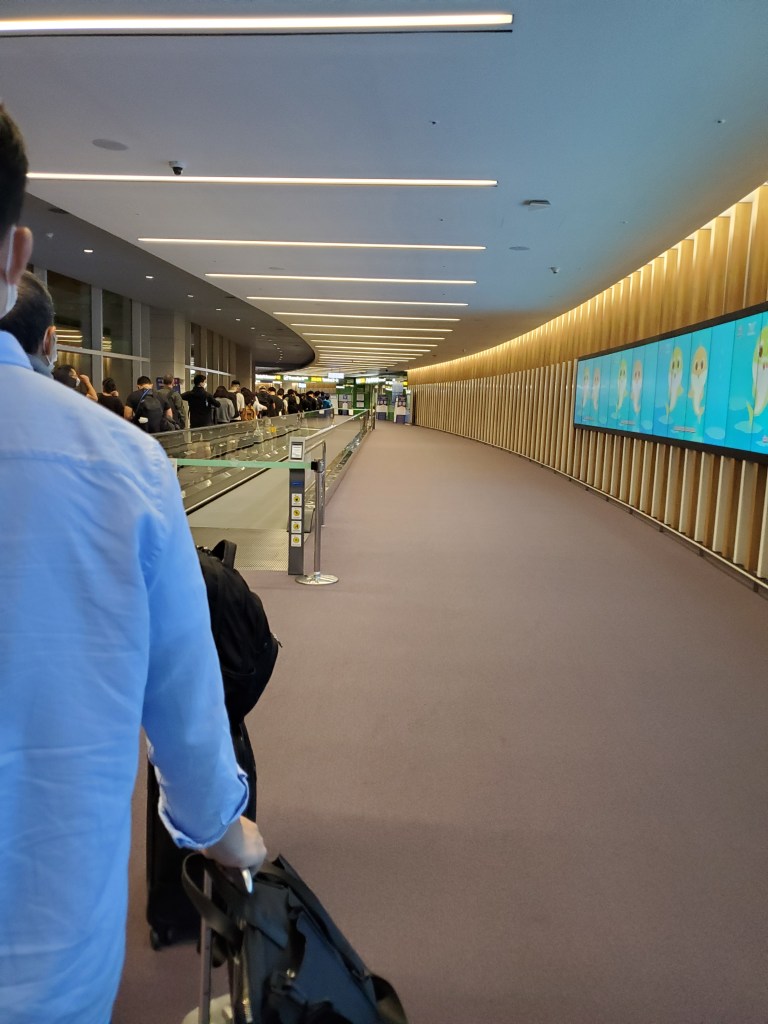
Waiting in line at the second checkpoint; for non-Korean citizens/foreigners

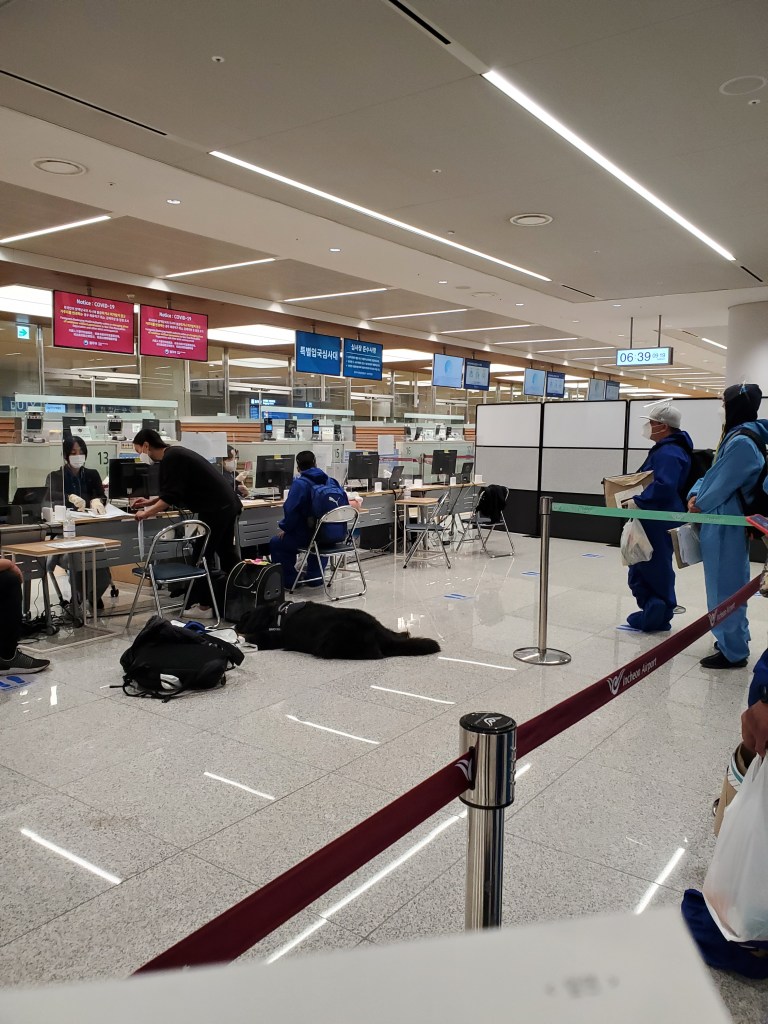
By the time I made it to the second checkpoint it had been about an hour and forty minutes from deplaning. At this stage I had picked up and filled out more paperwork (I kept finding kiosks with more paperwork, but was completely unsure which, if any, I needed to fill out. There wasn’t really anyone to ask, so I just picked up and filled out anything that seems related and wasn’t a duplicate of what I already had). You can see that everyone in line with me had literal packets of paperwork in hand to share with the folks working at the Incheon airport. If you have all of the paperwork that I’ve mentioned in previous posts, as well as the paperwork that you get along the way in Incheon, you should be fine.

After getting through the second checkpoint, the third checkpoint (getting in line and then being waved through a gate attendant), gathering your baggage at the claim, and getting through the fourth checkpoint (customs) should be relatively quick. As a note, it is worthwhile to review what you cannot bring into Korea with you as you will have to declare imports (which will be seized from you and your bags searched should you declare something that is not allowed). Beef/meat especially seems to be a nono, so don’t bring things like beef jerky even if it is meant as a gift to someone you are visiting.

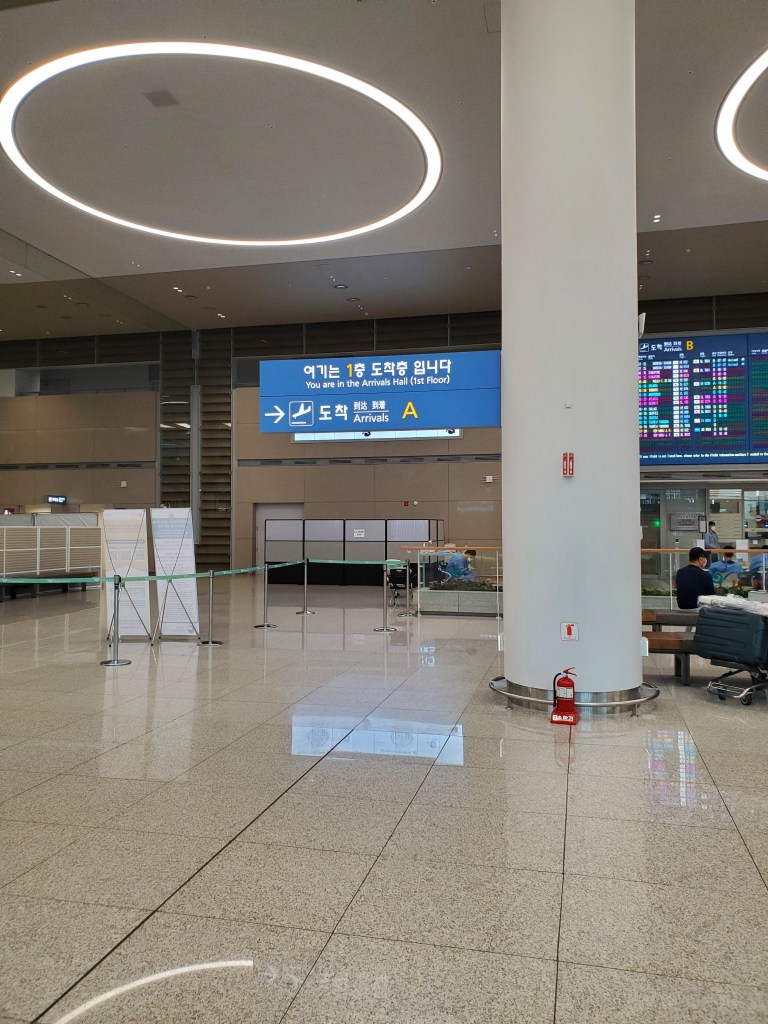
I finally made it out of Immigration/Customs around 7:45am. In total, from time of deplaning, it took me about 3 hours to make it into the actual Incheon airport after landing. Granted, this was in September of 2021. I also had quarantine exemption (How To: Apply for a Quarantine Exemption to Visit Family as a KAD) which meant that I did not have to go through the process for going from the plane to a quarantine facility. It is possible this process will be longer, or shorter, or easier, or harder depending on your particular travel details. 🙂

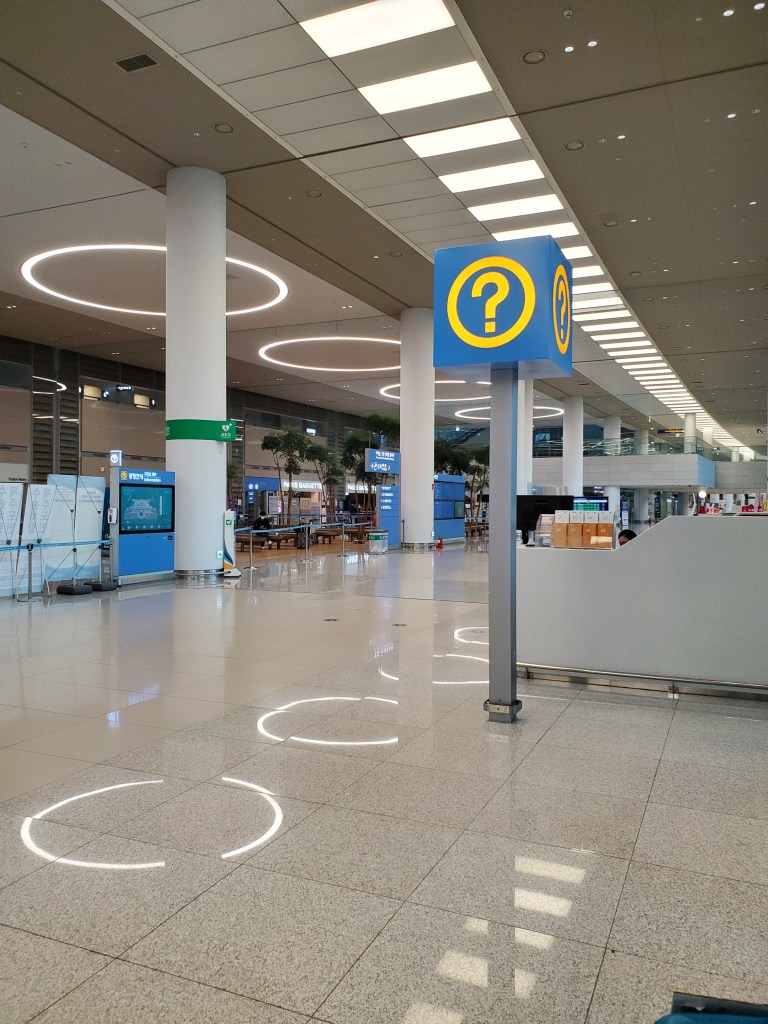
When I finally made it into the Incheon airport, I got caught up in a flurry of texts and calls with my birth family who did not know where I was. None of them speak English, so it was very hard to communicate where I was so that they could meet me. I finally found a very helpful attendant at a help kiosk whom spoke enough English that she understood the situation and kindly spoke with my aunt. It turns out, they had gone to a different terminal and were waiting there to greet me. The attendant told me that my birth family wanted me to wait where I was, and that they’d come to the terminal where I was to meet me.

Help Desk kiosk. The attendant spoke/understood some English.

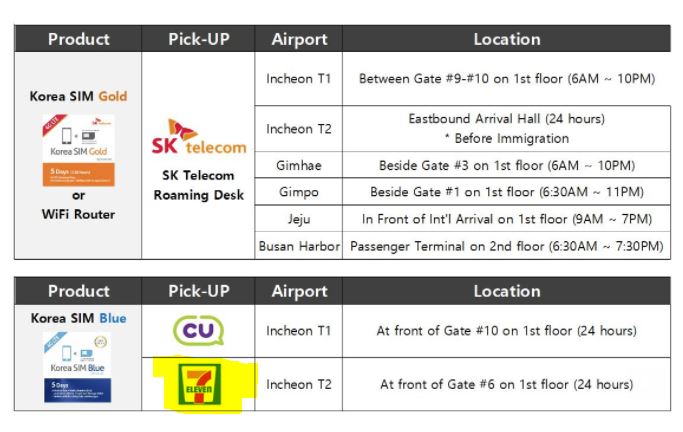
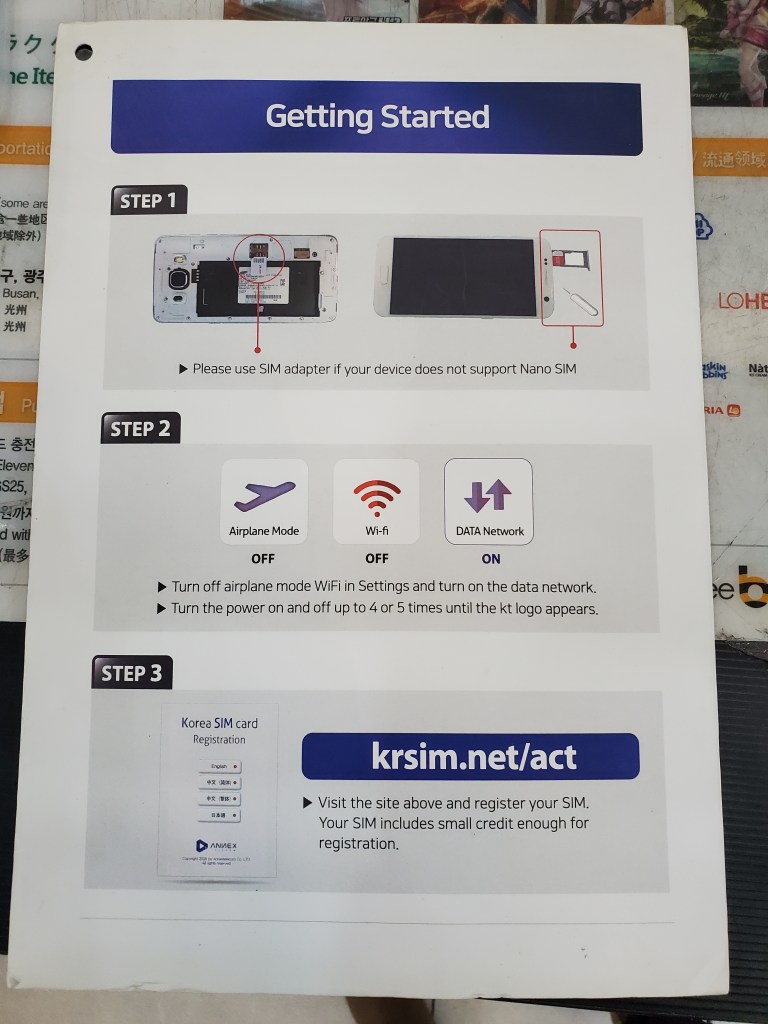
While I waited, I walked over to the 7/11 to pick up my Sim card nearby. I had pre-ordered one (https://www.krsim.net/product/Korea-SIM-Blue-4G-LTE-Unlimited-Data-Local-Voice-USIM/40/) while in the USA so that when I arrived in Korea I could simply pick it up at the airport, install it, and then have a Korean phone number to use during my stay.

It took a while for them to track down my order (nobody spoke English, so we fumbled through using gestures and my beginner’s Korean). But, I was able to obtain and install my Sim relatively painlessly as I waited for my birth family to find me.

After sorting out the Sim card, I returned to kiosk and sat nearby. I really wasn’t sure what to expect, I wasn’t sure whom would be meeting me, or when they would arrive.

After some time passed, I turned around to look out the large windows behind me. I saw three women running full tilt down the sidewalk gesturing wildly at each other. One was holding a sign and another was holding flowers. I thought to myself “that must be them”. Moments later they were running down the terminal hallway and I was immediately embraced by one sobbing woman, talked at excitedly and embraced by another, while the third stood quietly nearby holding a bouquet of sunflowers. The sobbing one was my third aunt. The excited happy one was my fifth aunt. The quiet one was my birth mother. (As a note, you do not call an elder by their name in Korea. So, I called my aunts by their Aunt titles and my birth mother Eomma.

I felt immediately cared for and welcomed. It felt like they had all been waiting to meet me for a long time. I don’t know how long they had waited at the terminal for me that morning, but it seemed like none of that mattered to them and they were just glad to see me.

With little fuss the three women took my bags (which were quite heavy because I’d packed gifts) and walked me to a waiting car. Each took turns touching me and holding my hand. A man got out and he quickly stowed my luggage. He was my only uncle. (I called him 삼촌/sam-chon). We all got in the car and off we went!

Uncle dropped us off at my birth mother’s apartment in Nowon-gu to spend some time together and to eat lunch. The lunch was delicious and was a precursor to the Chuseok holiday (like Thanksgiving in the USA), which started the next day (Sept 20-22). There were many dishes and my birth family made sure I ate well. It was very comfortable and we spent time quietly conversing however we could.

My younger birth sister (a 25 year old pharmacy student) lives with my birth mother. So, I got to meet her for the first time too. 

After eating, my aunts left for the day. My birth mother suggested that I take a shower, rest, and get settled. Apparently she had planned for me to stay with her that night, which I had not realized. While I’d had arrangements at an apartment in Itaewon for the entirety of my time in Korea (about 50 minutes away by subway), I decided to stay at her home and check-in at the apartment when it made sense at a later date.

She helped me figure out getting the first of two Covid tests that were required as a part of my quarantine exemption (one within the first 24 hours of arrival in Korea and another about a week later). We walked over with my younger sister that afternoon to the nearby Covid testing site, which was set up outdoors via a series of tents. It was quite quick because I had paperwork that showed I needed a Covid test as part of the quarantine exemption. I showed it to the administrator, they gave me a vial with a sticker that had my information on it, I got in a short line to go to a booth with a nurse, they administered the test, and off I went!

As a note, the Covid tests in Korea are more painful/brusque than the ones in the USA. They take a throat and a nose swab. The nose swab is very deep. If you aren’t prepared for it, it is a bit of a rude surprise.

After that we walked back to her home in Nowon-gu and spent the rest of the evening relaxing, resting, and eating dinner. She suggested I shower and go to bed relatively early, which I was grateful for as I was rather exhausted from the travels as well as my first full day in Korea.

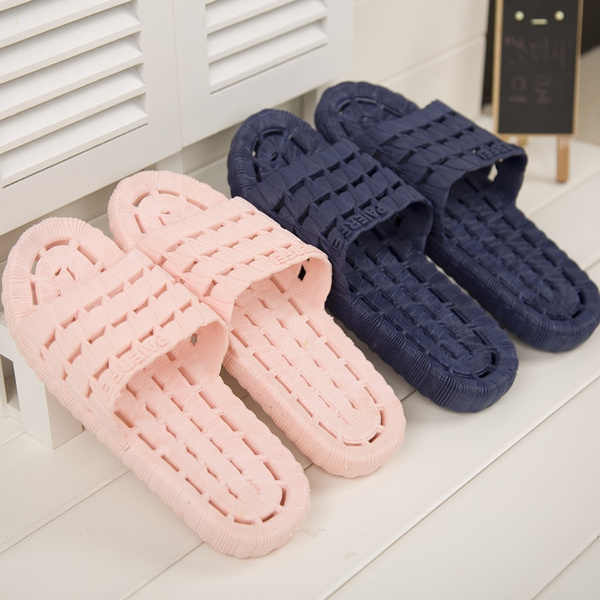
I was too tired to take any pictures of the bathroom, which I regret. Bathrooms in Korea are different than in the USA for the most part. The entire area is intended to get wet. There is likely no shower curtain to separate the bath/shower from the rest of the room. Most Koreans seem to keep the shower head separate (handheld, not attached). Koreans also tend not to have a trash bin in the bathroom and use very small towels (think hand towels). In Korea, people also have bathroom slippers specifically meant to be used in the bathroom only. This is all fine and I learned to really appreciate and love many things about the bathing experience in Korea. That said, if you find yourself showering in Korea and have expectations for an American bathroom experience, I’d suggest you be open minded. Make sure you use the bathroom slippers, have a plan for where to put your trash (for me it was dental floss and daily wear contacts), and know that you will only have a small towel to dry with (that should be used once and then laundered). It is considered polite to clean up after yourself in the bathroom, scrubbing and rinsing the surfaces with the little mops/sponges many people keep.

Bathroom slippers

I was definitely mentally and physically spent, so not particularly elegant or thinking quickly as I experienced my first shower in Korea at my birth mother’s home. I have no idea if I used the correct products on the correct places haha! Thankfully I bumbled through and passed out nearly immediately after my birth mother bade me goodnight.

I have probably missed some details about my flight to Korea and my first day in Seoul. It was all a whirlwind and happened about 6 months ago. But, I tried to cover some of the main things that came to mind about my journey there. If there is anything in particular that you are curious about, please feel free to ask or comment and I’ll do my best to be responsive.

Thanks all for reading! Until next time.

사랑해요. I love you.

Learning to be Korean ❤

Categories
KAD Life Personal Update

KAD Life: Personal Update Arrival Day

Last Friday, April 30th 2021 was the anniversary of the day that I arrived in the USA from Korea, over three decades ago, to meet my new family. While my family has typically celebrated by letting me know that they love me or are thinking about me on my arrival day, I have historically not celebrated in any large way. I’ve always had feelings about the day, but they span a pretty broad spectrum. That said, I’ve always found it meaningful that my family lets me know that they love me and care. I love them, too, and feel very grateful to be one of them.

My mom and I talked on the phone this year and she told me how much I mean to her and how she is proud of me, loves me, and how happy she is to have been able to be a part of my life these many years. Of course, I cried (and pretended I didn’t haha). I am aware how lucky I am to have this kind of relationship with my family. While some adoptees are like myself, with families whom love and support them, and have fully embraced them as family, there are also many adoptees who do not have positive or healthy relationships with anyone in their families. I can only imagine that arrival day anniversaries are tough.

Please note that I specifically do not refer to this anniversary as my “gotcha day” as I find it offensive. I feel like the term can promote the white, hero/savior complex, can equate a child to an “object” for procurement, and takes the narrative away from the complex circumstances and feelings that the adoptee might have about the event. I totally support folks whom do refer to their, or their adopted family member’s, arrival days in those words (you do you!!).

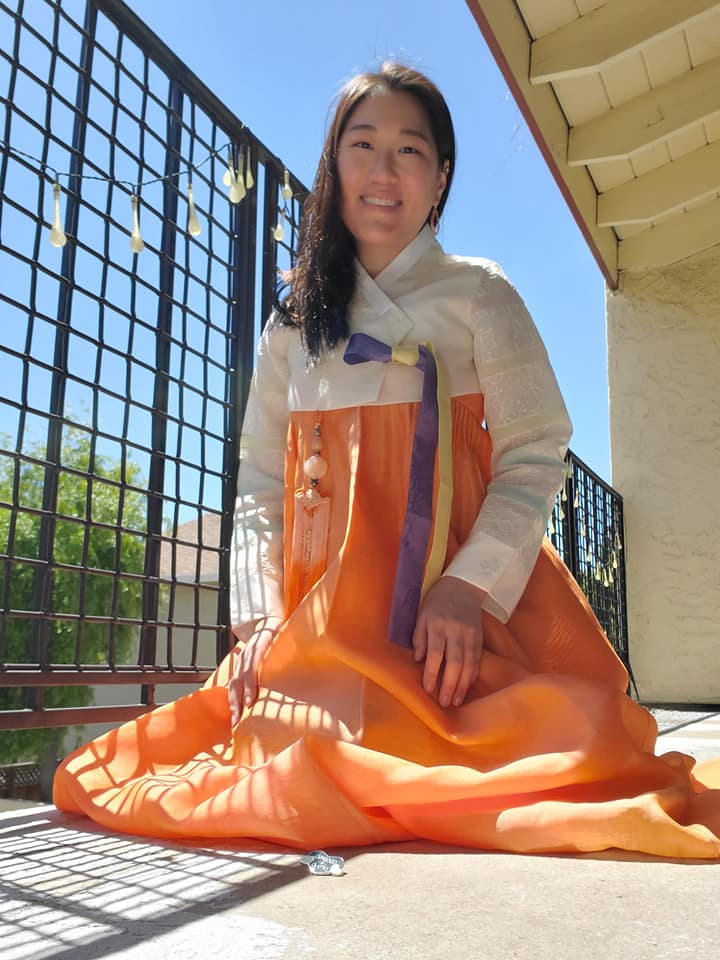
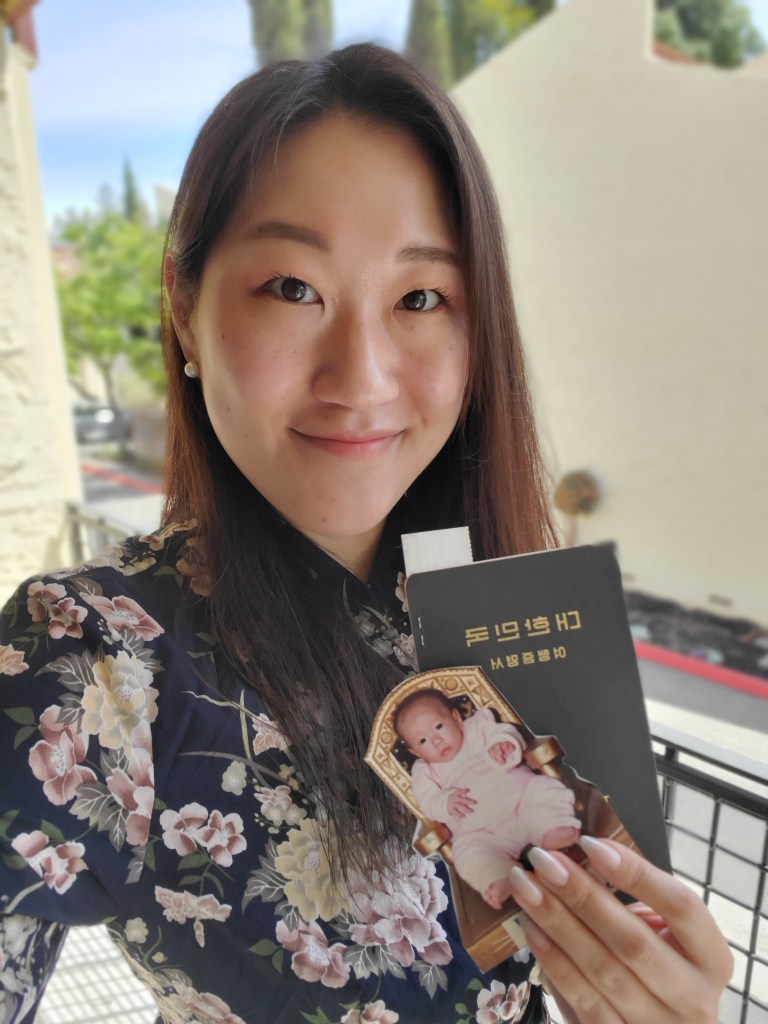
This year’s arrival day anniversary was the second year in a row that I took the day off from work to be selfish and focus on myself. I treated myself to a modern hanbok (last year’s was a beautiful cream and orange hanbok more traditional in style).

Photo: Author 2020 in hanbok on arrival day anniversary. Credit: Author.

Hanboks were a luxury growing up. My family was not wealthy, and buying hanbok for me was a notable expense. I recall feeling special, beautiful, and like I had deeper connection to my Korean heritage whenever I wore one. I remember being surrounded by other Korean girls in their hanboks when I did Korean dance or went to Korean Culture Camp as a child. I felt the older girls were so beautiful. When my friend Kirsten married her Korean husband, Dan, his mother and grandmother wore hanbok. They were stunning. I felt a sense of longing for a culture I was a part of, but also a stranger/outsider to. My love and relationship with hanbok is, in some ways, similar to my relationship with Korea and Korean culture.

Photo: Author in modern hanbok 2021 holding original adoption photo and Korean passport. Credit: Author.

Unlike the past 30+ years of arrival day anniversaries, about 8 months ago I reconnected with my biological mother. As noted in a number of my blog posts, the reconnection with my maternal biological family has had an impact on me emotionally and operationally. I found myself having even more complex feelings about this year’s anniversary than some past ones. Especially knowing my bio mother’s experience surrounding my adoption, there’s more for me to think about.

To those readers whom are adoptees, birth parents, or adoptive family… what do you do to recognize arrival days? Do you do anything?

Thanks for reading! As always, 사랑해요! ❤

Categories
KAD experience KAD Life Personal Update

KAD Life: AAPI Racism and Current Events

On April 28th of last year I made a personal Facebook post about some of the challenges I’d experienced that were potentially related to anti-Asian racism and sexism (one can experience both at the same time). It came after having been quietly upset about the typical anti-Asian slights aimed in my direction becoming more public and more frequent the preceding months. I’d also been following a lot of chatter in Asian communities (especially the KAD community) about similar experiences since the start of Covid. That day I’d gone out for a run, and was chased down the street by a screaming man. Something about being a “China whore” or similar language. I’d been a little taken aback (initially surprised and scared), outran him (fear and physical fitness helped I suppose), finished my run (over 4 miles of additional ground), and then resumed my workday like nothing had happened (meetings are meetings). That said, for whatever reason I mentioned it online. I guess I wanted to speak out.

Not quite a year later, having now surpassed the one year anniversary of sheltering in place in CA, it’s interesting to reflect upon those past experiences as well as new and ongoing ones.

For the most part, I’ve tried not to talk about arguably racist experiences I’ve had both throughout my life as well as in current times. Some of this is out of embarrassment, not wanting to cause trouble, and not wanting to make those of other minority groups feel like I’m infringing on or detracting from their real hate-based experiences and hardships. I’ve found this to be surprisingly common amongst other Asian persons… a lot of silence about issues we’ve faced. This silence is reflected, I feel, by society at large which typically doesn’t acknowledge anti-Asian racism or the Asian American experience at all (adopted or otherwise).

I’ve also found that when I have brought up my experiences, or talked about the history of racism toward Asians in America or in Western cultures in general, nobody wants to hear it. Or if they are interested, because they love me or care about the topic in some way, it’s often something they truly have no way to fully understand despite our mutual best efforts.

When trying to talk about my experiences as an Asian person and woman, or about anti-Asian racism in general, I’ve been asked if I’m sure what happened to me actually happened. I’ve been told that I should remember that no such thing as racism toward Asians exists. People remind me that Asians actually “have it better than any other race” and have “Asian privilege”. Others tell me that every other minority group has it worse, that Asians are racist and are the source of racism, and that it’s even nice to see Asians finally experience what real racism is like for ourselves. (Please note that I understand that racial and cultural relations between Asians and other minority groups is complex. I’m not saying that I do not recognize or support why people feel the way they do in this regard. I’m not saying that the Asian community has done no wrong. I’m also not saying we have it “worse” than anyone or that the experiences of other minority groups is not equally valid or important).

Another thing that people have told me is to think of things that I’ve considered to be racist microaggressions (people bowing and saying “ni hao” to me, folks asking where I’m “reallllyyyyy from”, being told my English is “surprisingly good”, joking about my husband or anyone I’ve dated as having “yellow fever”, or when people ask about why my eyes or skin or face look like they do) as compliments. “It’s just people showing interest! Don’t be mean. It’s a compliment”.

Let me just say… I have never found it helpful when people tell me how or what my experiences are or how I should feel about them. If anything, it has fed into a deep sense that I am completely alone. That I don’t have a safety net. That it’s pointless to bother speaking up, at least for myself (I’m very happy to fight for and support others). Worse, I struggle a lot as an adult with gaslighting myself for experiences related to racism and sexism and adoption that really have happened and do happen. “It’s not that big of a deal”, “Everyone says this type of thing happens to everyone and is okay and normal”, “I’m probably just being ridiculous”, “I’m mean”, “I deserved it or caused it”, “I’m the problem”. So, if you’re reading this and know you say or have said things like above to someone trying to be open and vulnerable about their personal experiences, please stop yourself. It can cause real damage.

I have a Korean friend whom recently immigrated to the USA with her American (white) husband. Since coming here she has experienced racism. This is new to her since, in Korea, nobody would attack or other her for being Korean. Unfortunately, she’s living in an area (mid-west) with very little Asian population. Her immediate family is all white and has lived there forever. While her family and friends may care about her, or be aware of the troubles she’s had, she has nobody to talk to that understands or validates her experiences, fears, or worries in the way another Asian person can. For instance, her husband reminds her to be open minded, that she can’t live in fear, and that statistics show that she’s in a safe area and few Asians actually get hurt (i.e. her fears are unfounded and her brushes with racism aren’t an issue).

What she is experiencing is so intensely relatable to me. I know it’s something that other Asians (and minorities both racial and otherwise) can relate to.

Today she sent me an email letting me know that she has been having a hard time because of the anti-Asian racism news. Between reports of mild abuses (people moving away from Asians in public, saying arguably racist things etc.), slightly greater issues (Asians being sprayed with cleaners, folks refusing to serve Asians, being spat upon, or things like my being chased down the street), greater abuses (Asians being set on fire, having acid thrown at us, being physically attacked and beaten), to the deadlier reports (Pak Ho in Oakland, Vicha Ratanapakdee in SF, and now Xiaojie Tan, Daoyou Feng, Delaina Ashley Yaun Gonzalez, Paul Andre Michels, Soon Park, Hyun Grant, Suncha Kim, and Yong Yue in Atlanta), my friend is scared and upset. She said she has been crying all of the time. She said she misses Korea. She asked me if “Is this something you would get used to if you lived in the US long enough? Would I ever reach the phase where I don’t feel anxious anymore about who I am?”.

Honestly, the question is a painful one. How does one respond? I guess the answer many folks would want me to give, assuming they even believe that anti-Asian racism exists, is “Of course not! Because this is just a bad moment in history. It’s not America. We’re welcoming and a melting pot and racism is over. This isn’t who or what we are. Please have faith. Things will get better”! But, I think that would be a false answer as much as we’d like it to be true.

I’ve lived in the United States of America most of my life. I still feel anxious about being Asian. About being a woman. About being an immigrant. About being adopted. About a number of things, actually. Regardless of people insisting that these feelings are ridiculous or that the causes are made up, the anxiety is real. I can only imagine the anxiety that my Asian friends with elderly Asian family living in the USA must be feeling on top of everything else. The same goes for KADs whom are of mixed black and Asian descent. I think it’s about mitigating or finding ways to live with the anxiety if you can. It takes work. The problems don’t go away. The anxiety doesn’t go away.

As for getting “used to” issues like racism… what a different beast. I realized, after giving it thought, that for me it’s a yes and no. I am used to it in that I’ve navigated otherness (from microaggressions though attempts at physical attacks) for decades. I tell myself “it’s fine”. They happened as a child, as a teen, as an adult, in public, in private, and at multiple places of work. Friends, extended family, strangers, coworkers, and acquaintances are not exempt from this. “It is what it is”. You start recognizing the type of racism it’ll be and then navigate accordingly.

For instance, and this IS unkind, when people start the whole verbal dance of figuring out “what kind of Asian I am”, I sometimes toy with them before eventually giving them the answer they seek (and the chance to tell me all about the Asian they know or how much they love Asians or whatever, which inevitably happens). It’s mean, it’s wrong, and I shouldn’t do it. It happens when I’m feeling particularly tired and unkind and that person has gone about it in a way I find frustrating (like a person creeping on me and following me around or trapping me physically to broach the subject). That said, I probably wouldn’t do this unkind thing if I weren’t so “used to” that kind of racism.

Having experienced these things that are troubling my friend so much throughout my life has made me “used to” it. I’m savvier in dealing with the day-to-day challenges. I can be heckled, chased, endure comments about my looks, have people get weird about my exotic Asian sexuality, or whatever the flavor of racism might be and get back to work or life without appearing phased. It’s probably an advantage and privilege that I’ve not appreciated as much as I could or should.

However, being “used to” it doesn’t make it good or right or what I want for her or anyone. I internalize a lot of these events and experiences and they bubble up in ways I’m not proud of. I still have emotional reactions to racism or other types of harassment, even though I wish I were stronger, tougher, unflappable, graceful. I get scared and angry, even though it’s unhealthy. Getting overly emotional at every slight is no way to live when the slights are many and don’t show signs of abating. I guess, to me getting “used to” is more about being less surprised when “it” happens and having more tools at your disposal to recognize what’s happening and not let it ruin your life every time it happens. (As a note, I’m talking about myself not anyone else. This is how I navigate. I absolutely understand that for some people this is not an acceptable way of thinking. I absolutely understand that some attacks are too gross and traumatic to not ruin your life. I also understand that when the attacks lead to brutality or death, as often happens especially to BIPOC, women, members of the LGBTQ+ community, of course it’s a life ruinous event. Nobody should be expected to get “used to” or otherwise appear “okay” about those things). I guess what I’m saying is… getting “used to” hate or mistreatment doesn’t mean that you don’t have emotional reactions, that it gets easier, or that these events don’t impact you. But, for me, it’s finding ways to keep living as best I can despite the challenges.

I’ve realized that I have a hard time with getting “used to” as a premise because it can potentially put the ownership and responsibility on the victims rather than the perpetrators. That’s not okay. Telling anyone that the goal is to be more accepting of being treated badly, of being attacked, of being killed, of living in fear… that’s a problem. I don’t like any narrative where we dismiss folks living with these very real concerns. It feels harmful, wrong, and cowardly. Shouldn’t we work to make sure that people don’t get “used to” these types of problems?

Anyway, I’m getting super wordy. I think I just wanted to say something on the topic because it’s meaningful to me, and to people I know and care about. While my blog is a personal one focusing on the KAD experience, I do not feel that racism is a topic to be ignored. It’s a huge theme in my life and the lives of other KADs.

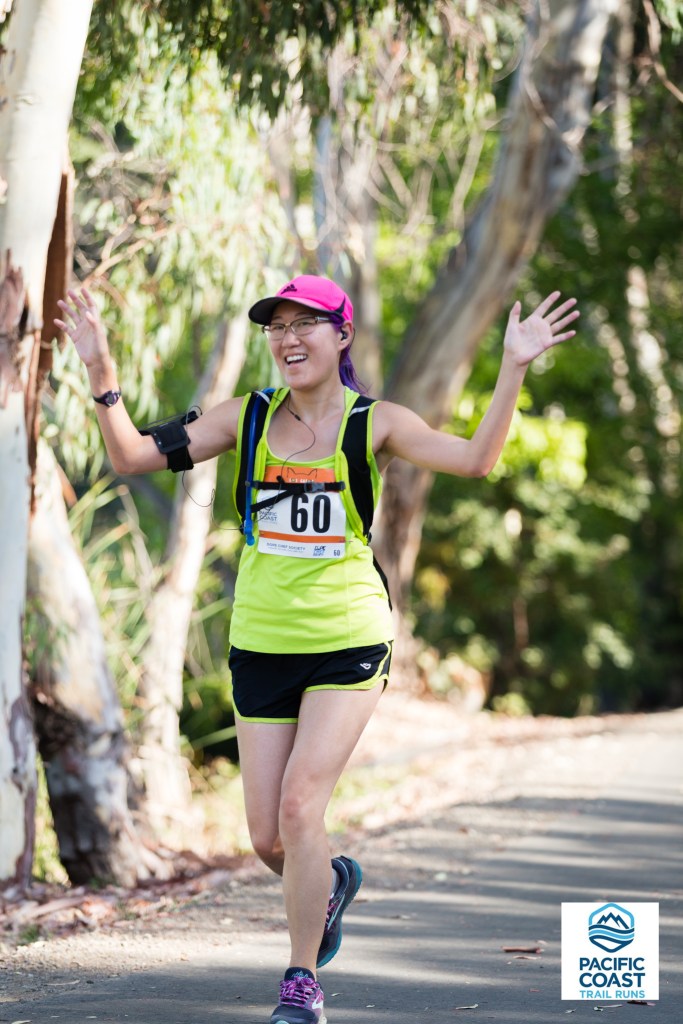
Full circle, my running is a pretty good example of my musings on racism, and how I’ve spent the past year. After the chasing incident, and all of the other things that happened to and around me, I am ashamed and saddened to say that I stopped running as frequently. Eventually, I stopped running at all. I’ve been a long time runner and have found it to be a self investment that I love and take pride in. It’s a way for me to mediate, to focus, to feel alive, to travel and see and experience and explore. But, for whatever reason, more and more I started exercising indoors instead. It’s been hard. I haven’t been kind to myself about it. I’ve felt like a failure, a weakling, not strong or independent like I want to appear. I have felt like I “gave in” to silly fears and gave up on myself.

Running in a Pacific Coast Trail Run in 2018. I placed third in my division!


I announced to my husband and some close friends and confidants (whom have had to endure my emotional ups and downs this past year and I am intensely grateful to) before the Atlanta shooting that I was going to start running again starting Tuesday, March 16th. Tuesday at lunchtime I put on my trusty running shoes, my neon running gear (aside from helpfulness in not getting gear mixed up with other people’s the neon has always been my way of helping if I were to be attacked or killed and people needed to find me), my fancy new Bluetooth earbuds (I actually only ever wear one so I’m more aware of my surroundings as a lone female), and my running belt (which holds my phone, key and id). I hit the road and ran for the first time in months. I fell into a familiar cadence and rhythm, toe to heel, breathing just so, looking at the long distance. Was I weaker, slower, less conditioned, and less good than before? Absolutely. Did I feel bad about my backward slide? Absolutely. Did I run less mileage? Absolutely. I essentially ran only 3 miles in 30 minutes (unlike my typical longer distances and speeds). But, I felt so proud of myself for doing it. It felt like I was taking something back that I’d allowed myself to give up.

That late afternoon/early evening I started seeing posts coming though about the murder of 8 people, mostly Asian women, in my Asian community feeds. It was astounding. Everyone was upset, scared, and frustrated. Feelings of “it’s not just Covid or Trump, although both are major factors now…we’ve experienced racism for far longer and it needs to be talked about” were popping up everywhere. Women started coming forward about the experiences they’d had and do have that resonated with me. Asian women are the majority of victims in recent reported allegedly anti-Asian crimes. There was a mutual sentiment that someone having “a bad day” wasn’t a good enough reason to murder 8 people. Having a “sex addiction” and wanting to “remove temptation” was not just cause to target mostly Asian women.

The next day my Mom reached out to me to ask about me, to tell me how much she loves and cares and worries about me, and to ask me to please be as careful as I can. We both know there’s only so much I can do to stay safe… a lot of it really isn’t up to me. I can, however, be vigilant. My husband talked with me about please carrying mace and making sure to tell him my running routes in case the worst happens and he needs to search for me if I don’t come home.

I went running on Thursday.

This has gotten far longer and more self indulgent than I planned. I think my friend reaching out to me for comfort and to talk, an Asian woman to another, gave me the shove I needed to make some kind of public statement about the arguably anti-Asian racism and sexism that I’ve experienced and that are experienced by the greater community. Sorry for being wordy. It occurred to me that I felt better and cared about and heard, validated, supported when my mom reached out, when my husband talked with me, or even just seeing non-Asian friends post about the issues in the news on various social media outlets.

So, I wanted to write and share this post personally/self indulgently, but also in case it resonates with anyone else out there whom is or has been having a tough time. You’re not alone. I care about you. I hope you’re safe. I hope your family and friends are safe. Please be vigilant about protecting yourself both physically and emotionally. Please stand up for and protect those that need protecting. Sometimes people look like they have it together, but they don’t.

And, because I’m oversharing right now and I’m opinionated in general, Black Lives Matter. A lot of the things I and the AAPI community have experienced and are experiencing cannot be righted until Black Lives Matter. I believe this to be true. I hope you understand. If you support the AAPI community, but not the Black one, that’s not okay.

Thanks for reading if you’ve made it through all of this. Please take care of yourselves, everyone.

사랑해요. I love you. ❤

Categories
KAD Life Personal Update

KAD Life: Personal Update DNA Results

Today’s post is simply a personal KAD journey update. In a previous post (How To: Start a Birth Family Search) I mentioned an optional DNA step. While some adoptees and birth families choose not to use DNA in their searches, or to confirm relations after contact has been made, my birth mother and I did choose to pursue DNA confirmation. However, we waited to start until December 2020, multiple months into our growing relationship, and have been subsequently biting our nails and experiencing emotional fatigue as a result for the past 2.5/3 months. Our DNA testing process was lengthy and included a “redo” because samples didn’t work the first time around. Suffice it to say, the whole thing has been an ordeal. I stand behind what I said in my previous post about not waiting to do the DNA step if you can help it due to the emotional and time-related impact.

Well, good news, the wait’s over! As of March 8th, 2021 (4 days ago) I received word from my CHLSS-SW (state-side social worker) that ESWS had sent an update about the DNA results. ESWS said

“I got a call from DNA test company, and they said that they establish the paternal relationship.

I’m really happy to send this content.”

I have subsequently asked my CHLSSSW to please have ESWS share the actual results/paperwork with me. There’s no guarantee that I’ll be allowed to have any of this information due to things like Korean laws or rules of adoption agencies etc. That said, I’m hoping that I can obtain these records for my own gratification and record-keeping.

So, how am I feeling? I suppose a mix of things. Relief, because I’ve been framing my mind around us receiving negative results so as to theoretically reduce feelings of disappointment, hurt, sadness, loss. Weird… definitely feeling weird. For most people, the lifelong feeling of never knowing “who” you are or “where” you come from is likely different than it is for an orphan or otherwise abandoned person, especially one whom has never had any opportunity to “know” a genetic relative. I’ve gotten used to the idea of being a solo-flyer without the benefit of that “safety net” that everyone else seems to have (i.e. where you got your looks, many of your strengths/weaknesses, personality traits, allergies, disease susceptibility, blood type, whatever else comes with genetic knowledge). I guess I feel like I have the potential for learning these things that have been closed to me for my entire life, but that most people know as a matter of course. It’s weird and I don’t know what to make of it, or what to do with the information.

Outside of feeling relief, and a constant sense of “weirdness”, I am at a loss for what, if anything, it means for my birth family or for my “rights” in Korea. Does my birth mother care more about me now? Will the family be more willing to accept me with DNA proof than they already were? Will she tell my (half) sister about me, now? Will she, and the family, add me to their family registry (the only way an illegitimate person like myself, or any other KAD, is “recognized” as a legal/legitimate Korean person in South Korea)? What, if anything, does this mean?

I am looking at the photos that my birth mother has sent me through ESWS and CHLSS these past months through a different lens.

Before the DNA result, I was actively searching for any visual resemblance to try to legitimize and validate a sense of belonging and a biological relationship. When I’d first seen my birth mother’s photo I was disappointed. I didn’t feel that I looked like her and kept searching for definitive characteristics that matched. She’d commented that I looked a lot like my birth father (whom I have no information or rights to learn about in South Korea due to being “illegitimate”). So, I’d felt a bit of a sense of loss… like I was never going to actually know anyone that looked like me. Over the months, though, I found more visual resemblance in the photos of her and the extended family. One aunt in particular she, and my cousin, felt I could be the direct daughter of because of how similar we looked based on pictures. That felt good to hear, because I could see it too.

I felt like my birth mother, and my birth family, were acting similarly to me… searching for visual similarities in lieu of DNA proof. Every new physical detail or attribute we learned about each other that was similar was elevated in our minds. When my birth mother and I found out that we both had the same menstrual symptoms and history (South Korean women will talk about this, it’s considered normal in a maternal relationship), are the same height, same weight, and have similar skin and hair types it felt like a comfort and revelation. Still, it felt like we were trying to connect dots to try and reinforce broken or unformed ties.

Now, when I look at those photos, I’m certain that I am related. I’m not searching for “proof” to assuage lingering doubts or to try to build up my theoretical “where I come from” story. Rather, I’m looking for aspects of myself with a degree of certainty. I’m not sure if the distinction makes sense to those whom have not experienced what this is like. But, to me it’s a difference.

Anyway, I certainly have plenty more thoughts on the matter, but I feel like this is a good stopping point. I’m curious what other KADs have experienced in terms of “where do I come from” and genetic history. Of course, all comments are welcome regardless of KAD experience or not.

Thanks for reading!

사랑합니다! (I love you) ❤