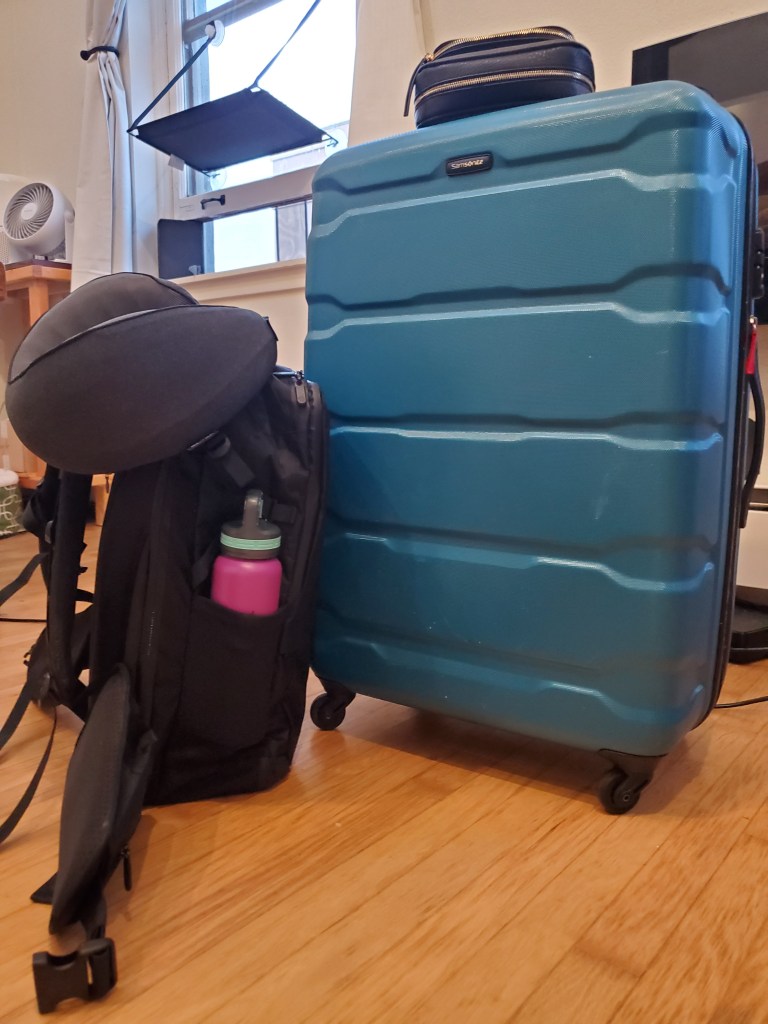
Photo 2022: Suitcase packed for travel from USA to South Korea
Even though Covid is *still a thing*, just like many other countries, South Korea has opened up its borders broadly to foreign visitors. While there are still more safety precautions being taken by the Korean government, public, and travel services (airplanes, accommodations), the logistics of coming to Korea as of 2022 are much simplified compared to the previous two years of Covid.
Photo 2022: Pre-flight selfie from airport in USA
I created an updated list, below, with paperwork that I feel is either necessary or helpful with a trip to Korea these days. That said, the Embassy of the Republic of Korea’s website also has some similar information.
List of Paperwork for a Trip to Korea 2022: 1. Plane ticket & boarding pass (I went with Korean Air again, although this one was serviced through Delta). 2. Valid passport 3. Visa – If under 90 days (and not employed in Korea) then get the K-ETA travel visa. If over 90 days, you have multiple options. I have my F4 Visa this time around. Note, if you come with your F4 Visa but DON’T have your Alien Registration Card (ARC), you’ll want to bring all of the paperwork required to get your ARC card with you. 4. **UPDATED: As of September 3, 2022, travelers from the USA to South Korea will no longer need to show a negative Covid test before departing for South Korea. You can read more about it here. Note, you will still need to take a Covid test within 1 day of your arrival in Korea. And, if you test positive you will need to do quarantine. 5. Q-Code – This is new and is essentially a one-stop-shop for Korea to track foreign entrants’ Covid information and status. You can register as soon as you have your negative PCR test results before coming to Korea. I recommend registering as soon as you can, rather than waiting until you arrive in Korea (and subsequently have to figure out how to do it while waiting in a long line at the airport). 6. Optional; Cell phone plan (I went with a Sim card). If possible, I recommend finding out your Korean cell phone number before you arrive in Korea so that you can refer to it when filling out documentation or paperwork. 7. Optional; Traveler’s insurance (I went with SafetyWing this time, due to a stay greater than 90 days) 8. Optional; Lodging reservation (reservation information; location, dates, contact) 9.Optional; Korean contact information (names, addresses, phone numbers) 10. Optional; American contact information (names, addresses, phone numbers) 11. Optional; Transportation (T-money) 12. Optional; Currency (Credit card, debit, Korean won) 13. Optional; International driver’s license
Image: Screenshot of updated, 2022 travel information for American travelers to KoreaPhoto 2022: Waiting in line to get through quarantine/Covid checkpoint at Incheon. I had a much easier time getting to the front of the line because I already had my Q-Code! I recommend completing this step before you depart for Korea.
I hope that this updated information is helpful for those of you planning a trip to Korea!!
읽어주셔서 감사합니다. 사랑해요! (Thanks for reading, I love you!)
As mentioned in my previous post “KAD Life: Planning a Trip to Korea – Part 1 – Desire”, I purchased a ticket to go to Seoul in September of 2021. It will be my first time returning to Korea since I was adopted internationally.
Since then, possibly because of Covid-times, I’ve spent countless hours tracking down the files I will need to travel to Korea. This includes some optional documentation that I’ve opted to pursue because of certain preferences I have (for instance, applying for Quarantine Exemption which you can read about in my post “How to Apply for Quarantine Exemption as a KAD”).
As a note, this list is a running list of any and all “paperwork” (files, documents, tickets, reservations, subscriptions) that I’ve gathered for my trip to Korea. They are in no particular order, but the top 6 are bare-minimum requirements. Not all of these are “needs”, some are preferences. My goal in sharing them is so that anyone else planning a trip to Korea has a consolidated list that they can consult as a place to start or even just as a mid-planning sanity-check.
List of Paperwork for a Trip to Korea: 1. Plane ticket & boarding pass (I went with Korean Air). Some folks suggest have a proof of your flight back, too, if doing a round-trip. 2. Valid passport and/or license for additional identification 3. K-ETA travel visa (https://travel.state.gov/content/travel/en/international-travel/International-Travel-Country-Information-Pages/SouthKorea.html#ExternalPopup) 4. Negative Covid test (PCR issued within 72 hours of departure) – at least 1 physical copy in English and/or Korean 5. Proof of Covid vaccination 6. Korean contact information (names, addresses, phone numbers) 7. Quarantine exemption (How To: Apply for a Quarantine Exemption to Visit Family as a KAD) – 4 physical copies 8. F4 visa (https://goal.or.kr/f-4-visa/) 9. American contact information (names, addresses, phone numbers) 10. Lodging reservation (proof of reservation, location, dates, contact) 11. Traveler’s insurance (I went with Travel Guard) 12. Cell phone plan (I went with a Sim card) 13. Transportation (T-money) 14. Currency (Credit card, debit, Korean won) 15. International driver’s license
I hope that this list of paperwork for a trip to Korea is helpful! I’ve found that planning for my trip has been a lot of research with many threads of action all over the place. For myself, I’m planning to have all 15 things from this list prepared before take-off. However, each person is different and while I find comfort in extra-prepared-ness and things like future-proofing, not everyone will find value in the same things.
I hope that any KADs reading and preparing for their first trip back to Korea find this to be a useful post!
As I mentioned in a recent post, I am planning to make my first trip to Korea since I was sent out of country to be adopted. My flight departs the USA in September 2021. This post is meant to outline the process that I’m navigating specific to the current rules and the timeline of my visit. These are subject to change in the coming weeks, months, and years.
Because of the global pandemic, South Korea implemented a 14 day mandatory quarantine (for most people, in a governmental facility at the expense of the traveler) for anyone entering the country. Very recently it was announced that, as of July 1st, vaccinated foreigners traveling to South Korea could apply for exemption from the mandatory 14 day quarantine.
According to Son Young-rae, an official with the Central Disaster Management Headquarters, “The new policy will apply only to certain people such as citizens and foreign residents, as well as those coming to visit family, or for the purpose of business, academics or public interest”.
I have connected with my biological mother. Because of this, I am applying for quarantine exemption as a fully vaccinated person to visit my immediate birth family in South Korea.
For the purposes of clarity, South Korea has specific requirements to be considered a “fully vaccinated person” or “immediate family”.
Fully Vaccinated: The applicant should complete the both COVID-19 vaccinations in the same country if the dose is 2 and 2 weeks since the last dose should have passed before travelling. – Only vaccines that are approved by WHO such as Moderna, Phizer, Yansen, etc are acceptable. – If the applicant gets the first dose in one country and second dose in another country, it is not acceptable. – You are eligible to apply for a quarantine exemption certificate on the 15th day once all the required doses have been administered.
Immediate Family: The applicant should visit their spouse or their immediate family (e.g. grandparents, parents, sons, and daughters) or the immediate family of their spouse (e.g. parents in law). – Visiting siblings, uncles, and aunts are not eligible.
Please note that I cannot provide any insights into the process or requirements as a KAD applying for quarantine exemption as a Visa holder, a Korean/dual citizen, or for the purpose of business, academics, or public interest. The steps and information I provide in this blog post are only as it relates to my experience.
Steps to Apply for Quarantine Exemption:
Find your local Consulate General of the Republic of South Korea’s website.
If you’re not sure what you need to do to apply, email the Consulate General of the RoK (or call them or set up an appointment). In my case, I wasn’t exactly sure of what I needed to submit for a family visit, if there were specific papers I had to fill out, or the correct process and timeline to do so.
There was no specified email for people regarding quarantine exemptions, so I emailed sfkcg0404@mofa.go.kr, consularsf@mofa.go.kr and koreavisa1@mofa.go.kr.
I used a descriptive subject for my email as requested by the Consulate General of RoK instructions. “Vaccine Quarantine Exemption_NAME_DATE of Departure”.
Update 07/29/2021; the SF Consulate now has an email to submit your Quarantine Exemption application to sfqec@mofa.go.kr. The other email koreavisa1@mofa.go.kr can be used questions.
Start gathering the required documents
Valid Passport – Scan your valid passport
Quarantine Exemption Application – This is a filled out copy of the Quarantine Exemption Application as provided to you by your local Consulate General of the RoK. For me, that was a document called “English Forms_Quarantine Exemption Application(Family visit).pdf”.
Agreement to the Terms and Conditions – Attached to the previous Quarantine Exemption Application form.
Pledge of Authenticity – Attached to the previous Quarantine Exemption Application form.
Copy of your Vaccination Card – Depending on what you were given by wherever you got your vaccination, this might differ. I included a copy of my little, paper “COVID-19 Vaccination Record Card” in addition to the official “COVID-19 Vaccination Record” print-out supplied to me by the local hospital where I was vaccinated.
Government-issued document to prove family relationship with the immediate family member that the applicant is visiting – This can be difficult for an adoptee to prove. Update 07/29/2021; After MUCH communication and running around, I have gotten confirmation from the SF Consulate that what I have collected “look good”. Therefore, if you’re a KAD working on gathering documents to prove family relationship, it’s likely that you will be okay if you submit something similar to the following. See number 5. with today’s update.
The government specifically asks for a Korean family relationship certificate (가족관계증명서) or a Korean family registry document (제적등본). You can ask your immediate biological contact to apply for a Korean family relationship certificate. There is a section in the family relationship certificate that states that the information must reflect the information in the original Family Relation Register. Unless your family registered you, it is unlikely that you will have access to a usable document as a KAD.
I supplied the Consulate all of my supporting documents including a redacted “Initial Social History” form, “Extract of Family Register”, “Application for Certificate of Appointment to Guardian of Minor Orphan in Orphanage”, “Statement of Consent to Overseas Adoption” in addition to a number of extra documents in Korean/한글. I also supplied them the DNA test report that confirmed my direct relationship to my birth mother.
The Consulate let me know that none of these counted as establishing direct family relationship and weren’t admissible. Thankfully, I have the unredacted copy of my “Initial Social History” form that included my birth mother’s name which one one of the reasonings for my previously submitted documents not being admissible. I am still waiting to hear back about whether or not the unredacted copy is enough to establish direct family relationship, or if I’m out of luck.
Update 2021-07-09: The Consulate General of the Republic of South Korea says that I (and possibly other KADs) need a completed and approved Family Relationship Certificate (가족관계증명서) AS WELL AS an unredacted adoption agency document or birth certificate that states the full birth parent’s name to be considered for Quarantine Exemption. Apparently this is because the 가족관계증명서 might not include the adoptee’s name if they were not recognized by the family and/or are not on the official family registry. The Family Relationship Certificate must be issued within 3 months of the Quarantine Exemption application.
Update 2021-07-29: I ended up getting into contact with NCRC (https://www.ncrc.or.kr/ncrc/main.do) to request help obtaining the Family Relationship Certificate (가족관계증명서) that my local Consulate insisted I must have to apply. They were not responsive for multiple weeks, but eventually replied after I emailed them 4 times.
They told me that the Consulate was wrong and that what I needed was the Adoptee-Birth Family Relations document (입양인 친가족관계 확인서). They also made sure to mention that the documents required may vary depending on the jurisdiction of the consulates (i.e. each KADs required paperwork might be different regarding proof of family relationship).
Further Info on the NCRC Paperwork: According to the NCRC, before the Adoption Special Act was revised, it was not mandatory for birth parents to report their child’s birth in order to put them up for adoption. Therefore, most KADs born before the revised Act were adopted with an orphan registry and not a family registry. Therefore, the Family Relations Certificate (가족관계증명서) that the Consulate requires doesn’t prove family relationship. The Adoptee-Birth Family Relations document (입양인 친가족관계 확인서) is NOT a legal certificate. It’s simply a document that the Korean Ministry of Health and Welfare and the Ministry of Foreign Affairs agreed to accept for the purpose of KADs/orphans/etc. applying for self-quarantine or quarantine exemption.
In order to get the Adoptee-Birth Family Relations document (입양인 친가족관계 확인서) I texted my birth mother to ask her to please contact NCRC. I also asked NCRC to contact her to ensure they communicated. They were able to get the document and sent it to me to include in my application PDF.
Update 2021-07-29: After getting the Adoptee-Birth Family Relations document (입양인 친가족관계 확인서), I pulled together my PDF and applied to the Consulate for Quarantine Exemption even though I knew I’d be rejected for applying before my application period (for me I can apply on September 3rd, 2021). I noted to them that I’m a KAD and wanted to make sure that what I submitted would be admissible. They told me everything I included “looked good”. But, I needed to also include a new document called a Certificate of Entry and Exit (출입국사실증명) for further proof of family relationship.
The Certificate of Entry and Exit (출입국사실증명) must be requested by the birth family that the KAD is visiting. In my case, that’s my birth mother. In order to get this document, she had to go to her local district office (주민자치센터). She then emailed me the certificate, which I sent to my local Consulate to confirm was acceptable. They said that it is “sufficient” and that I must include it in my application PDF when I apply in September.
Update 2021-07-29: SO! What files am I submitting in my final Quarantine Exemption as a Vaccinated Adoptee visiting Immediate Family in Korea for the “6. Government-issued document to prove family relationship with the immediate family member that the applicant is visiting” requirement?
Adoptee-Birth Family Relations document (입양인 친가족관계 확인서) – Obtained through NCRC and my birth mother
Adoption Certificate from my Korean agency ESWS (동방사회복지회) – Obtained through ESWS
Positive DNA Test Report – Obtained through ESWS DNA test via DowGene Co., Ltd. It MUST state the “alleged mother”‘s full name, the “child”‘s full name, date of test, test results, and be fully officiated.
Extract of Family Register – Obtained through ESWS (for most adoptees this will be the orphan registry not a family registry)
Application for Certificate of Appointment to Guardian of Minor Orphan in Orphanage – Obtained through ESWS
Statement of Consent to Overseas Adoption – Obtained through ESWS
Certificate of Entry and Exit (출입국사실증명) – Obtained through birth mother. Again, I have direct contact with her and asked her to get this for me. She had to go to her local district office (주민자치센터), apply, get the certificate, and email it to me.
Flight itinerary – This should be as simple as sharing your flight confirmation and itinerary details after your purchase your tickets from your airline.
As a note, the rules stipulate that the itinerary must originate in the region that your Korean Consulate of the RoK covers. So, for me, my Korean Consulate is in San Francisco. Therefore, my itinerary must show that I am departing to Korea from northern California.
Combine all of your necessary application documents into one PDF and submit it to the local Consulate General of the RoK. For me this looks like the following…
Email sfqec@mofa.go.kr titled “Vaccine Quarantine Exemption_AprilESchmidt_2021-09-17” (Vaccine Quarantine Exemption_NAME_DATE of DEPARTURE). Make sure to include the combined PDF. (Note: ZIP or compressed files will NOT be accepted. Don’t use them)!
You have to submit your Quarantine Exemption request during the appropriate time period stipulated by your Consulate General. If you do not, the Consulate will automatically reject the request. The time window is one week (7 days) starting 10 days before your departure date. For example, if you’re departing from the USA to Korea between July 19th and July 25th, you must submit your Quarantine Exemption request July 9th through July 15th.
The Consulate will try to email you your Quarantine Exemption Certificate (if approved) within 24 hours of your departure at latest.
Additional Note: My local Consulate will be changing their application process from email to their “Consular Services 24” website (https://consul.mofa.go.kr/) starting July 30th, 2021. I’m not sure if other Consulate Generals have a website or do their application process through email, so be prepared for your process to look different accordingly.
As noted above, once all of the steps above are completed (assuming you are granted an exemption) your Consulate General will email you your Quarantine Exemption Certificate within 24 hours of your departure to Korea.
As such, you will need to print out a minimum of 4 copies of your Quarantine Exemption Certificate. Digital copies might not be accepted.
Your Quarantine Exemption Certificate is only valid for 1 month from its issuance. If you apply early, and they send you your certificate more than one month before your departure or arrival date(s), it will not be valid.
You can only use your Quarantine Exemption Certificate once. After that, you will need to reapply.
You cannot modify your Quarantine Exemption Certificate. Only your Consulate General can do that.
You must have your Quarantine Exemption Certificate before you enter Korea. You cannot apply, or receive it, once you’re already on Korean soil and still have it be applicable.
Regardless of your Quarantine Exemption Certificate, you must bring a negative PCR Covid-19 test result issued with 72 hours of your departure from the USA (or local area) to Korea.
Real-time Reverse Transcription Polymerase Chain Reaction tests are required by the Korean government. Starting April 2021, NAATs, LAMP, TMA, SDA, NEAR and other PCR tests are also accepted until further notice. So, make sure to check if the rules are the same before getting your Covid-19 test pre-departure.
Negative test results must be shown in physical paper form! So, print them out.
The test results must show the passenger name matching their passport, date of birth (or passport number), type of test, test date, test result, date of issuance, and the name of the testing site. I’ve also heard that the name and title of the person who issued the test must be included. I’m not sure how accurate that is, but plan to get that information to be safe.
Special Step: Apply for K-ETA if you do NOT hold a Visa!
Currently, travelers from 21 countries and regions can enter Korea without a visa. The United States of America is one of these countries. However, if entering without a visa, you have to apply for a K-ETA.
The information you need to apply for K-ETA should overlap with files you’ve gathered for your Quarantine Exemption application. It’s general stuff like passport information, the zip code and street address of the place you’ll be staying in Korea, contact information etc. The one thing I wasn’t prepared for was a photo similar to a passport picture. The photo dimensions are rectangular, not square, and must be no bigger than 700 pixels high and 100 kb total. I suggest preparing a photo before applying to ease the application process.
For me, applying and getting approved took less than 24 hours. This is a pretty quick and painless process compared to everything else!
I applied for Quarantine Exemption to the San Francisco Consulate General of the Republic of South Korea on Friday, September 3rd 2021. As of Tuesday, September 7th 2021 I was issued a Quarantine Exemption Certificate. Yayy!!!
I hope that the information provided so far is helpful should you be starting your own process.
읽어주셔서 감사합니다. 사랑해요! (Thanks for reading, I love you!)
There comes a time in many KAD’s lives where we decide whether or not to travel back to Korea. It might be a fleeting decision, one given great care , or even one that’s decided for us by our family, friends, or employers. Our decision may change over time, but usually the topic of a “homeland visit” is relatable across the KAD community.
Credit: LearningtobeKorean. Image: Korean tourism bookc-over from 1994 campaign.
For most of my life, visiting Korea was never a strong desire nor was it something that felt attainable (age, job, finances, metal/emotional preparedness, or any number of reasons both tangible and intangible). While it might have been cool, it just never seemed realistic. Or, if I did get the occasional desire, I staunchly told myself that I didn’t need to go, ending the conversation with myself before allowing it to go any further.
Instead, I found it nice to participate in Korean culture from America (taking classes, meeting other KADs and Korean-Americans, wearing hanbok, eating Korean foods, talking about being Korean with curious non-ethnic Koreans and so forth). I “felt” Korean, but did not feel the need to go to Korea similar to how I did not feel the need to start a birth-search or reunite with biological family.
Regarding KADs, none of us chose to leave Korea or to leave our biological families. Nor did we choose the families or countries we were sent to. Much like how none of us chose not to keep Korean language or heritage in our lives. I’m not saying these are bad or good things, just something to keep in mind when considering how KADs may feel about traveling to Korea.
Additionally, Korean-ness, American-ness, and the overwhelming feeling of other-ness (not Korean, not American, not “normal” as family, but also Korean, American, and a part of a family) is one that many KADs navigate over our lifetimes. The only ethnic or similarly-relatable moniker that I personally identify with is KAD.
Because of my complex feelings surrounding Korea, Korean-ness, and being a KAD, I have always had a difficult time answering when people ask me “where are you from” and then “have you ever visited Korea”? I’ve often answered “I was born in Korea” and “no I have not been back”. Folks usually reply that I’m not really Korean so it’s okay that I haven’t been a tourist there, nor did my time in Korea count as having been in or to Korea. They will typically talk about their own experiences in Korea, tell me about Korean people, culture, and language and what it’s like to “be Korean”, ignorant to or ignoring the potential impact to my person. Surprisingly frequently they also remark how funny it is that they’re more Korean than me. (Most typically they are not themselves ethnically Korean nor were they born in Korea. Sometimes they have lived there for a short period of time).
While these are common interactions that I’ve had, and I’m sure all of the people meant well and wanted to express their expertise in and interest of Korean culture, Korean language, and Korean-ness, these conversations and opinions added to my self-defeating and self-preservationist attitude about going to Korea.
I’d often feel jealous, and still do (which I’m recognizing and working on), about their “Korean-ness” that I hadn’t been able to attain or experience. Perhaps those feelings come from a self-created “victim” narrative rather than owning up to my own failures in my lack-of-Korean-ness. Regardless, the result was often me shoving down any hurt, jealousy, feelings of inadequacy, or sadness and putting “go to Korea” in the “never going to happen” category.
On top of emotional reasons, I’ve often not been in a place in my life where I could afford the time or money to travel. Especially, not internationally or for a vacation. My family rarely if ever traveled or took vacations, certainly never international ones. Such things were for rich people and were a luxury.
In summation, the emotional challenges on top of the time and money constraints, as well as thinking that vacations/travel were unattainable, caused me to be in the KAD camp of “I don’t plan to visit Korea” for a span of multiple decades.
My feelings have evolved over these past couple of years. Covid, re-investing in my Korean heritage, starting to learn the language, and building a relationship with my biological mother have impacted my desire to go back to Korea for the first time since I was sent to America.
I recently took the plunge and bought a round-trip ticket to Incheon Airport. I will be there for one month this autumn 2021. I felt like if I didn’t purchase a ticket, I might always find reasons not to go.
Credit: LearningtobeKorean. Image: Korean Air e-Ticket snippet.
I have many fears, anxieties, and hopes regarding a visit to Korea. I don’t feel ready. But, I’ve decided that never going to Korea would be a life-long regret. If something happened to my birth mother, or my living biological family and I missed the chance to meet them, I’d also have regrets. Unlike most of my life, I’m in a place of relative stability. I have a job that I like, I’m allowed to work full-time or part-time remote (a change since the pandemic), and I have paid time off that I can leverage if need be. It’s a bit of a stretch, but I can afford the travel costs (ticket, travel supplies, food, transportation, and housing in Korea etc). It seems as good a time to go as any.
As this post is getting long, I’m going to end it here. My goal with this post was simply to share the lead-up to my decision to make my first visit back to Korea. I will be working on pulling together concrete travel plans and resources as my travel date approaches. I will share more details about planning a first trip to Korea, including extra KAD-related information, in future post(s).
I’ve found throughout my life that often times, when talking about adoption, the folks leading the conversation are not adoptees. This has occurred to me both personally and observationally and has been mentioned by many adoptees anecdotally.
I was talking with a friend of mine who was thinking about adopting a child domestically. Part of being a potential foster or adoptive parent includes going through training, at least in the state that she lives in. She shared with me those experiences and often spoke of guest speakers whom were subject matter experts. I asked her if any of the expert speakers or writers of the learning materials that were being presented in class had been orphans, foster or adopted children (domestically or internationally)? She said no and that it hadn’t occurred to her to think about that perspective. It sounded like biological parents were also not consultants in her experience, focusing instead on the expertise of foster families, adoptive families, or institutional workers.
While I’m sure institutions and individuals related to adoption (or fostering, orphans, or similar) all mean the absolute best, and that it’s an oversight to not include the perspectives of adoptees or biological parents, the omission is a missed opportunity. Rather than telling adoptees what to think or feel, and spreading information about the adoption experience that doesn’t include these perspectives, it seems valuable to widen the conversation.
As I’ve navigated my own adoption experience, especially since reconnecting with my birth mother in summer 2020 (we have not met in person or spoken because it would mean signing away support from my Korean adoption agency, but have frequently passed non-identifying letters to each other through our agencies), something I’ve realized is how little the biological parent’s (especially biological mother’s) perspective is represented. Often the narrative made publicly and privately (including to adoptees) is that the birth mother was young, uneducated, single/unmarried, or potentially a prostitute whom made the tough but heroic decision to give up her child (100% willingly, fully briefed on and understanding of the process and rules/regulations/laws, without coercion) to a loving, vetted, nuclear, sometimes Christian, typically Caucasian Western or Western European family. While this narrative may be true and accurate the majority of the time, in my experience it’s not wholly representative (especially from the perspective of my biological mother and myself as an adoptee).
During my own birth-search process, I learned from my biological mother that very soon after I was born she was asked to sign some papers. She was told that I was ill and needed to be taken care of at the hospital. Those papers relinquished me from her care at behest of my biological father (without her full consent or understanding).
I was institutionalized as an orphan, the records stating that I was willingly given up by my biological family in a joint decision. The institution eventually became my “legal guardian”. I was renamed to Da-Bee 다비 (my true birth-name was omitted) and my new name was recorded on all legal documents. (I’d not known my birth-name, or that Da-Bee wasn’t my birth-name, until talking about it with my biological mother over these past months). My biological father began telling her that I was still being taken care of by the hospital because I was sick. Eventually after enough time passed he told her that I’d be returned to her if she was good and did what he said. While she was working to get me back, I was already processed and available for international adoption.
This type of exchange, while very common for Korean adoptees especially during the Korean War – 1990’s era, has since been classified (by the UN) as “illegal adoption” or “child trafficking in the form of adoption”. A short snippet about this as stated by the UN can be seen below.
“Adoptions resulting from crimes such as abduction and sale of and trafficking in children, fraud in the declaration of adoptability, falsification of official documents or coercion, and any illicit activity or practice such as lack of proper consent by biological parents, improper financial gain by intermediaries and related corruption, constitute illegal adoptions and must be prohibited, criminalized and sanctioned as such.
Illegal adoptions violate multiple child rights norms and principles, including the best interests of the child, the principle of subsidiarity and the prohibition of improper financial gain. These principles are breached when the purpose of an adoption is to find a child for adoptive parents rather than a family for the child”.
Previous to my birth, my biological mother (whom was a high school graduate then 20 years old) had made plans to attend a vocational beauty school to support herself and her to-be infant. She started attending beauty school during the period when she thought she could have her infant returned to her. In letters she has often described the period of her life immediately after my birth, and several years later, as “a living hell” during which she became completely disengaged with her family while putting herself through school to try to create a life where she could support her new-born baby. Unfortunately, after a number of years it became clear that she would not get her biological child back.
She opened up a hair salon four years after my birth after finishing school, eventually marrying a man with whom she had another daughter 10 years after I was born. She has shared with me that she lived with intense guilt and depression over the 30+ years since her first born left her life. She never told anyone about what happened, had bouts of depression annually around my birthday, and found it hard to be around her family since many of her sisters had daughters that reminded her of her first biological daughter (me).
When the Korean adoption agency reached out to her last year she had been in a state of slow acceptance that she would never have her first born bio-daughter in her life. She told me (and has sent photos accordingly) that she had started hiking up Seoraksan (설악산) whenever things got hard to pray for her first born daughter and to leave a stone on top of the stone tower there.
My biological mother told me that when she received word from the Korean adoption agency that her biological daughter had been found, and wanted to make contact with her, she could not stop crying. She kept asking if her biological daughter was safe, healthy, and okay. Apparently the agency felt this was an odd response since, by all accounts, she’d given me up and was reacting in an irregular and overly emotional manner at the news. However, from her perspective this was a totally understandable reaction. From her point of view, if her accounts were true, this was news that she’d waited for for over 30 years. She had started to give up hope. She had not knowingly given her first born biological daughter up. She was extremely invested in learning what had happened to her biological child, if that child had lived a good life, and what that child was like now. Her initial letters to me reinforced those feelings and have continued to do so.
Why am I sharing this personal experience and perspective? It’s not to breed ill-will, criticize anyone involved in my adoption story, or to create a pitiful narrative. I completely understand that every adoption story is different, that we’re all subject to bias (my biological mother included), and that it’s likely all perspectives are “right” and “wrong” in their own ways. I absolutely love my parents; the family that raised me and continues to love and care for me today. This is not a critical review or attack on them or any adoptive parent, adoptive family, the adoption institution, foster families, orphanages, governments supporting adoption as a practice or similar.
I’m sharing this post because I feel that my biological mother’s perspective is not one that I’ve seen represented in the public space at large. While I’ve come across the occasional NPR “adoption deep dive”, it usually centers around long-lost twins or biological siblings who found each other after being separated, or about the woes of unethical practices surrounding orphans/unwanted or abandoned children in disadvantaged, non-Western countries (Asia, eastern Europe). Up until last year, when my American and Korean agencies made contact with my biological mother, I’d never thought that I could be one of those adoptees with a story that didn’t match what the records showed. I’d never thought that my biological mother’s version of what the adoption experience was like could vary so wildly from what I’d been told or assumed. I’ve since talked with and listened to the stories of many other KADs whom have similar stories to my own in one way or another. Ultimately, I’ve found that I am just one of many adoptees whom has found that their biological family’s perspective or their own adoptee-perspective is missing from the topic of adoption as a whole.
Because this is getting long, I wanted to wrap up this portion of the topic with a poem that my biological mother recently sent me. I have been expressing concern, worry, doubt, anxiety about how she and the rest of her family (my biological grandmother, aunts, uncle, cousins, half-sister) may receive me as a concept and as a person entering their lives. I think that it’s something that expresses her feelings as a biological mother toward her biological child. It’s not a perspective that many adoptees get to see or hear. I realize how lucky I am to have the opportunity to see this perspective.
“너 훌쩍이는 소리가
네 어머니 귀엔
천둥소리라 하더라.
그녀를 닮은 얼굴로
서럽게 울지 마라.
네가 어떤 딸인데
이 글귀가 너한테 가있는 내 마음이다.
다비야 너무 애태우지 마라. 내 마음이 아프다.”
“Your whimper
Sounds like thunder
To your mother’s ears.
Do not sob
With that face that looks just like hers.
You don’t realize what a precious daughter you are to her.”
She followed up the poem by saying “This poem describes how I feel about you. Da-Bee, don’t be anxious. It’s breaking my heart”.
As always, thank you for taking the time to read my blog! Until next time, fellow KADs or those interested in the topic.
On April 28th of last year I made a personal Facebook post about some of the challenges I’d experienced that were potentially related to anti-Asian racism and sexism (one can experience both at the same time). It came after having been quietly upset about the typical anti-Asian slights aimed in my direction becoming more public and more frequent the preceding months. I’d also been following a lot of chatter in Asian communities (especially the KAD community) about similar experiences since the start of Covid. That day I’d gone out for a run, and was chased down the street by a screaming man. Something about being a “China whore” or similar language. I’d been a little taken aback (initially surprised and scared), outran him (fear and physical fitness helped I suppose), finished my run (over 4 miles of additional ground), and then resumed my workday like nothing had happened (meetings are meetings). That said, for whatever reason I mentioned it online. I guess I wanted to speak out.
Not quite a year later, having now surpassed the one year anniversary of sheltering in place in CA, it’s interesting to reflect upon those past experiences as well as new and ongoing ones.
For the most part, I’ve tried not to talk about arguably racist experiences I’ve had both throughout my life as well as in current times. Some of this is out of embarrassment, not wanting to cause trouble, and not wanting to make those of other minority groups feel like I’m infringing on or detracting from their real hate-based experiences and hardships. I’ve found this to be surprisingly common amongst other Asian persons… a lot of silence about issues we’ve faced. This silence is reflected, I feel, by society at large which typically doesn’t acknowledge anti-Asian racism or the Asian American experience at all (adopted or otherwise).
I’ve also found that when I have brought up my experiences, or talked about the history of racism toward Asians in America or in Western cultures in general, nobody wants to hear it. Or if they are interested, because they love me or care about the topic in some way, it’s often something they truly have no way to fully understand despite our mutual best efforts.
When trying to talk about my experiences as an Asian person and woman, or about anti-Asian racism in general, I’ve been asked if I’m sure what happened to me actually happened. I’ve been told that I should remember that no such thing as racism toward Asians exists. People remind me that Asians actually “have it better than any other race” and have “Asian privilege”. Others tell me that every other minority group has it worse, that Asians are racist and are the source of racism, and that it’s even nice to see Asians finally experience what real racism is like for ourselves. (Please note that I understand that racial and cultural relations between Asians and other minority groups is complex. I’m not saying that I do not recognize or support why people feel the way they do in this regard. I’m not saying that the Asian community has done no wrong. I’m also not saying we have it “worse” than anyone or that the experiences of other minority groups is not equally valid or important).
Another thing that people have told me is to think of things that I’ve considered to be racist microaggressions (people bowing and saying “ni hao” to me, folks asking where I’m “reallllyyyyy from”, being told my English is “surprisingly good”, joking about my husband or anyone I’ve dated as having “yellow fever”, or when people ask about why my eyes or skin or face look like they do) as compliments. “It’s just people showing interest! Don’t be mean. It’s a compliment”.
Let me just say… I have never found it helpful when people tell me how or what my experiences are or how I should feel about them. If anything, it has fed into a deep sense that I am completely alone. That I don’t have a safety net. That it’s pointless to bother speaking up, at least for myself (I’m very happy to fight for and support others). Worse, I struggle a lot as an adult with gaslighting myself for experiences related to racism and sexism and adoption that really have happened and do happen. “It’s not that big of a deal”, “Everyone says this type of thing happens to everyone and is okay and normal”, “I’m probably just being ridiculous”, “I’m mean”, “I deserved it or caused it”, “I’m the problem”. So, if you’re reading this and know you say or have said things like above to someone trying to be open and vulnerable about their personal experiences, please stop yourself. It can cause real damage.
I have a Korean friend whom recently immigrated to the USA with her American (white) husband. Since coming here she has experienced racism. This is new to her since, in Korea, nobody would attack or other her for being Korean. Unfortunately, she’s living in an area (mid-west) with very little Asian population. Her immediate family is all white and has lived there forever. While her family and friends may care about her, or be aware of the troubles she’s had, she has nobody to talk to that understands or validates her experiences, fears, or worries in the way another Asian person can. For instance, her husband reminds her to be open minded, that she can’t live in fear, and that statistics show that she’s in a safe area and few Asians actually get hurt (i.e. her fears are unfounded and her brushes with racism aren’t an issue).
What she is experiencing is so intensely relatable to me. I know it’s something that other Asians (and minorities both racial and otherwise) can relate to.
Today she sent me an email letting me know that she has been having a hard time because of the anti-Asian racism news. Between reports of mild abuses (people moving away from Asians in public, saying arguably racist things etc.), slightly greater issues (Asians being sprayed with cleaners, folks refusing to serve Asians, being spat upon, or things like my being chased down the street), greater abuses (Asians being set on fire, having acid thrown at us, being physically attacked and beaten), to the deadlier reports (Pak Ho in Oakland, Vicha Ratanapakdee in SF, and now Xiaojie Tan, Daoyou Feng, Delaina Ashley Yaun Gonzalez, Paul Andre Michels, Soon Park, Hyun Grant, Suncha Kim, and Yong Yue in Atlanta), my friend is scared and upset. She said she has been crying all of the time. She said she misses Korea. She asked me if “Is this something you would get used to if you lived in the US long enough? Would I ever reach the phase where I don’t feel anxious anymore about who I am?”.
Honestly, the question is a painful one. How does one respond? I guess the answer many folks would want me to give, assuming they even believe that anti-Asian racism exists, is “Of course not! Because this is just a bad moment in history. It’s not America. We’re welcoming and a melting pot and racism is over. This isn’t who or what we are. Please have faith. Things will get better”! But, I think that would be a false answer as much as we’d like it to be true.
I’ve lived in the United States of America most of my life. I still feel anxious about being Asian. About being a woman. About being an immigrant. About being adopted. About a number of things, actually. Regardless of people insisting that these feelings are ridiculous or that the causes are made up, the anxiety is real. I can only imagine the anxiety that my Asian friends with elderly Asian family living in the USA must be feeling on top of everything else. The same goes for KADs whom are of mixed black and Asian descent. I think it’s about mitigating or finding ways to live with the anxiety if you can. It takes work. The problems don’t go away. The anxiety doesn’t go away.
As for getting “used to” issues like racism… what a different beast. I realized, after giving it thought, that for me it’s a yes and no. I am used to it in that I’ve navigated otherness (from microaggressions though attempts at physical attacks) for decades. I tell myself “it’s fine”. They happened as a child, as a teen, as an adult, in public, in private, and at multiple places of work. Friends, extended family, strangers, coworkers, and acquaintances are not exempt from this. “It is what it is”. You start recognizing the type of racism it’ll be and then navigate accordingly.
For instance, and this IS unkind, when people start the whole verbal dance of figuring out “what kind of Asian I am”, I sometimes toy with them before eventually giving them the answer they seek (and the chance to tell me all about the Asian they know or how much they love Asians or whatever, which inevitably happens). It’s mean, it’s wrong, and I shouldn’t do it. It happens when I’m feeling particularly tired and unkind and that person has gone about it in a way I find frustrating (like a person creeping on me and following me around or trapping me physically to broach the subject). That said, I probably wouldn’t do this unkind thing if I weren’t so “used to” that kind of racism.
Having experienced these things that are troubling my friend so much throughout my life has made me “used to” it. I’m savvier in dealing with the day-to-day challenges. I can be heckled, chased, endure comments about my looks, have people get weird about my exotic Asian sexuality, or whatever the flavor of racism might be and get back to work or life without appearing phased. It’s probably an advantage and privilege that I’ve not appreciated as much as I could or should.
However, being “used to” it doesn’t make it good or right or what I want for her or anyone. I internalize a lot of these events and experiences and they bubble up in ways I’m not proud of. I still have emotional reactions to racism or other types of harassment, even though I wish I were stronger, tougher, unflappable, graceful. I get scared and angry, even though it’s unhealthy. Getting overly emotional at every slight is no way to live when the slights are many and don’t show signs of abating. I guess, to me getting “used to” is more about being less surprised when “it” happens and having more tools at your disposal to recognize what’s happening and not let it ruin your life every time it happens. (As a note, I’m talking about myself not anyone else. This is how I navigate. I absolutely understand that for some people this is not an acceptable way of thinking. I absolutely understand that some attacks are too gross and traumatic to not ruin your life. I also understand that when the attacks lead to brutality or death, as often happens especially to BIPOC, women, members of the LGBTQ+ community, of course it’s a life ruinous event. Nobody should be expected to get “used to” or otherwise appear “okay” about those things). I guess what I’m saying is… getting “used to” hate or mistreatment doesn’t mean that you don’t have emotional reactions, that it gets easier, or that these events don’t impact you. But, for me, it’s finding ways to keep living as best I can despite the challenges.
I’ve realized that I have a hard time with getting “used to” as a premise because it can potentially put the ownership and responsibility on the victims rather than the perpetrators. That’s not okay. Telling anyone that the goal is to be more accepting of being treated badly, of being attacked, of being killed, of living in fear… that’s a problem. I don’t like any narrative where we dismiss folks living with these very real concerns. It feels harmful, wrong, and cowardly. Shouldn’t we work to make sure that people don’t get “used to” these types of problems?
Anyway, I’m getting super wordy. I think I just wanted to say something on the topic because it’s meaningful to me, and to people I know and care about. While my blog is a personal one focusing on the KAD experience, I do not feel that racism is a topic to be ignored. It’s a huge theme in my life and the lives of other KADs.
Full circle, my running is a pretty good example of my musings on racism, and how I’ve spent the past year. After the chasing incident, and all of the other things that happened to and around me, I am ashamed and saddened to say that I stopped running as frequently. Eventually, I stopped running at all. I’ve been a long time runner and have found it to be a self investment that I love and take pride in. It’s a way for me to mediate, to focus, to feel alive, to travel and see and experience and explore. But, for whatever reason, more and more I started exercising indoors instead. It’s been hard. I haven’t been kind to myself about it. I’ve felt like a failure, a weakling, not strong or independent like I want to appear. I have felt like I “gave in” to silly fears and gave up on myself.
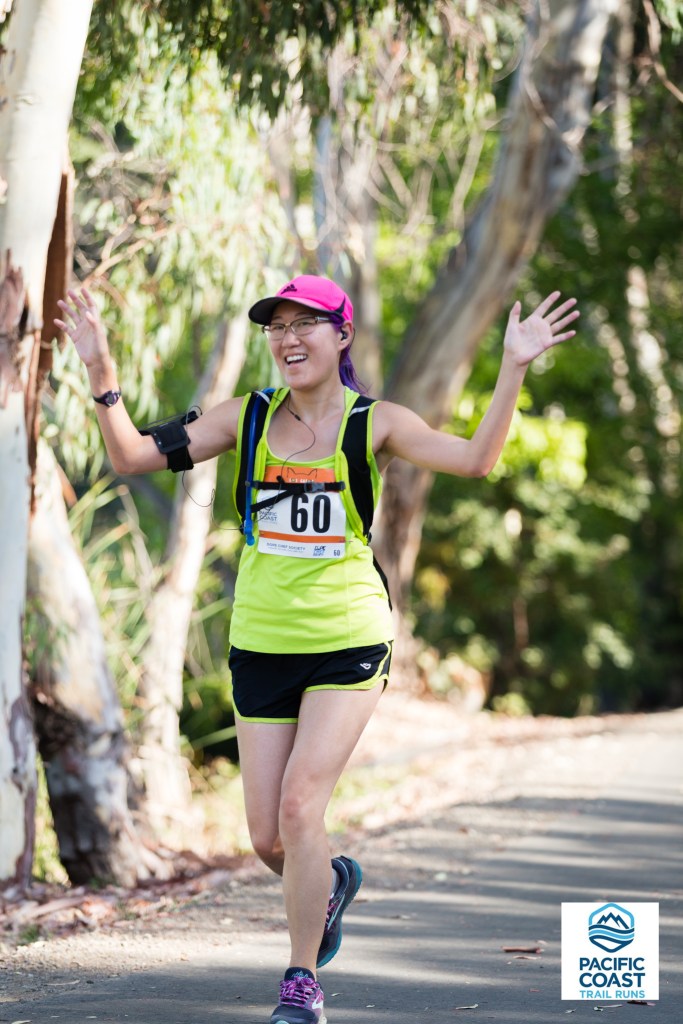
Running in a Pacific Coast Trail Run in 2018. I placed third in my division!
I announced to my husband and some close friends and confidants (whom have had to endure my emotional ups and downs this past year and I am intensely grateful to) before the Atlanta shooting that I was going to start running again starting Tuesday, March 16th. Tuesday at lunchtime I put on my trusty running shoes, my neon running gear (aside from helpfulness in not getting gear mixed up with other people’s the neon has always been my way of helping if I were to be attacked or killed and people needed to find me), my fancy new Bluetooth earbuds (I actually only ever wear one so I’m more aware of my surroundings as a lone female), and my running belt (which holds my phone, key and id). I hit the road and ran for the first time in months. I fell into a familiar cadence and rhythm, toe to heel, breathing just so, looking at the long distance. Was I weaker, slower, less conditioned, and less good than before? Absolutely. Did I feel bad about my backward slide? Absolutely. Did I run less mileage? Absolutely. I essentially ran only 3 miles in 30 minutes (unlike my typical longer distances and speeds). But, I felt so proud of myself for doing it. It felt like I was taking something back that I’d allowed myself to give up.
That late afternoon/early evening I started seeing posts coming though about the murder of 8 people, mostly Asian women, in my Asian community feeds. It was astounding. Everyone was upset, scared, and frustrated. Feelings of “it’s not just Covid or Trump, although both are major factors now…we’ve experienced racism for far longer and it needs to be talked about” were popping up everywhere. Women started coming forward about the experiences they’d had and do have that resonated with me. Asian women are the majority of victims in recent reported allegedly anti-Asian crimes. There was a mutual sentiment that someone having “a bad day” wasn’t a good enough reason to murder 8 people. Having a “sex addiction” and wanting to “remove temptation” was not just cause to target mostly Asian women.
The next day my Mom reached out to me to ask about me, to tell me how much she loves and cares and worries about me, and to ask me to please be as careful as I can. We both know there’s only so much I can do to stay safe… a lot of it really isn’t up to me. I can, however, be vigilant. My husband talked with me about please carrying mace and making sure to tell him my running routes in case the worst happens and he needs to search for me if I don’t come home.
I went running on Thursday.
This has gotten far longer and more self indulgent than I planned. I think my friend reaching out to me for comfort and to talk, an Asian woman to another, gave me the shove I needed to make some kind of public statement about the arguably anti-Asian racism and sexism that I’ve experienced and that are experienced by the greater community. Sorry for being wordy. It occurred to me that I felt better and cared about and heard, validated, supported when my mom reached out, when my husband talked with me, or even just seeing non-Asian friends post about the issues in the news on various social media outlets.
So, I wanted to write and share this post personally/self indulgently, but also in case it resonates with anyone else out there whom is or has been having a tough time. You’re not alone. I care about you. I hope you’re safe. I hope your family and friends are safe. Please be vigilant about protecting yourself both physically and emotionally. Please stand up for and protect those that need protecting. Sometimes people look like they have it together, but they don’t.
And, because I’m oversharing right now and I’m opinionated in general, Black Lives Matter. A lot of the things I and the AAPI community have experienced and are experiencing cannot be righted until Black Lives Matter. I believe this to be true. I hope you understand. If you support the AAPI community, but not the Black one, that’s not okay.
Thanks for reading if you’ve made it through all of this. Please take care of yourselves, everyone.
As mentioned in a previous blog post (“Korean Food: My Love Love Relationship”), I am a fan of Korean food. I like eating it, I like talking about it, and I like making it. I find that all of the above are especially meaningful to me as a way to explore and grow my connection to my Korean roots.
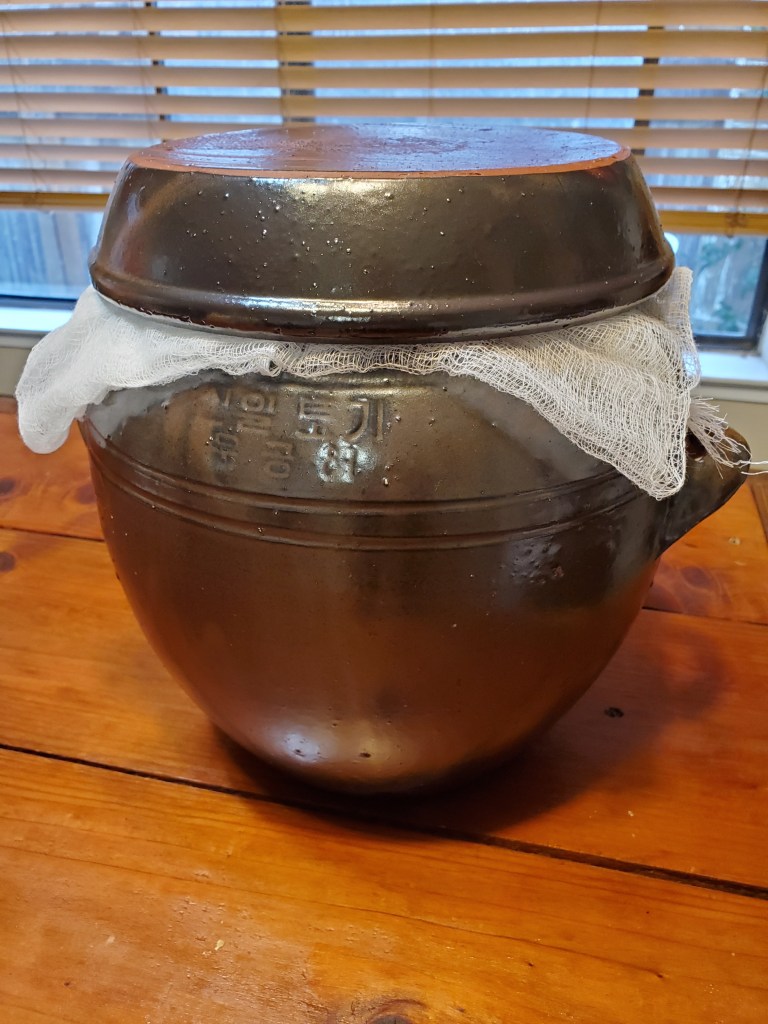
Spicy, fermented napa cabbage (commonly referred to as “kimchi” 김치) is arguably as Korean of a food as you can find. It is the national dish of both South and North Korea. It’s a staple of the Korean diet, coming in many varieties, and eaten numerous ways including by itself or as an essential ingredient in many soups and stews. Traditionally, kimchi was stored in large, earthenware, lidded pots (called “ong-gi” 옹기), often buried underground to prevent being frozen during cold months or to slow down the fermentation during warm months. Outside of the common napa cabbage version (actually “baechu-kimchi” 배추김치), there are hundreds of varieties of kimchi (the term itself referring to fermented vegetables). You could theoretically make kimchi out of just about any vegetable! The flavors and textures of each vary, and even the same variations of kimchi can look, smell, and taste differently depending on the maker, ingredients, age, and a number of other factors.
For this post, I’m going to specifically focus on sharing one of my experiences making baechu-kimchi. If you desire to make your own, there are numerous recipes online and in print. You could even find your own Korean friend (typically women were expected to make kimchi and many women over 50 continue this practice) and ask to join them in making kimchi. For ease, I’m going to include a few recommendations of recipes that I personally like for making napa cabbage kimchi (baechu-kimchi 배추김치) below. However, there are many recipes out there, so please explore on your own and find some that you like!
As a note, before you start making your own kimchi I highly suggest putting your hair up/back if you have long hair and wearing a pair of good rubber gloves!
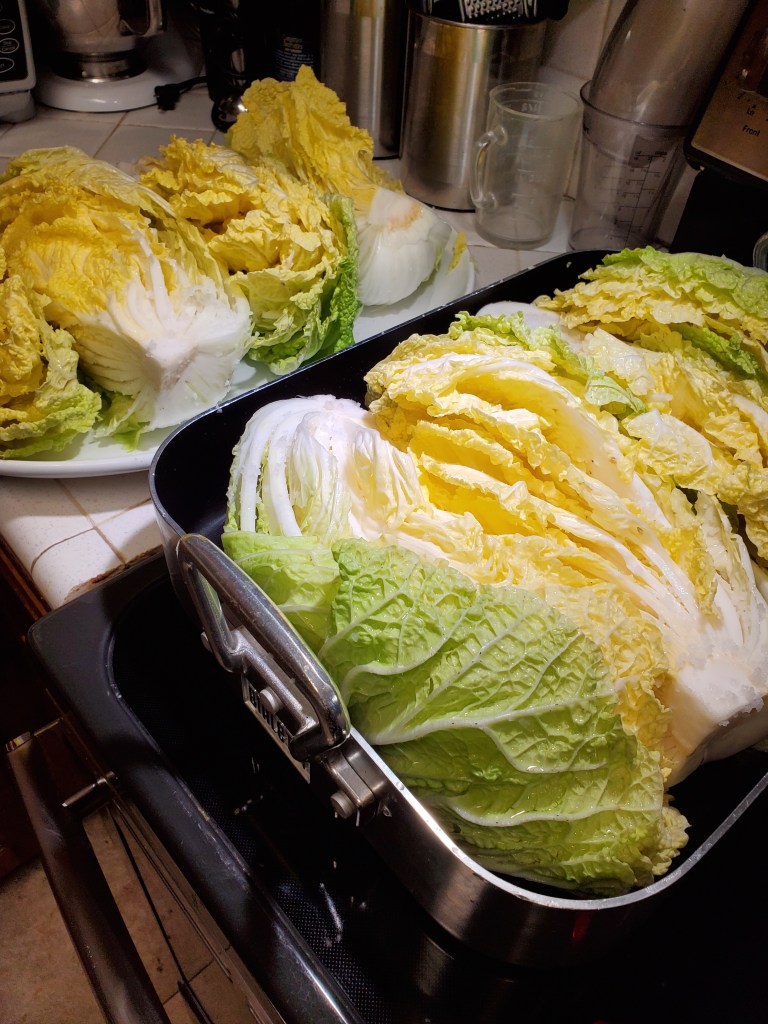
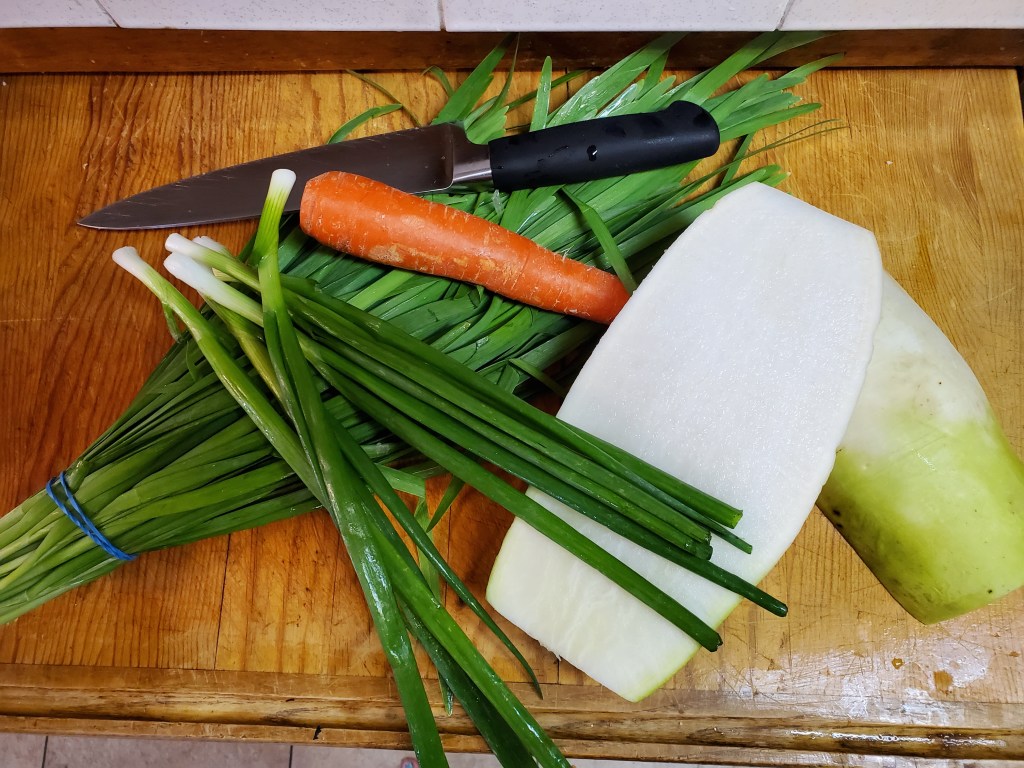
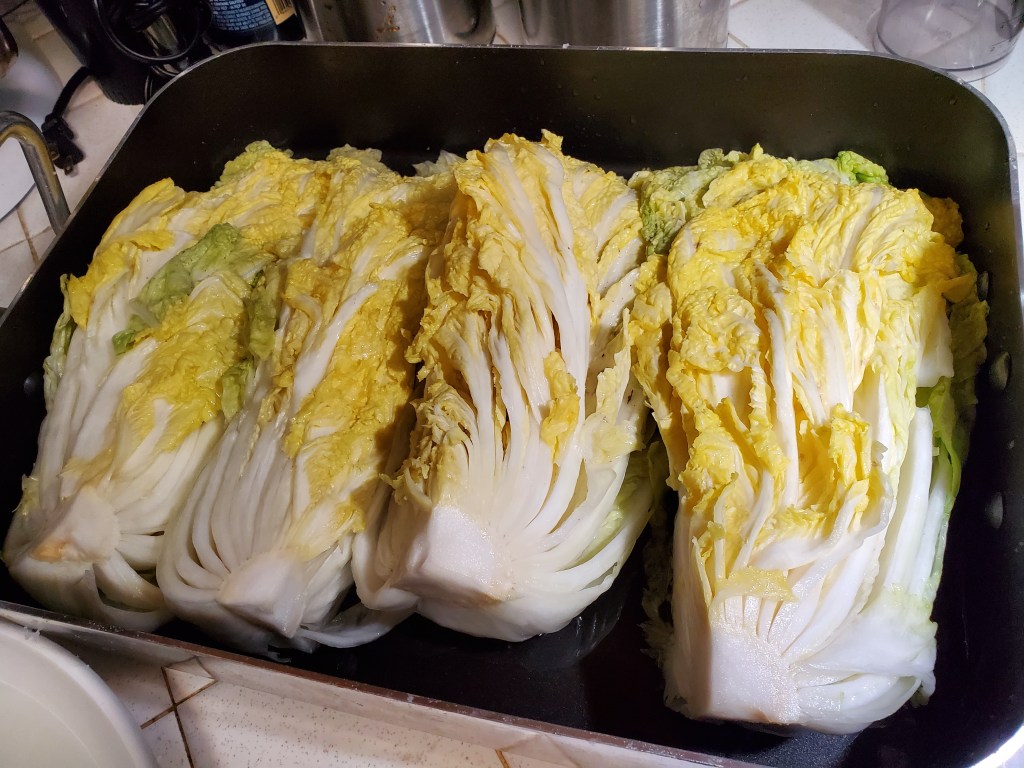
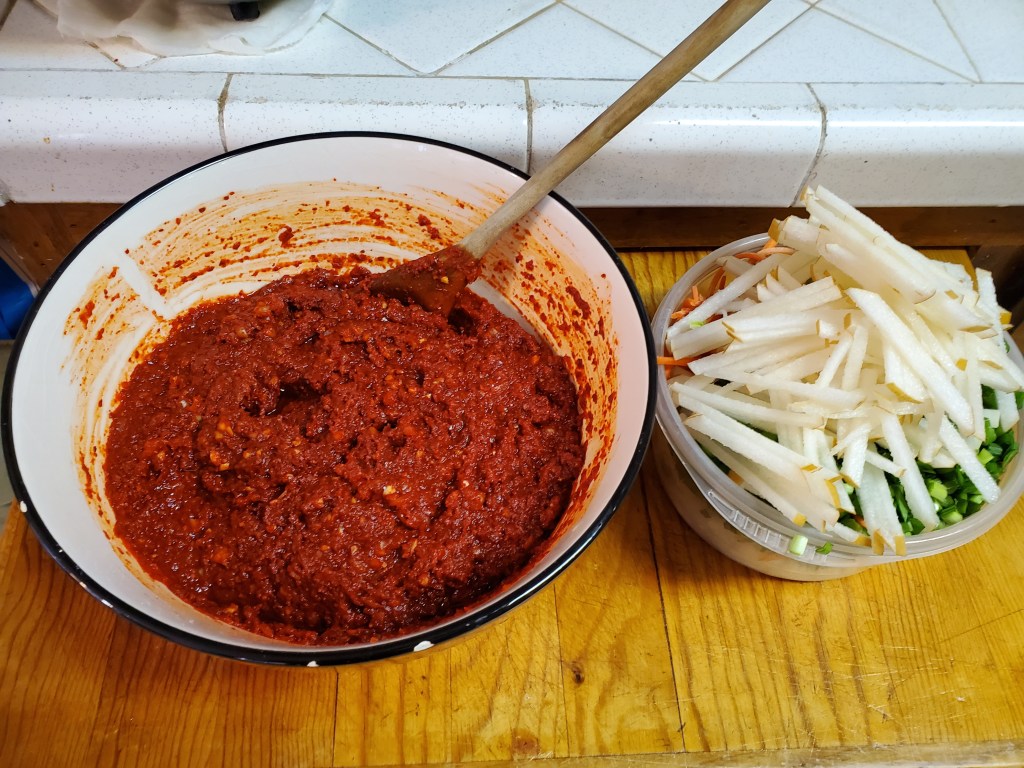
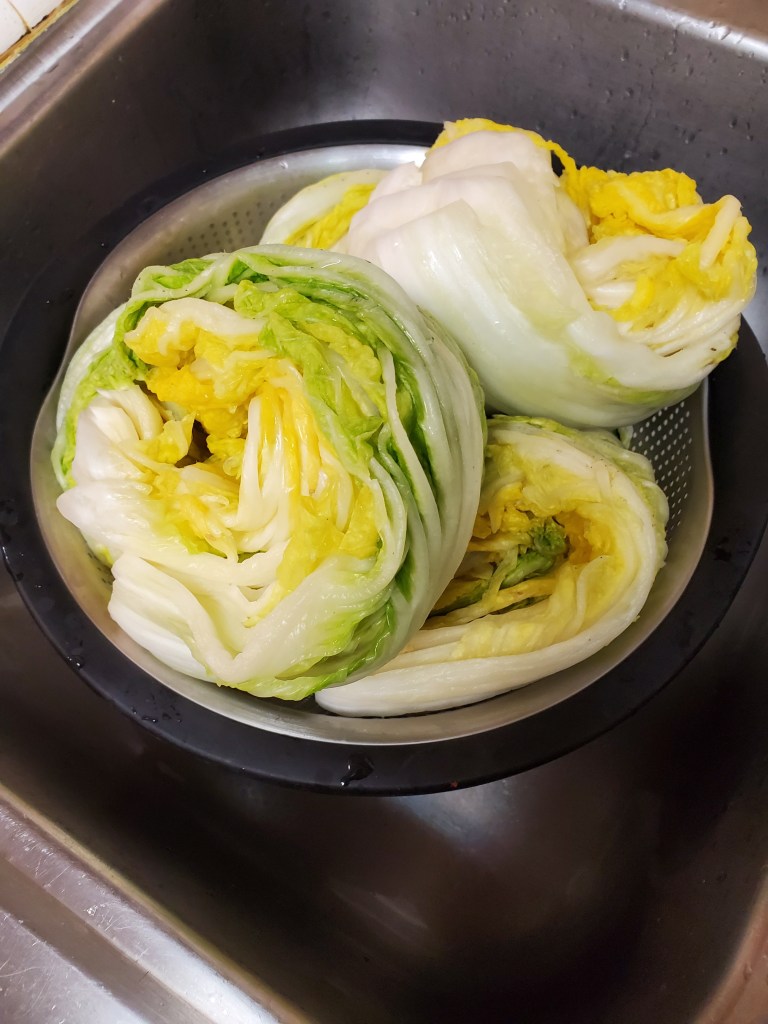
Early Stage: Halving and salting napa cabbage! Early Stage: Napa cabbage in the process of briningEarly Stage: Chopping and slicing additional fresh ingredients (pictured here: radish, green onion, scallion, carrot)Medium Stage: Brined napa cabbageMedium Stage: Additional vegetables and chili paste completeMedium Stage: Rinse, and drain your brined napa cabbageEnd Stage: Apply the extra ingredients to your napa cabbageEnd Stage: Stack your baechu-kimchi rolls in a container (pictured here: my onggi)End Stage: Cover and let the fermentation process begin
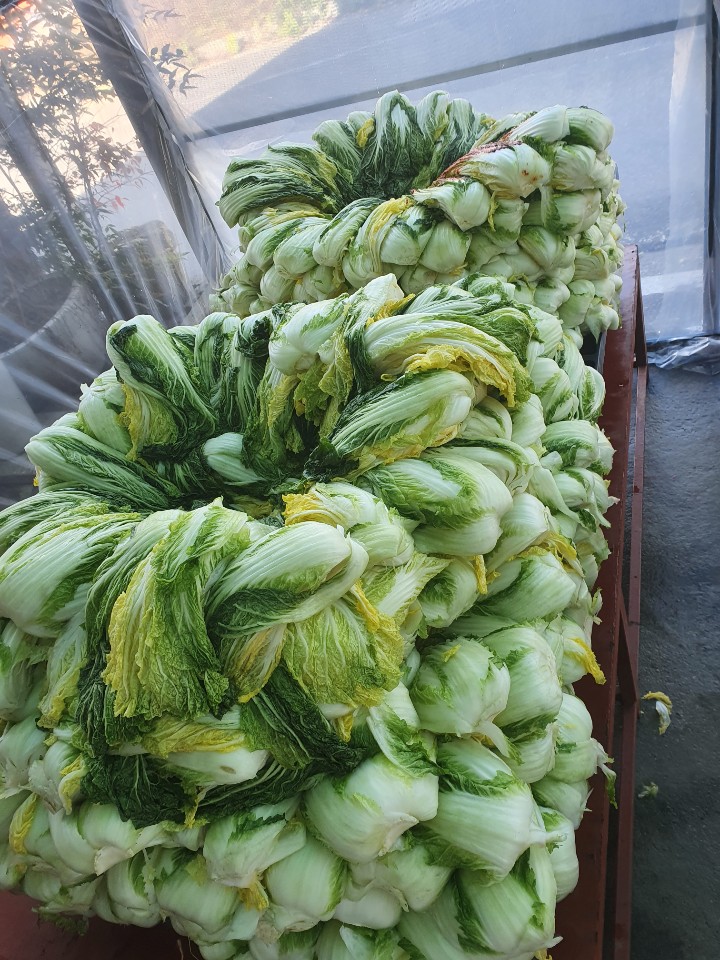
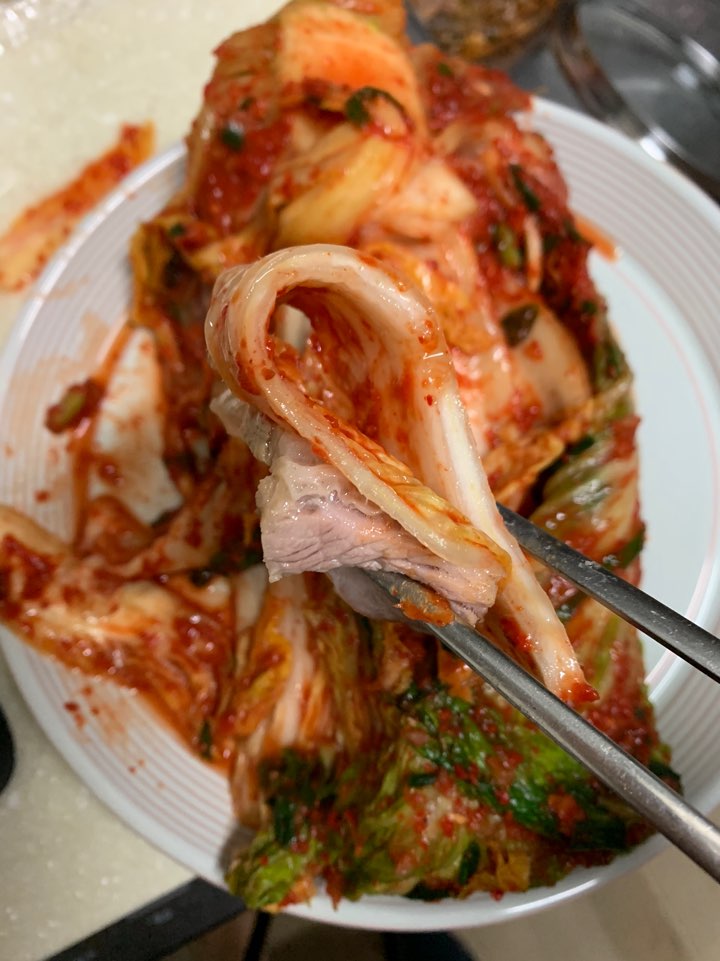
As a little added bonus to this post, there is a specific event in the winter called Gimjang (김장). Gimjang is the traditional process of preparing and storing kimchi for the winter. Gimjang yields large quantities of kimchi as it was meant to provide food throughout the winter. Often it is a highly labor-intensive task that communities participate in, families, extended relatives, neighbors. This past winter, my 엄마 (eom-ma meaning mom, in this case my birth/bio mom) sent me photos of my bio-family’s gimjang.
Napa cabbage for gimjangPaste/sauce for kimchiThey ate pork suyuk, kimchi, and drank makgeolli during gimjang! Delicious!
Anyway, I hope that you enjoyed this post about making traditional, napa cabbage kimchi! I love 배추 김치 and highly recommend giving it a try if you have never eaten it before. Additional points if you decide you’d like to try making it yourself! It’s an interesting process, yields delicious results, and, to me anyway, helps me to feel closer to Korea and being Korean.






 Learning to be 한국인
