I remember my childhood-young adulthood growing up as an east-Asian girl, in suburban (and sometimes rural) mid-Western America, with a white family, white friends, and a white community, surrounded by 1980’s-early 2000’s mainstream pop-culture, which was also heavily white. There’s nothing inherently wrong with any of those things. That said, being one of the very few people I knew or saw that looked anything like myself meant being alone when it came to beauty. Finding “how I fit” during a time when many young, cis-gender females were going through their own journeys of beauty and self expression was made more difficult by not having role models, products, tutorials, or similar sorts of references to rely on.
I recall watching the women in my family put on makeup, curl their hair, groom themselves, and wear clothing that never worked on me. The colors were all wrong, applying eye makeup the way they did looked terrible on my monolids, my hair did not hold a curl well and looked rather odd on me, and I found that I didn’t need the types of deodorants or hair removal supplies that many of them did. Skincare products were not made for me and were often far too harsh, furthering breakouts. Eyelash curlers didn’t even fit my eyes or the planes of my face!

Getting “make-overs” (whether by friends, family, or even paid beauticians) was often a bit bittersweet and awkward (although I never acted like I was bothered) as nobody knew what to do with me. Again, folks would try to do what worked for the norm (white girls and women) on me and it just didn’t work. Sometimes people would comment on how surprisingly long my eyelashes were because my “squinty eyes” hid that feature, how flat my face or nose was, how hairless I was, how thin and too straight my eyebrows were, and generally how unlike “most people” I looked.
Additionally, the number of times that people (including salespersons at stores) would focus on my body and make me feel unattractive or unwomanly was rather shocking in retrospect. I was called a “skinny mini”, a “doll”, a “child”, “flat”, and “not a real woman because I did not have curves” quite often. People still say these things to me as an adult, which is both surprising and unsurprising in a number of ways. Suffice it to say whether it was my face, my hair, or my body… I was not “normal” and people just didn’t know what to do with me!
Something that I’ve reflected on is the lack of mainstream prevalence of Asians in general, good or bad. In fact, if there was any representation at all it was often troublesome or flat out “bad” in how it impacted the way people saw Asians or how Asians, like myself, saw themselves. (As a note: I understand that these representations were reflections of the time and that many did not, and do not, think of these representations as negative given the historical context. I also understand that representation and racism are very complex issues, as are how people feel about said topics I am aware that some Asians, myself included, were just happy to see any representation at all regardless of theoretical good or bad because of how slim representation was in general).
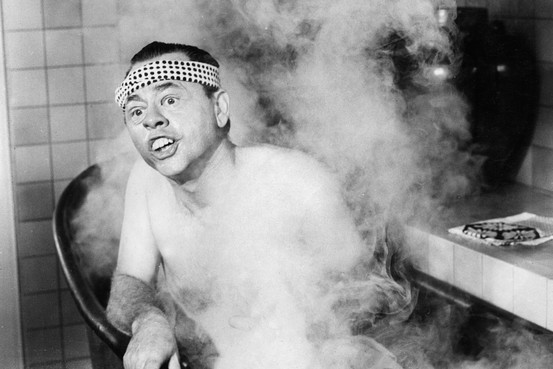
Sure, there was Mickey Rooney’s performance as Mr. Yunioshi in Breakfast at Tiffany’s in 1961, some fledgling televised Japanese anime starting in the late 1960s, Bruce Lee’s popularization of Kung Fu and arguably Chinese culture in the 1970s, David Bowie’s “China Girl” song released in 1983, the introduction of Thuy Trang (the “yellow ranger” in the Power Rangers TV show) in 1993, the appearance of Ally McBeal’s side-kick Ling Woo (played by Lucy Liu) in 1997, and the broadening of Japanese anime fan-culture in the 1990s-early 2000s. However, these examples tended to be dictated by, inherited by, represented by, or consumed by non-Asians. They also tended to exoticize, simplify or otherwise dis-empower Asians, especially Asian women.

A mixture of all of these things made it very hard for me to feel good about myself, my looks, my status as a female or woman. Add to the equation that I didn’t have anywhere to turn to find products or styles that were made to work with someone like me. Furthermore, that people both focused on and completely invalidated my Asian-ness… . Growing up as an Asian person, and specifically as a KAD without anyone like myself to turn to, made for a lot of self doubt and awkwardness when I approached anything that dealt with beauty, grooming, or fashion for a significant period of my life.
All of this said, I am aware that I was certainly not alone in growing up as an “other” in the USA during that time. The issues that other minorities (racial, gender, body type, able-ness or other) faced with representation, and subsequent beauty, grooming, and fashion challenges, were just as real and with extensive complexities, hardships, and impact that I cannot speak to other than to acknowledge that my experience does not over-shadow, compare to, or take-away from their experiences. Additionally, I had the good fortune of being raised by a family (immediate family especially) that celebrated or at least acknowledged and supported my Asian-ness or Korean-ness, even if they did not have the parallel experiences to draw from. I know many KADs did not have the privilege I did in that regard.
Something that occasionally comes up in KAD channels is the additional feelings of other-ness amongst KADs that mixed-race and/or black KADs feel when talking about the experiences of their fully east-Asian/Korean peers. I think it’s something that we as KADs need to be more aware of. I hope to see our community work to make space for and amplify the voices of KADs with a mixed-race or black background. However, as this is my blog and I can only share the experience that I’ve personally had, I cannot speak to that particular cultural journey. If there is someone who reads this blog that can speak to that experience, I’d be more than happy to do a collab or dedicate a blog post specifically for you to share your thoughts.
So, this post ended up being a little serious. It’s also a tad long. I will be doing separate posts about Korean Beauty that address tangential topics from the globalization and popularization of Korean culture (K-pop, K-dramas, K-beauty, Hallyu 한류), what navigating Western and Korean beauty paradigms as a KAD is like, and even my own thoughts of fashion/beauty/grooming.
I hope that it was interesting perspective. My hope was to set a stage and share what my experiences were like. I also hope that this information helps to parameterize the future Korean Beauty posts that I’ll be making. I’d be curious if other KADs, or readers in general, have their own experiences to share navigating otherness while growing up in a Western (American or European) community.
As always, I love you. 사랑해요! ❤
 Learning to be 한국인