As mentioned in a previous blog post (“Korean Food: My Love Love Relationship”), I am a fan of Korean food. I like eating it, I like talking about it, and I like making it. I find that all of the above are especially meaningful to me as a way to explore and grow my connection to my Korean roots.
Spicy, fermented napa cabbage (commonly referred to as “kimchi” 김치) is arguably as Korean of a food as you can find. It is the national dish of both South and North Korea. It’s a staple of the Korean diet, coming in many varieties, and eaten numerous ways including by itself or as an essential ingredient in many soups and stews. Traditionally, kimchi was stored in large, earthenware, lidded pots (called “ong-gi” 옹기), often buried underground to prevent being frozen during cold months or to slow down the fermentation during warm months. Outside of the common napa cabbage version (actually “baechu-kimchi” 배추김치), there are hundreds of varieties of kimchi (the term itself referring to fermented vegetables). You could theoretically make kimchi out of just about any vegetable! The flavors and textures of each vary, and even the same variations of kimchi can look, smell, and taste differently depending on the maker, ingredients, age, and a number of other factors.
For this post, I’m going to specifically focus on sharing one of my experiences making baechu-kimchi. If you desire to make your own, there are numerous recipes online and in print. You could even find your own Korean friend (typically women were expected to make kimchi and many women over 50 continue this practice) and ask to join them in making kimchi. For ease, I’m going to include a few recommendations of recipes that I personally like for making napa cabbage kimchi (baechu-kimchi 배추김치) below. However, there are many recipes out there, so please explore on your own and find some that you like!
List of Napa Cabbage Kimchi Recipes (in no particular order):
1) https://www.maangchi.com/recipe/tongbaechu-kimchi
2) https://www.koreanbapsang.com/baechu-kimchi-napa-cabbage-kimchi/
3) http://crazykoreancooking.com/recipe/kimchi-spicy-pickled-cabbage
As a note, before you start making your own kimchi I highly suggest putting your hair up/back if you have long hair and wearing a pair of good rubber gloves!

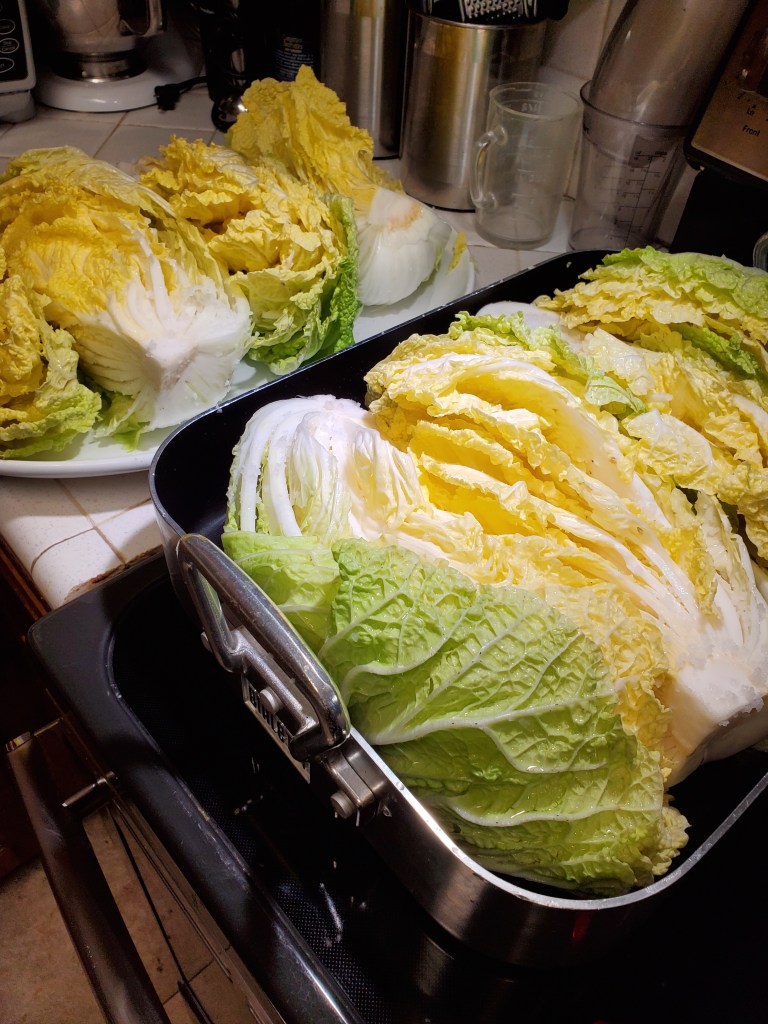
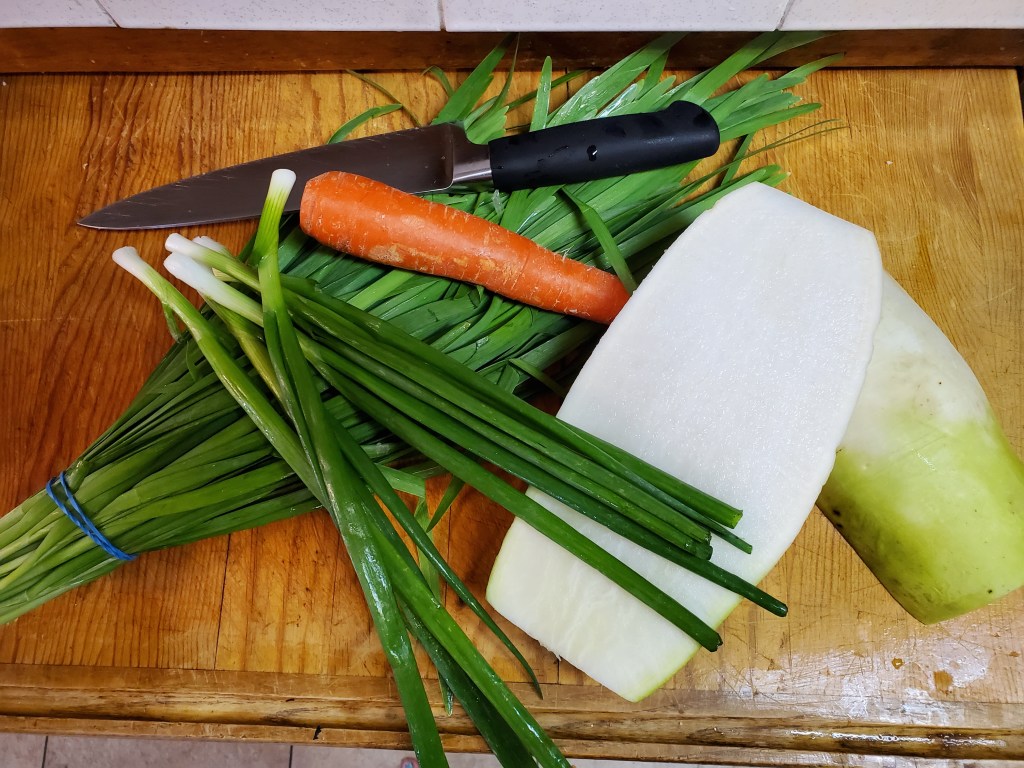
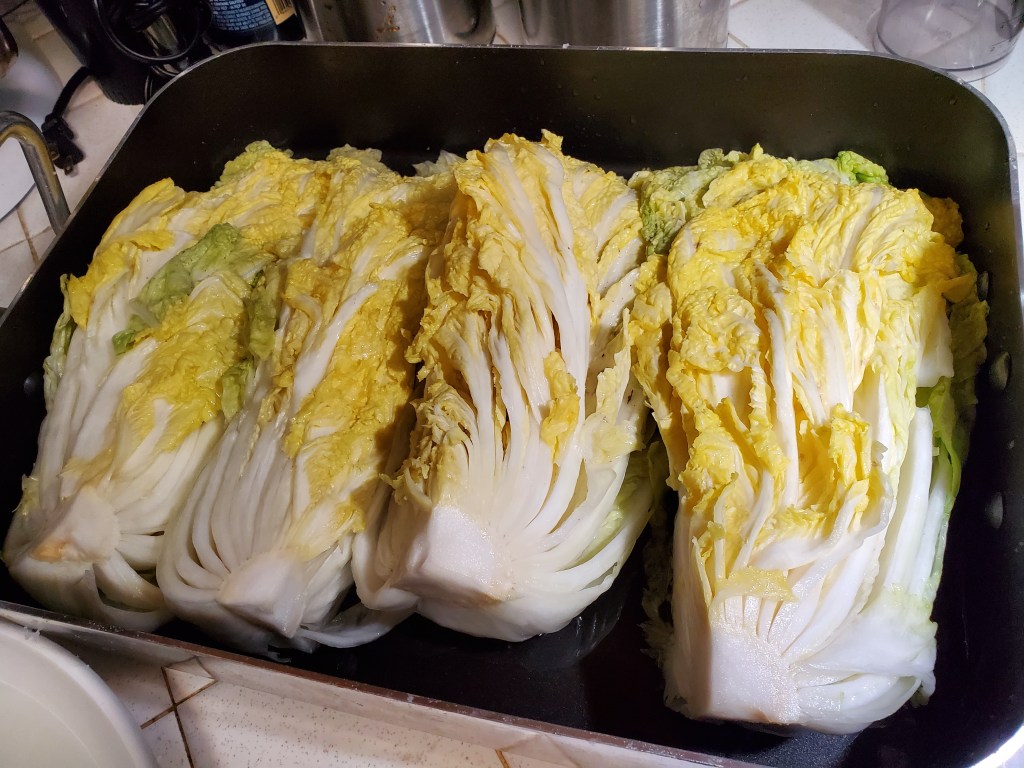
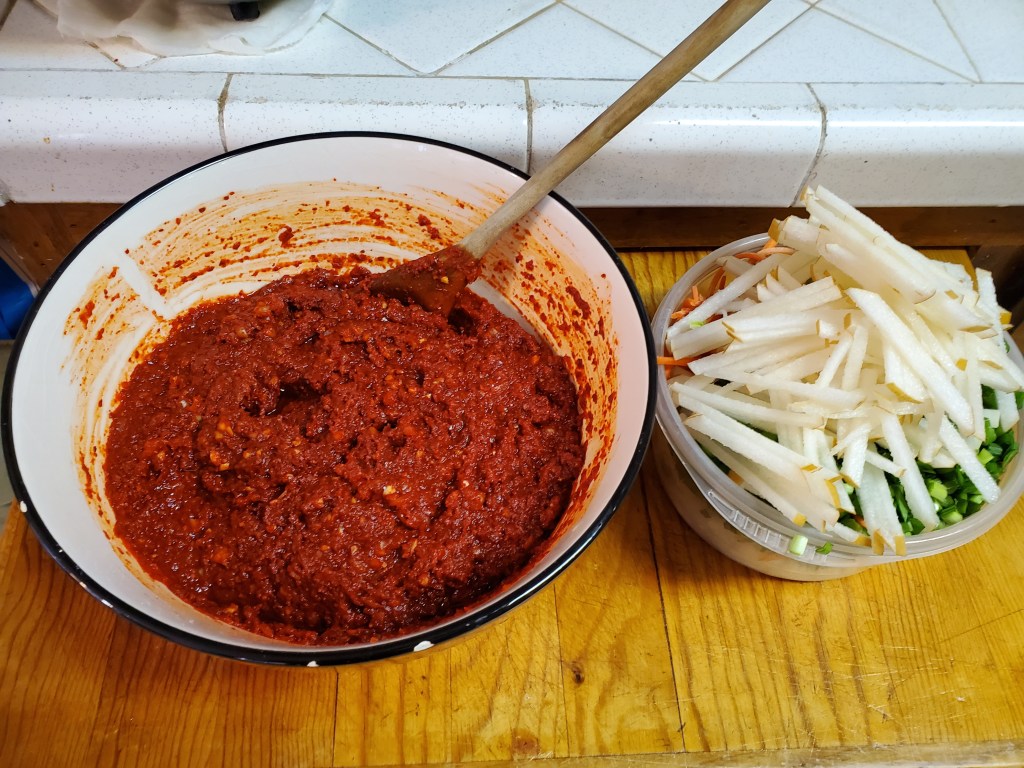
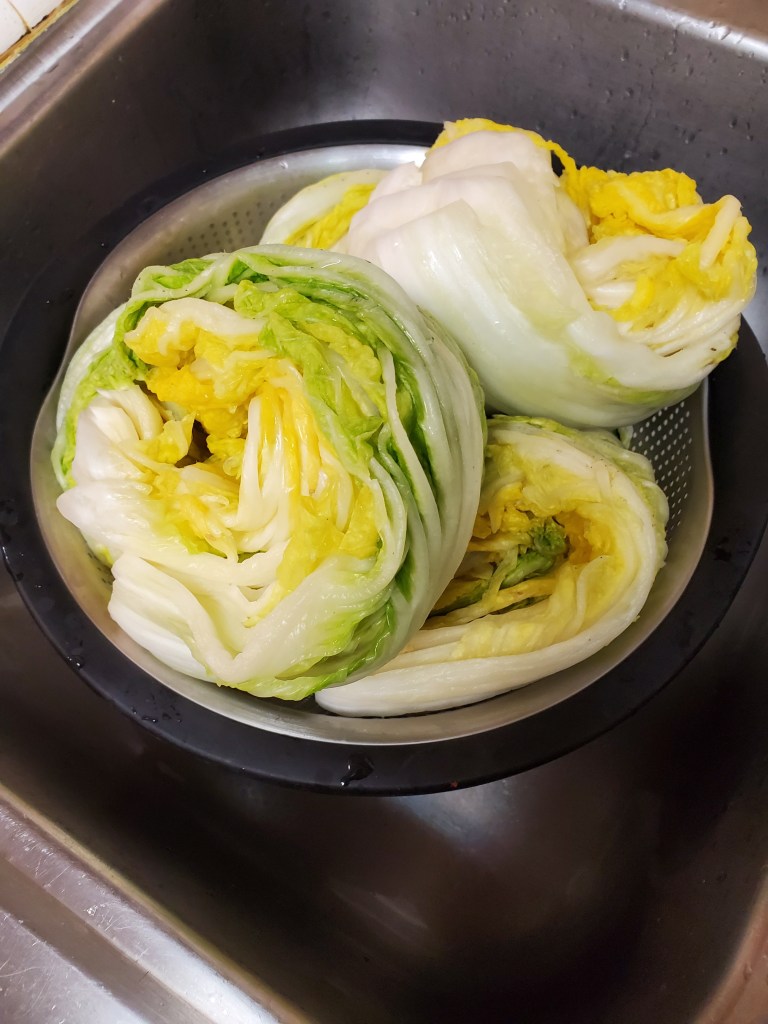


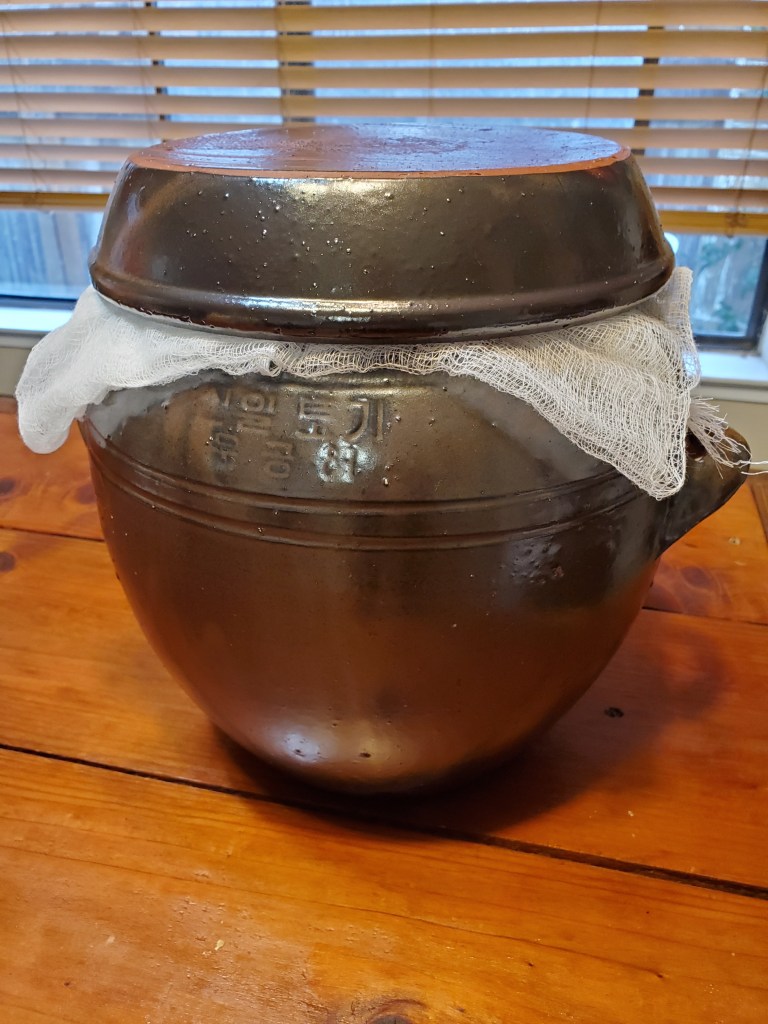
As a little added bonus to this post, there is a specific event in the winter called Gimjang (김장). Gimjang is the traditional process of preparing and storing kimchi for the winter. Gimjang yields large quantities of kimchi as it was meant to provide food throughout the winter. Often it is a highly labor-intensive task that communities participate in, families, extended relatives, neighbors. This past winter, my 엄마 (eom-ma meaning mom, in this case my birth/bio mom) sent me photos of my bio-family’s gimjang.
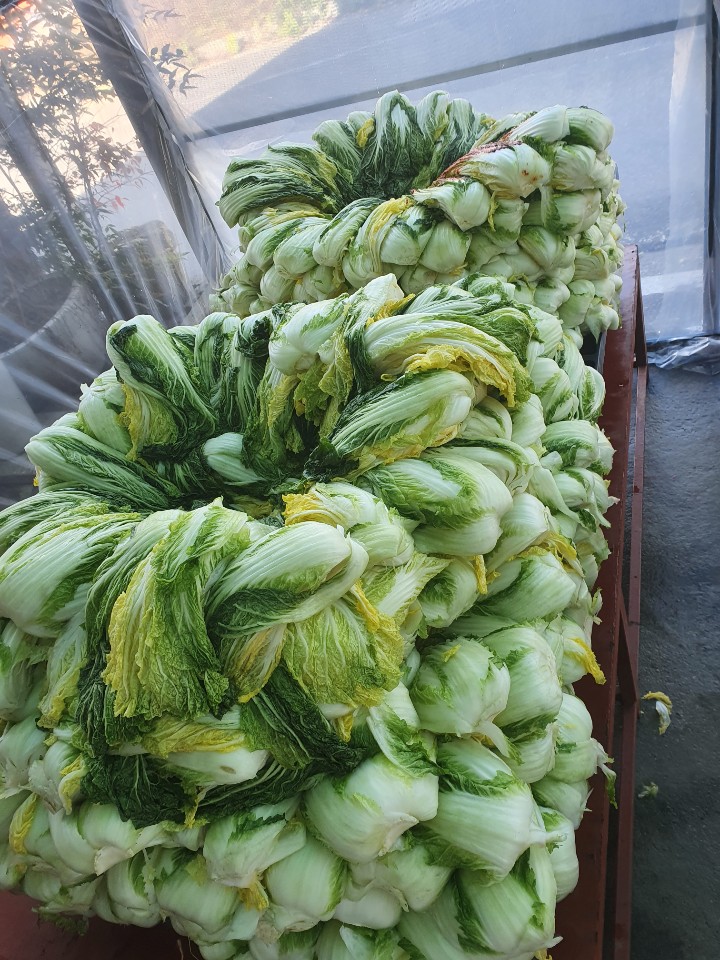

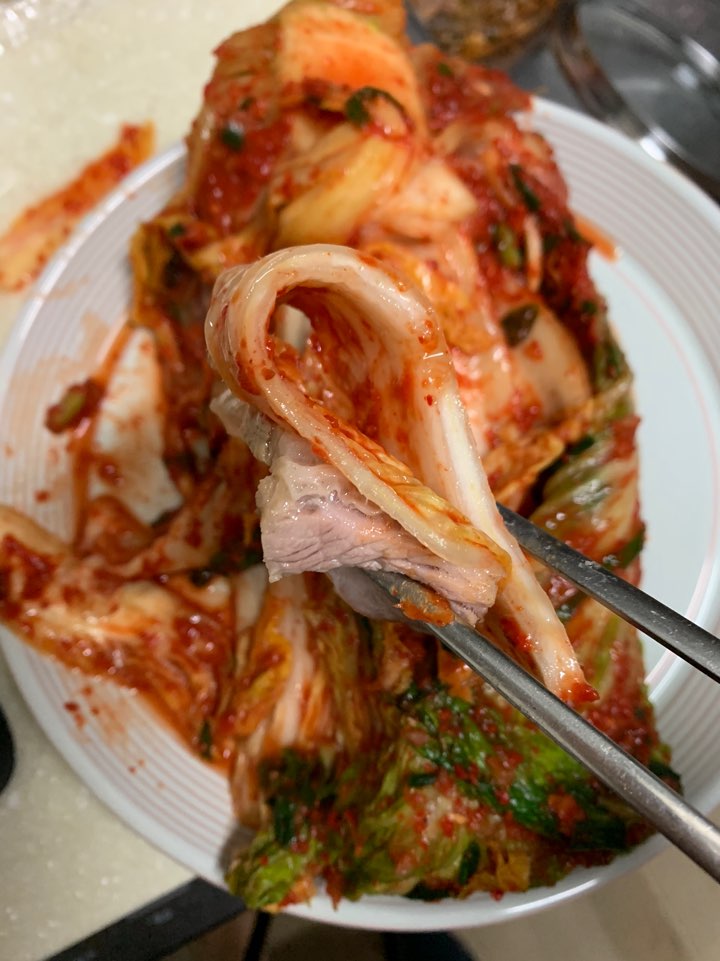
Anyway, I hope that you enjoyed this post about making traditional, napa cabbage kimchi! I love 배추 김치 and highly recommend giving it a try if you have never eaten it before. Additional points if you decide you’d like to try making it yourself! It’s an interesting process, yields delicious results, and, to me anyway, helps me to feel closer to Korea and being Korean.
사랑해요! (I love you)! ❤
 Learning to be 한국인