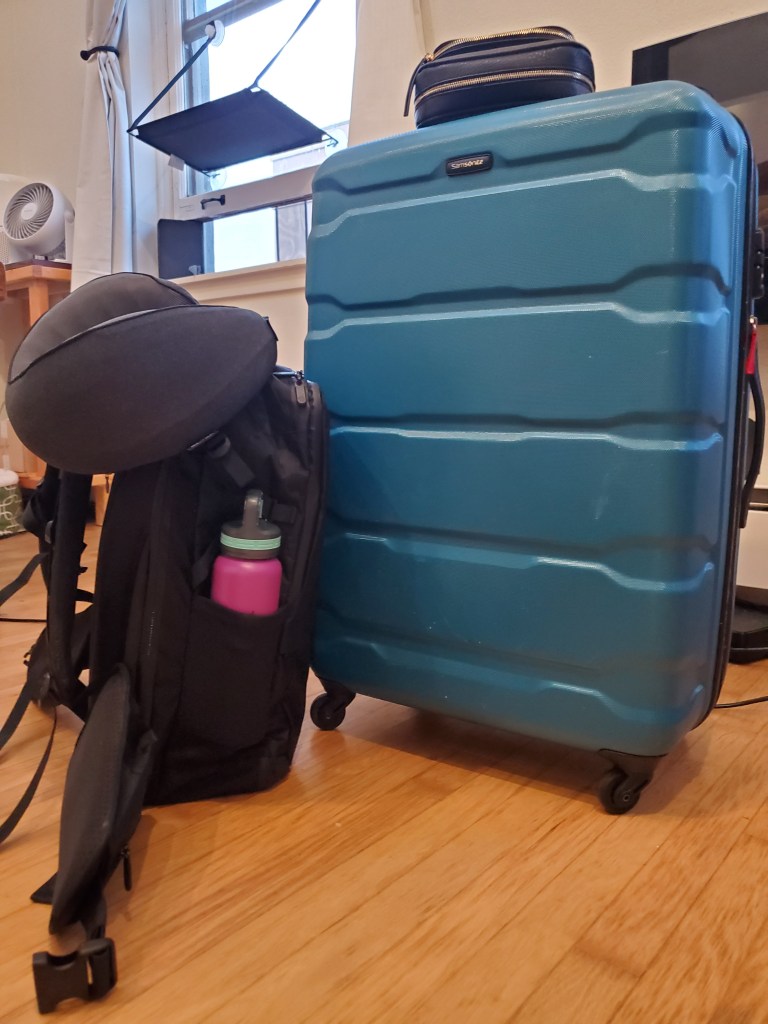
Photo 2022: Suitcase packed for travel from USA to South Korea
Even though Covid is *still a thing*, just like many other countries, South Korea has opened up its borders broadly to foreign visitors. While there are still more safety precautions being taken by the Korean government, public, and travel services (airplanes, accommodations), the logistics of coming to Korea as of 2022 are much simplified compared to the previous two years of Covid.
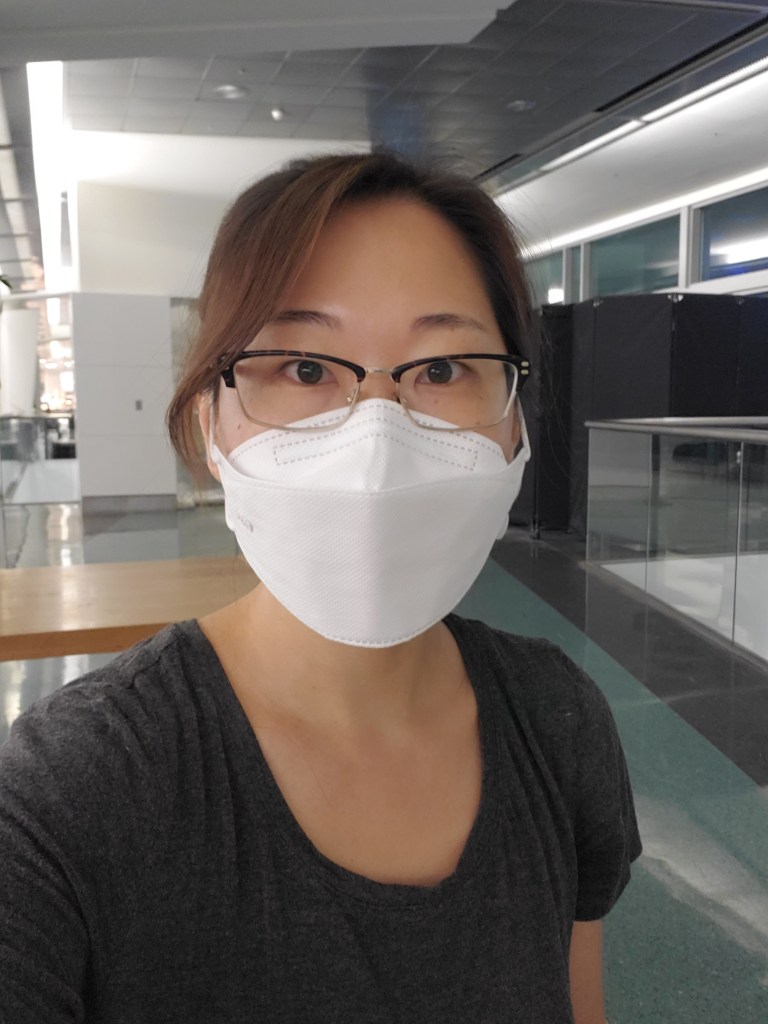
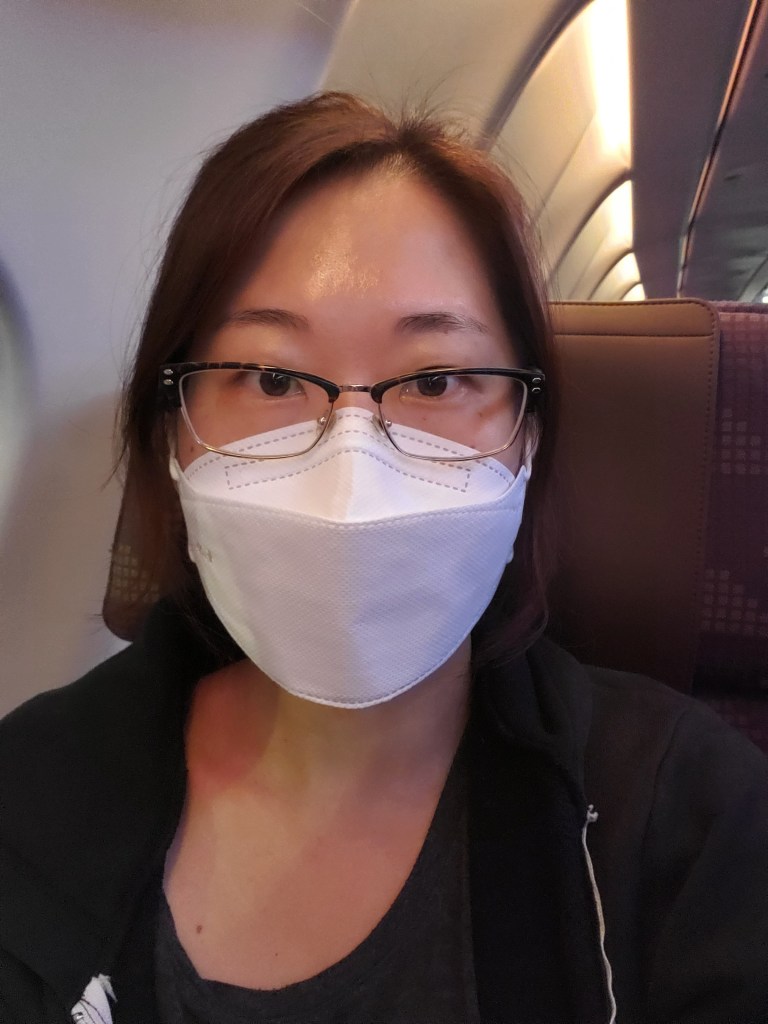
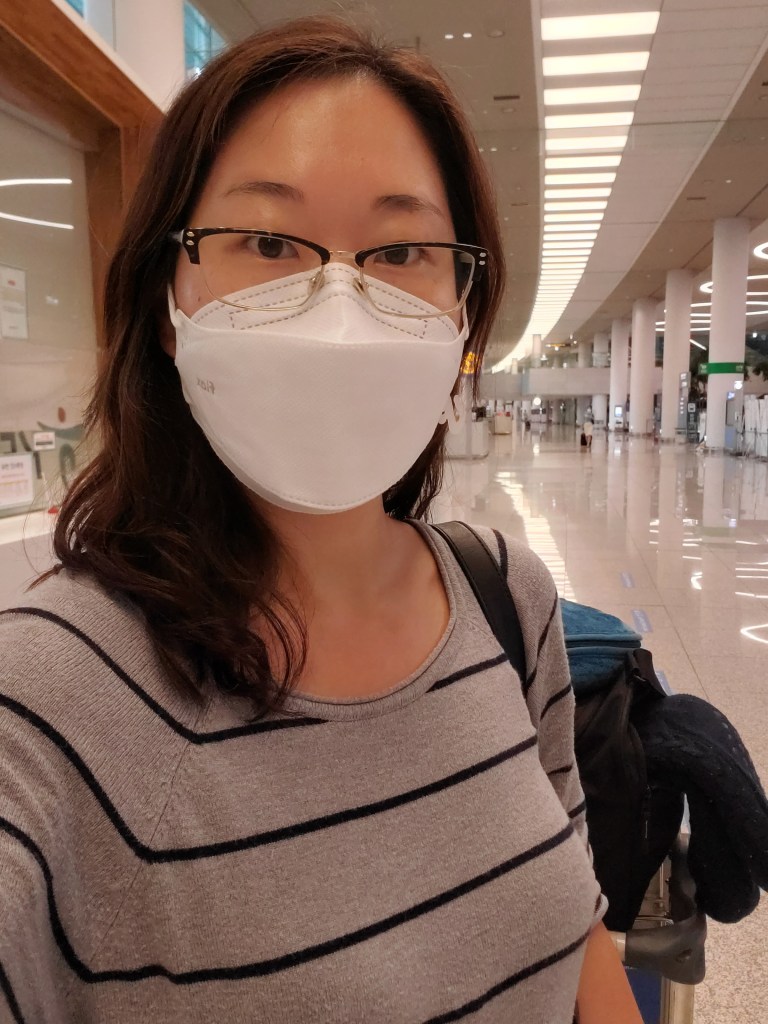
Photo 2022: Pre-flight selfie from airport in USA
I created an updated list, below, with paperwork that I feel is either necessary or helpful with a trip to Korea these days. That said, the Embassy of the Republic of Korea’s website also has some similar information.
List of Paperwork for a Trip to Korea 2022: 1. Plane ticket & boarding pass (I went with Korean Air again, although this one was serviced through Delta). 2. Valid passport 3. Visa – If under 90 days (and not employed in Korea) then get the K-ETA travel visa. If over 90 days, you have multiple options. I have my F4 Visa this time around. Note, if you come with your F4 Visa but DON’T have your Alien Registration Card (ARC), you’ll want to bring all of the paperwork required to get your ARC card with you. 4. **UPDATED: As of September 3, 2022, travelers from the USA to South Korea will no longer need to show a negative Covid test before departing for South Korea. You can read more about it here. Note, you will still need to take a Covid test within 1 day of your arrival in Korea. And, if you test positive you will need to do quarantine. 5. Q-Code – This is new and is essentially a one-stop-shop for Korea to track foreign entrants’ Covid information and status. You can register as soon as you have your negative PCR test results before coming to Korea. I recommend registering as soon as you can, rather than waiting until you arrive in Korea (and subsequently have to figure out how to do it while waiting in a long line at the airport). 6. Optional; Cell phone plan (I went with a Sim card). If possible, I recommend finding out your Korean cell phone number before you arrive in Korea so that you can refer to it when filling out documentation or paperwork. 7. Optional; Traveler’s insurance (I went with SafetyWing this time, due to a stay greater than 90 days) 8. Optional; Lodging reservation (reservation information; location, dates, contact) 9.Optional; Korean contact information (names, addresses, phone numbers) 10. Optional; American contact information (names, addresses, phone numbers) 11. Optional; Transportation (T-money) 12. Optional; Currency (Credit card, debit, Korean won) 13. Optional; International driver’s license
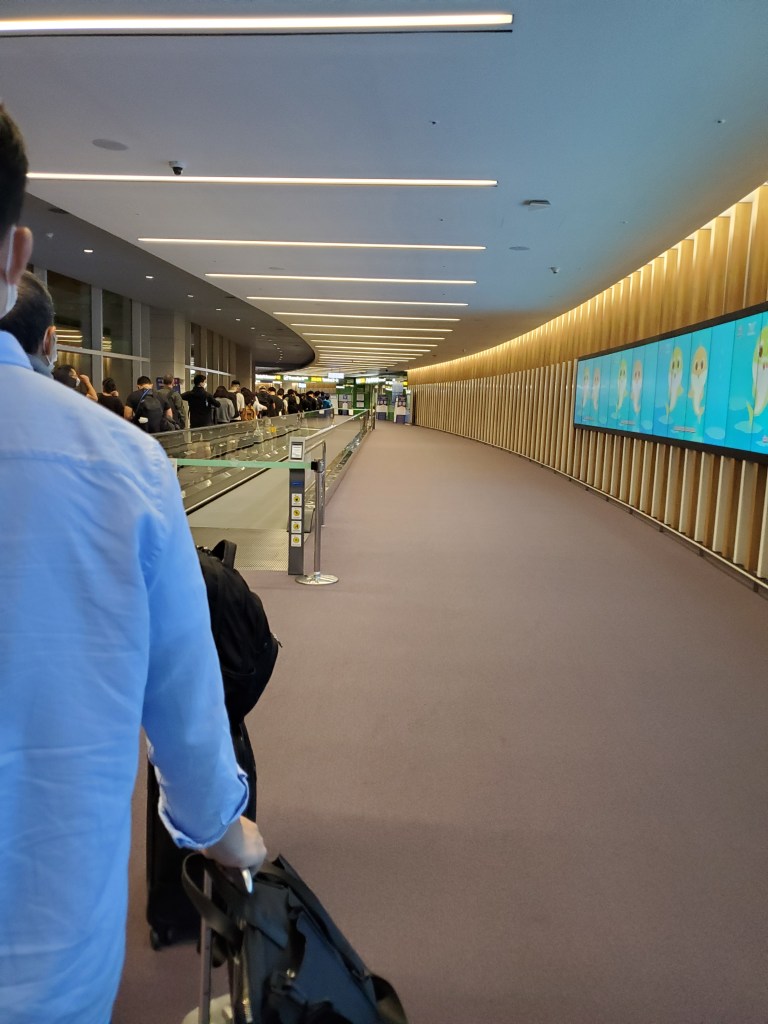
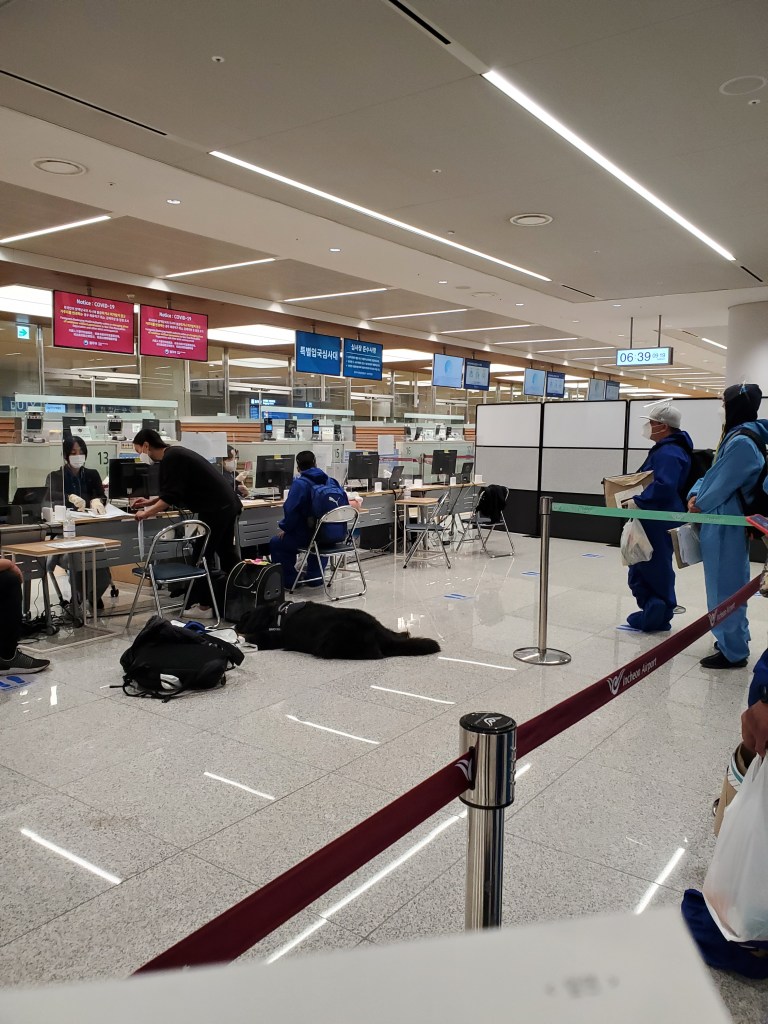
Image: Screenshot of updated, 2022 travel information for American travelers to KoreaPhoto 2022: Waiting in line to get through quarantine/Covid checkpoint at Incheon. I had a much easier time getting to the front of the line because I already had my Q-Code! I recommend completing this step before you depart for Korea.
I hope that this updated information is helpful for those of you planning a trip to Korea!!
읽어주셔서 감사합니다. 사랑해요! (Thanks for reading, I love you!)
After arriving in Seoul on September 19, 2021 I spent the day meeting my birth mother, sister, two aunts, and my uncle after when I stayed with my birth mom and sister at their home Nowon-Gu. ( Nowon-Gu 노원구 is a residential district in northeastern Seoul).
The next day, September 20, 2021, was the official start to the public holiday for Chuseok 추석, which is one of the largest holidays celebrated in Korea. Chuseok is a mid-autumn harvest festival with a major focus around family and ancestors. For this holiday, Koreans often gather with their families, perform Charye 차례 (ancestral memorial service), Seongmyo 성묘 (visit to ancestral graves), and eat a large feast (which is prepared as an offering to the ancestors).
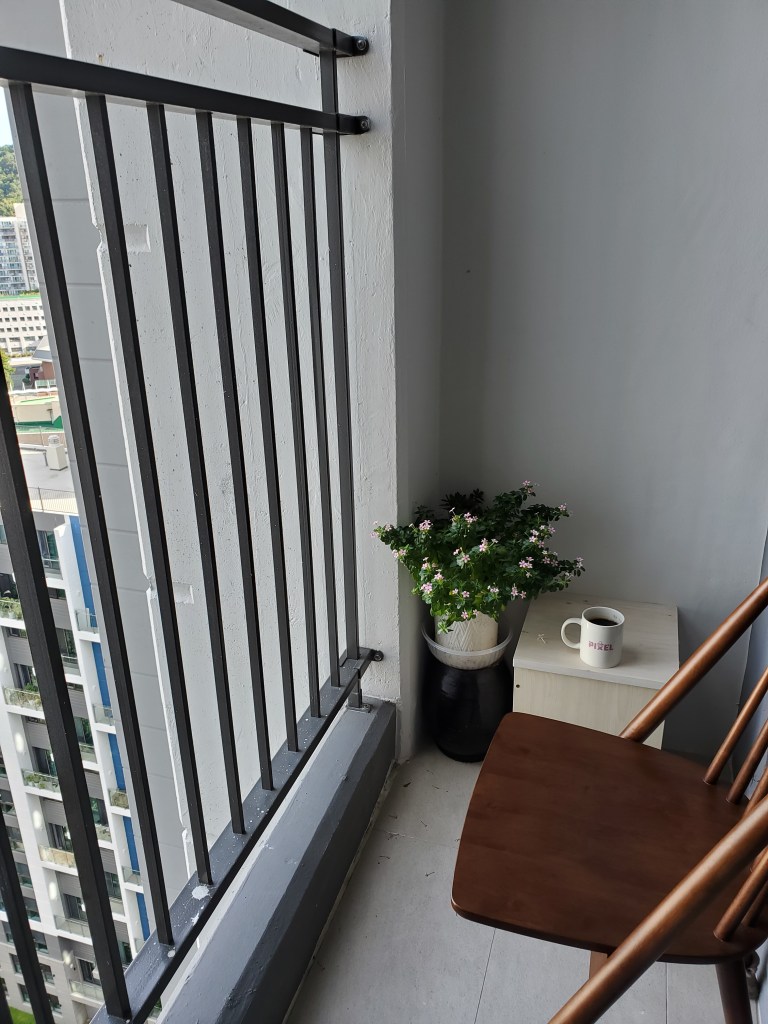
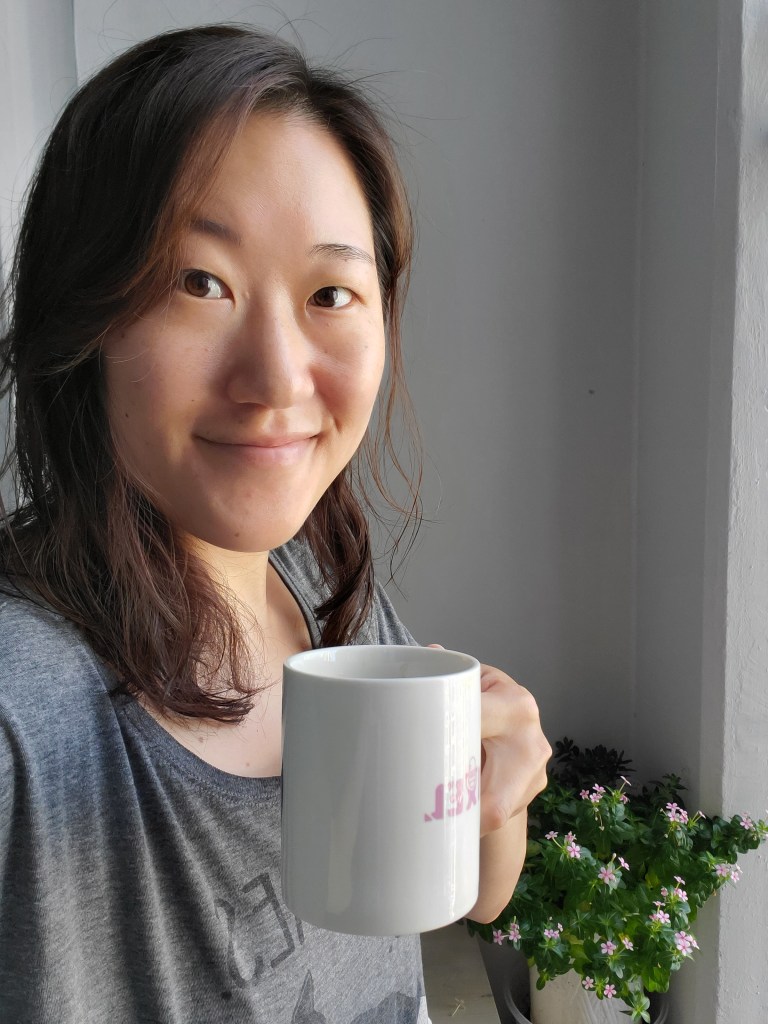
I started my day with a nice, quiet cup of coffee that my birth mother (whom I will just refer to as “eomma” 엄마) prepared for me. She noticed that I went out on the deck and was standing and wanted me to be comfortable. So she gathered a little pot of flowers and a chair so I could enjoy the coffee outside. Super sweet of her. 🙂
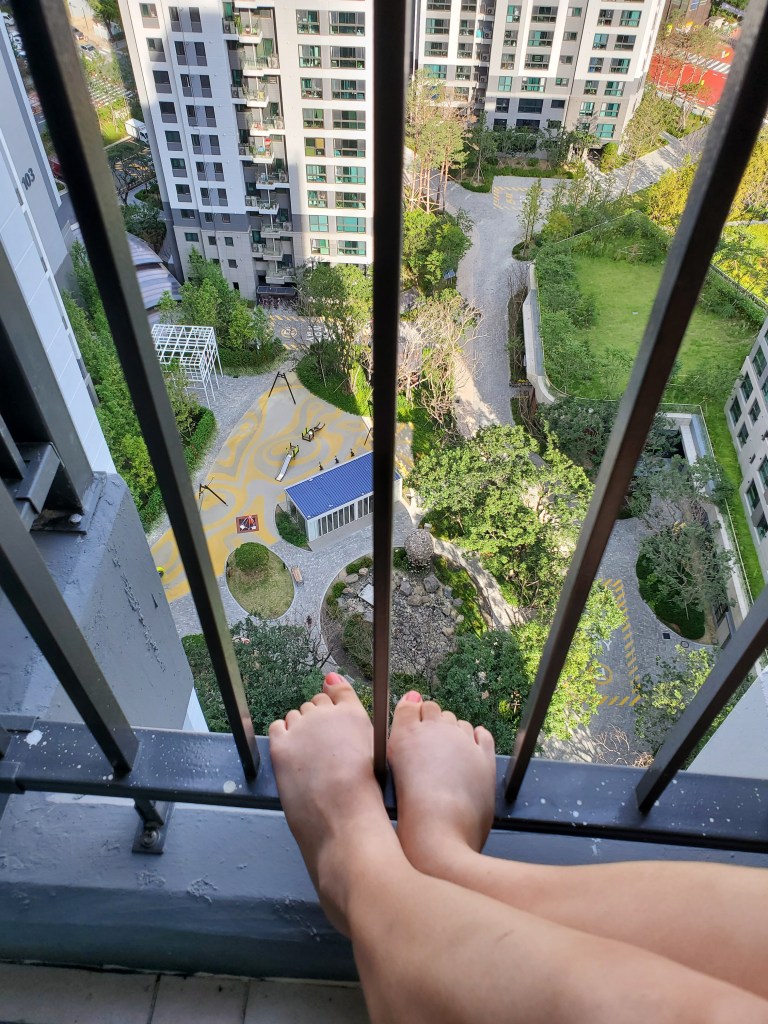
Room in eomma’s homeEomma’s deckMorning cup of coffeeView of the shared park area from eomma’s home
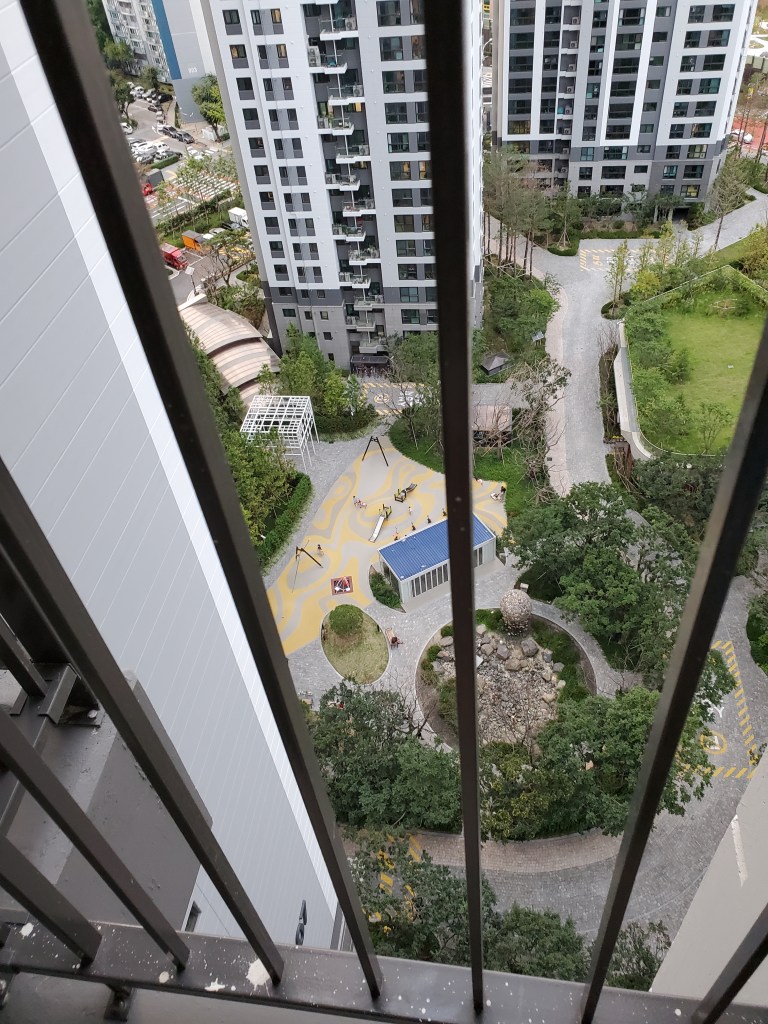
View of Nowon-Gu from eomma’s deck
Because I’d gotten quarantine exemption, and had taken another Covid test in Nowon-Gu the day I arrived which showed I was negative for Covid, I was free to travel around.
Eomma wanted to take a walk with just me and show me around. It is worth noting, she didn’t understand or communicate in English (the same for many older people in Korea). So, we mostly held hands or arms, and if she spoke I would do my best to understand, and would ask questions/respond to her using Papago as a quick translator if I was unable to adequately express myself in Korean.
We walked around the neighborhood and she pointed out all of the places that she usually goes, including the walk she makes 6 days a week to travel to and from the salon that she runs in another part of Seoul.
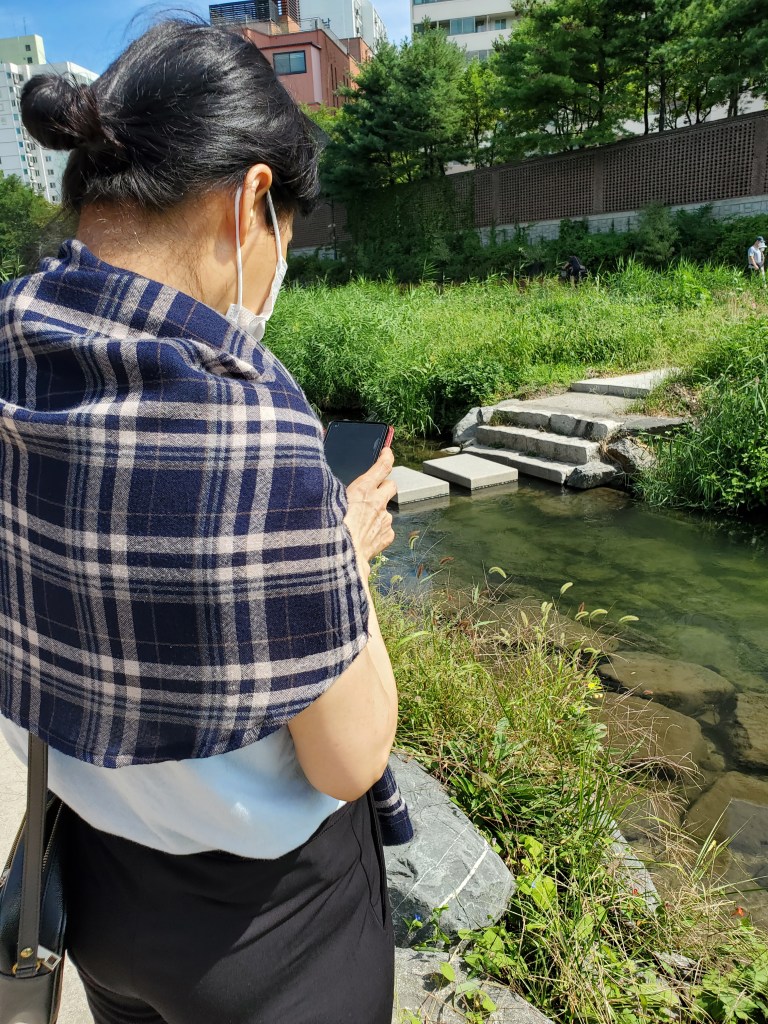
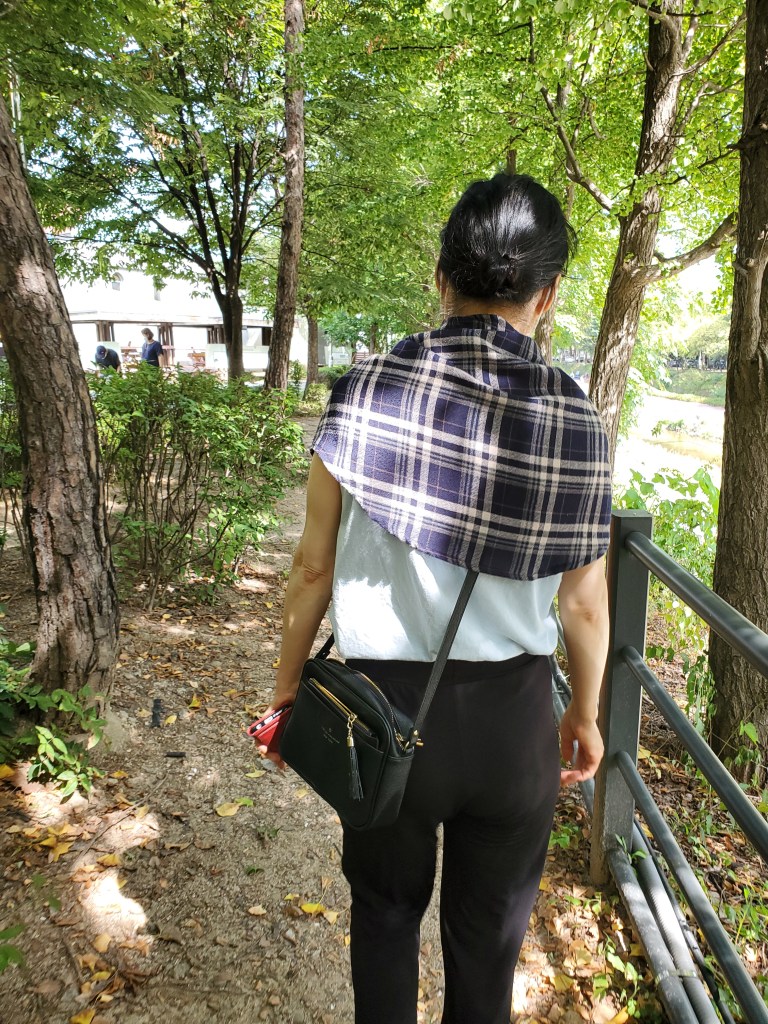
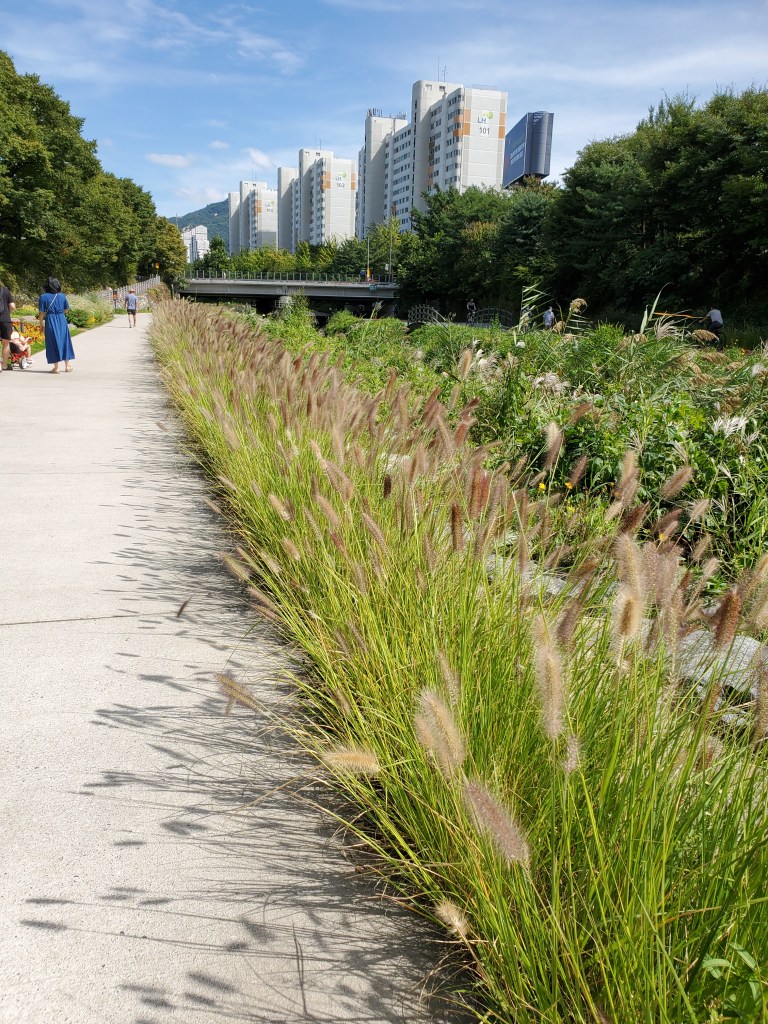
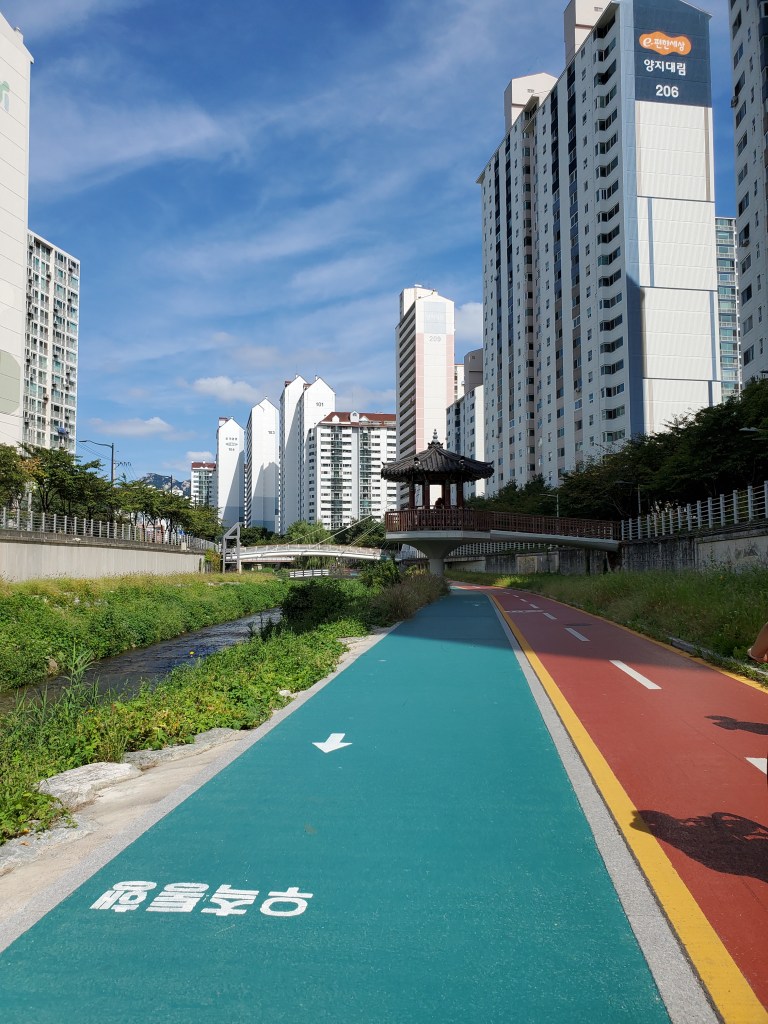
We walked quite a bit, ending up along a popular walking path that runs along a river. We took breaks along the way and sat together on benches, just quietly communicating as best we could. I felt that she just wanted to spend time with me, be near me and have me be near her, getting to know about each other despite our giant communication gap. She pointed out the names of a lot of the plants and flowers as we walked (something I learned she had a real knack for. In fact, this characteristic inspired the tattoo I got in Seoul, which I’ll talk about in a future blog post). 🙂
While impromptu and “simple”, this time spent together ended up being one of the most lasting and intimate memories I have of my eomma from my time in Korea.
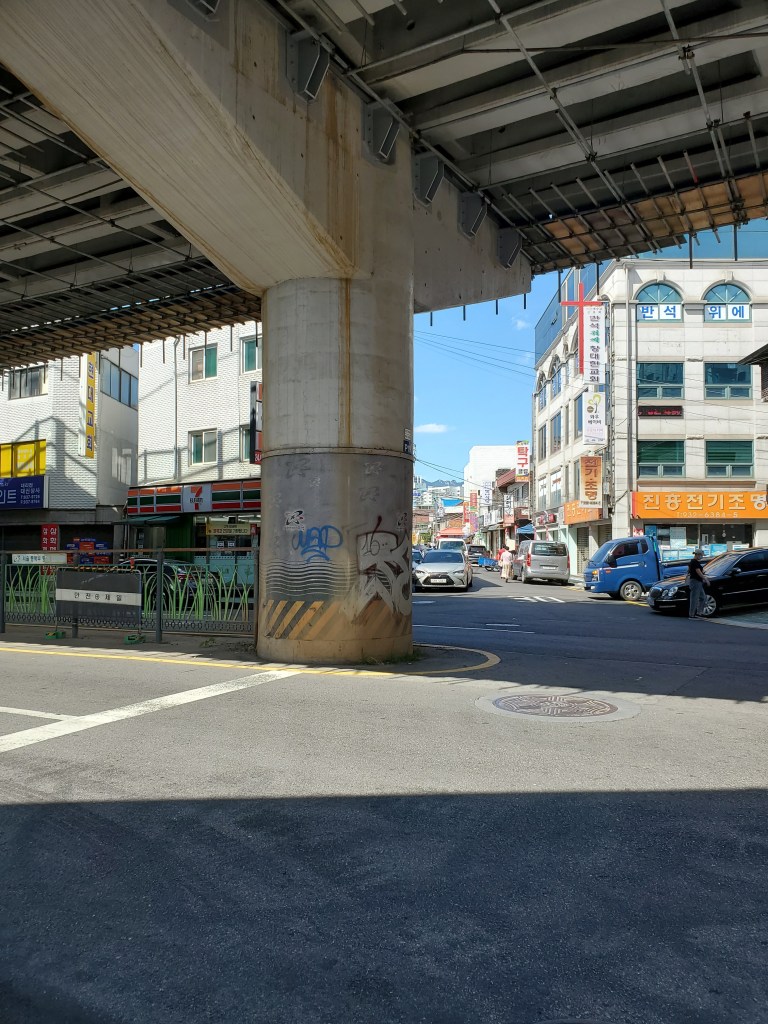
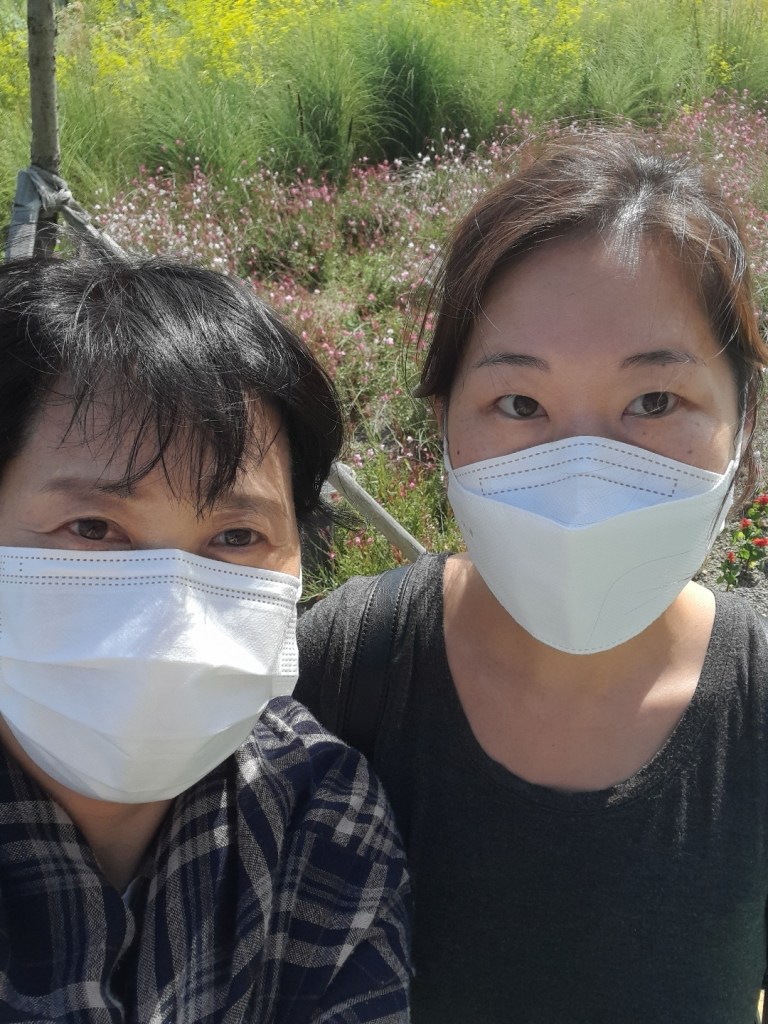
Walking under a major underpass in Nowon-GuEomma and me
After our walk, we returned to eomma’s home, showered (something that I found Koreans seem to do a LOT, my birth family seemed to bathe 2-3 times a day), and prepared to be picked up by my uncle for Chuseok.
Something that I hadn’t been aware of is that my uncle would show up with my grandmother, fifth aunt (who met me at the airport), and fifth aunt’s daughter (my younger cousin). With my uncle, eomma, sister, and I included, plus everyone’s overnight bags, the vehicle was very cozy! That said, I really loved feeling what a “family” trip to visit an uncle for a holiday felt like.
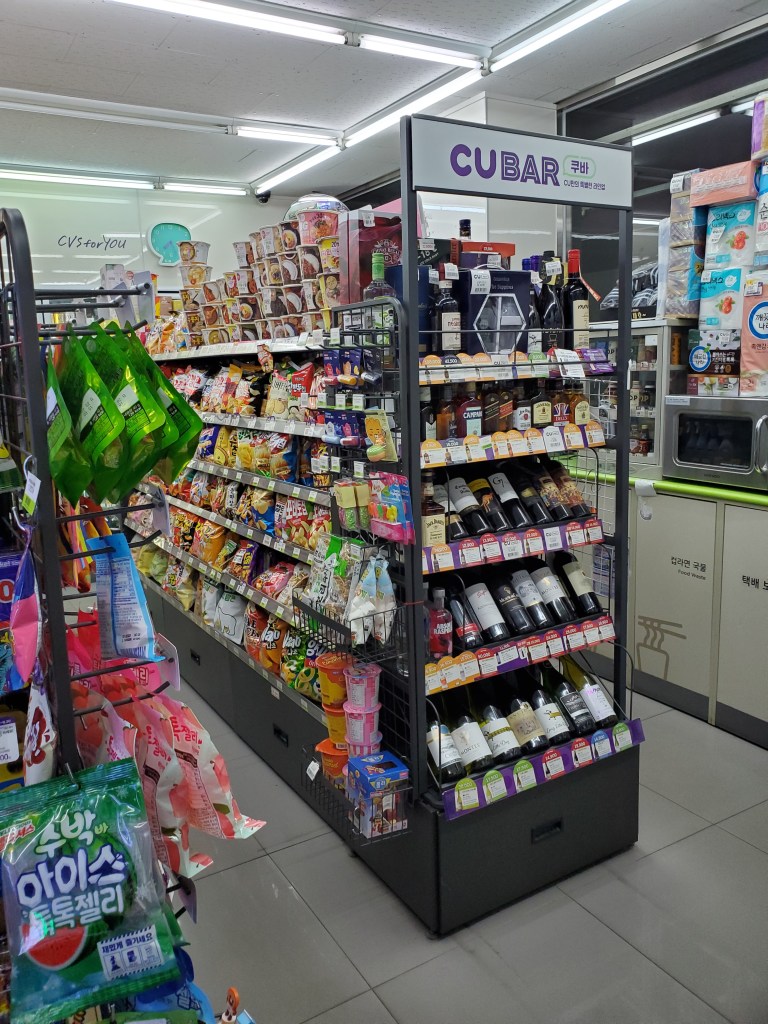
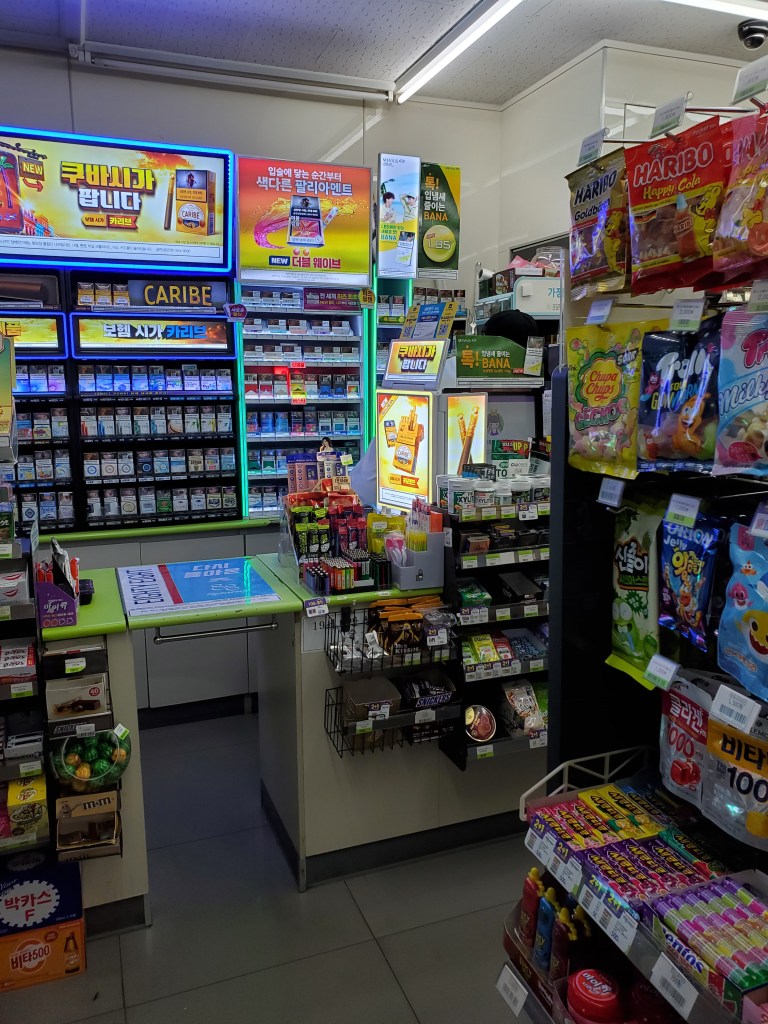
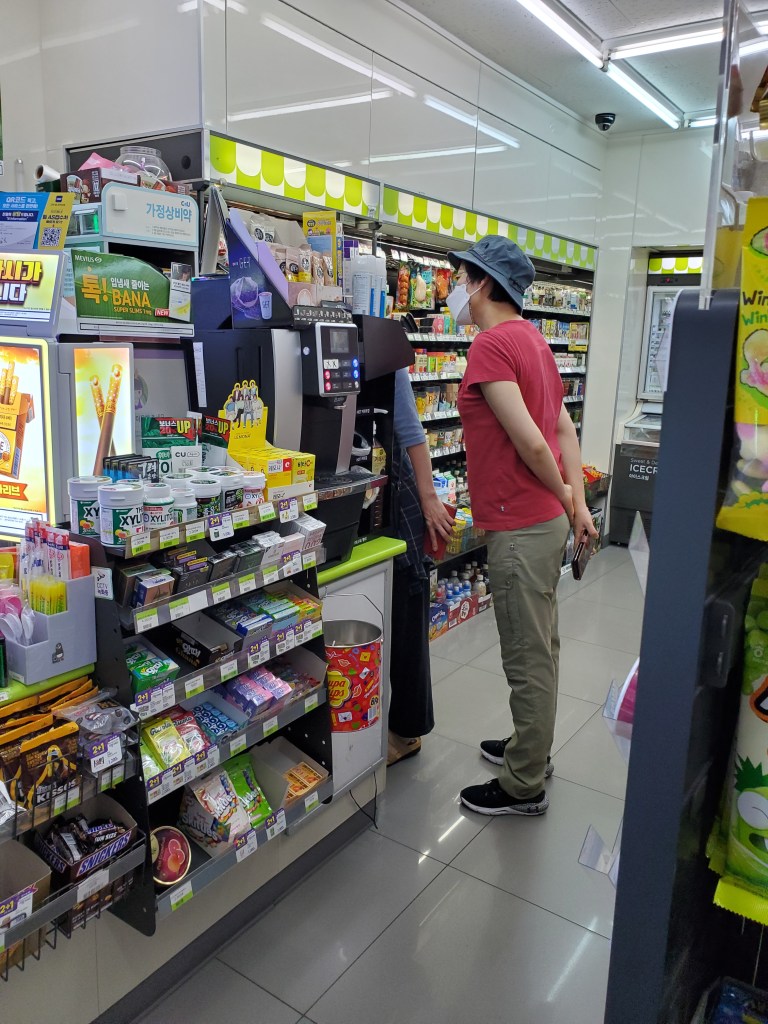
On the way we stopped at the pharmacy as well as the CU (very common convenience store) to see if we could find some medicine for my grandmother, whom suffers from digestive issues related to her age. While pretty mundane, I included some photos of the CU below.
One funny anecdote, fifth aunt’s daughter kept exclaiming how surprised and amazed she was at my English skills during the car ride to my uncle’s home.
While in Korea, I found that many Koreans don’t understand how international adoption works, or much about adoption or adoptees at all. So, to her it was amazing that eonni (meaning “older sister” and the proper way for a younger woman to refer to a woman older than her) had such fantastic English! It took some explaining that I spoke English so well because it is actually the language I was raised with, despite being born in Korea and being ethnically Korean, haha. ❤ If only language transferred so easily and I’d retained Korean language skills from my infancy!
Once we arrived at my uncle’s home, I met his wife and daughter. Everyone puttered around, mingled, and prepared dinner. I was told to sit and relax because nobody wanted me to lift a finger to help (something I’m not used to that became a recurring theme during my visit). So, while feeling guilty for not being helpful, I got to bond a little bit with my grandma as we sat together on the couch and watched a popular singing show.
During this quiet time, I learned that eomma (and my younger sister) had not been to the family’s Chuseok celebrations in years. Apparently, eomma had not felt good going to them knowing that I was not there. Chuseok, and the winter holidays, had remained very hard on her since my birth and disappearance. Not knowing what happened to me, combined with family gatherings and holidays to recognize ancestors and familial ties, had been something she had avoided. So, our attendance at Chuseok together was a very meaningful to her as well as to the family. I felt extremely lucky and grateful to be able to share that experience with her.
View in Byeollae-Dong from uncle’s window
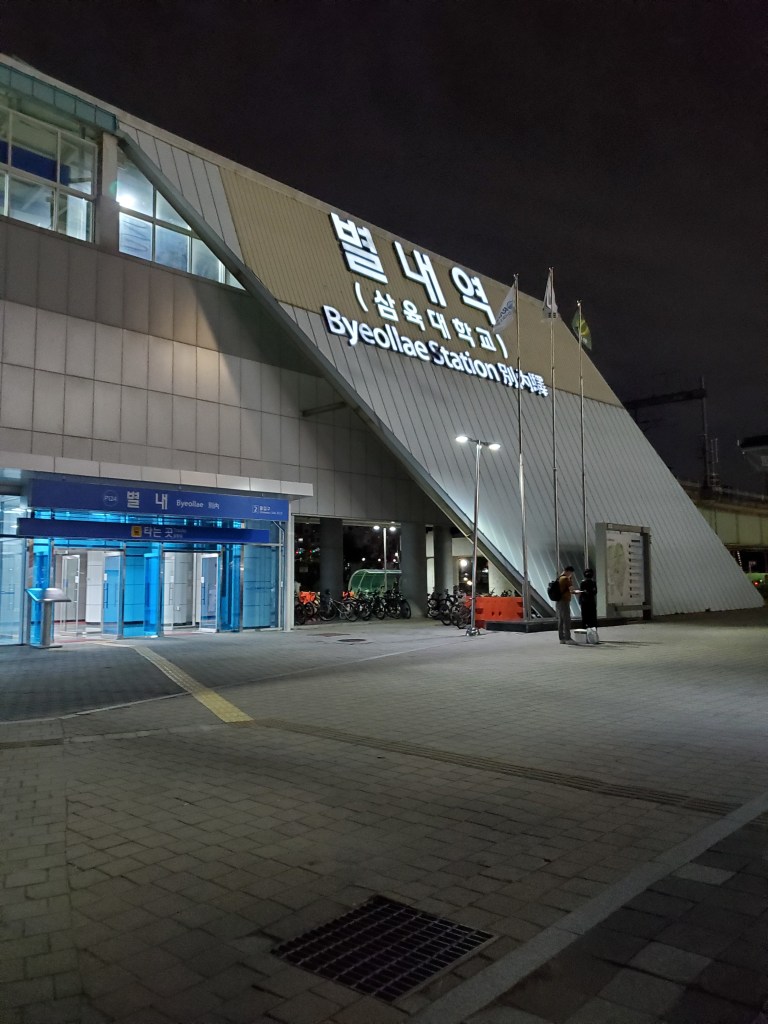
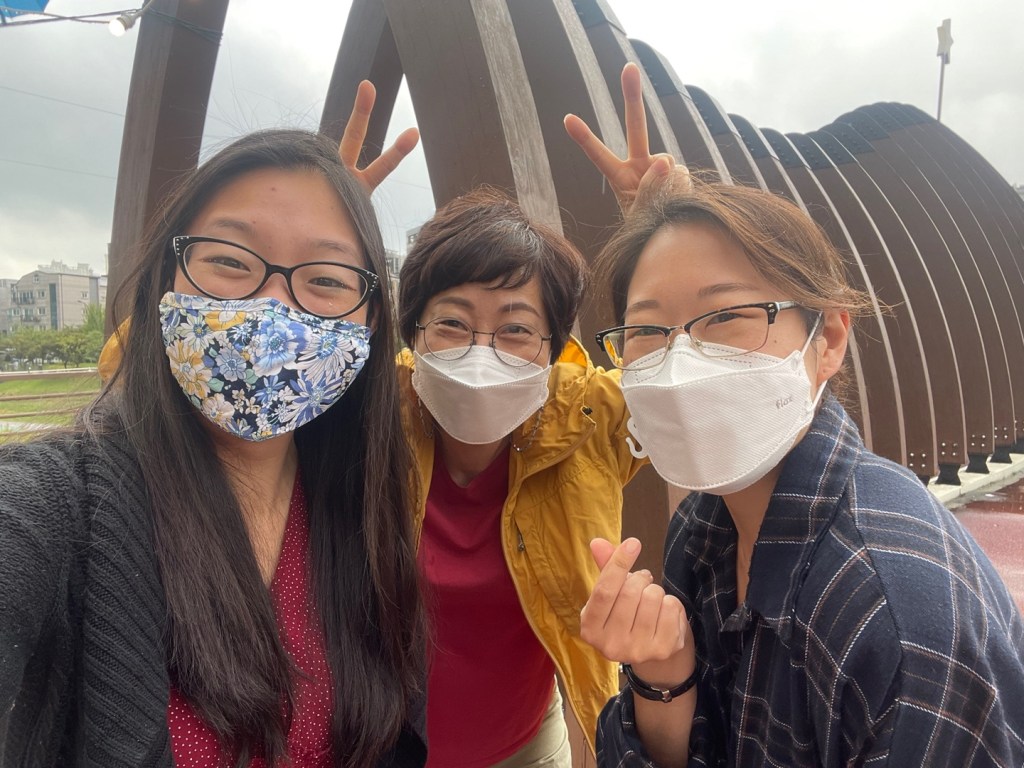
While we were hanging out I got word that another KAD friend of mine (an absolutely lovely younger woman who reached out to me when we were both in the USA before coming, right around the same time, to Korea for our first times) would be able to accept the invite that my birth family had made to have her join us for Chuseok. I was very excited, as was my birth family, that she could join us. So, my aunt, eomma, and uncle made a trip to the nearby Byeollae Station to pick her up and bring her to my uncle’s house to spend the night.
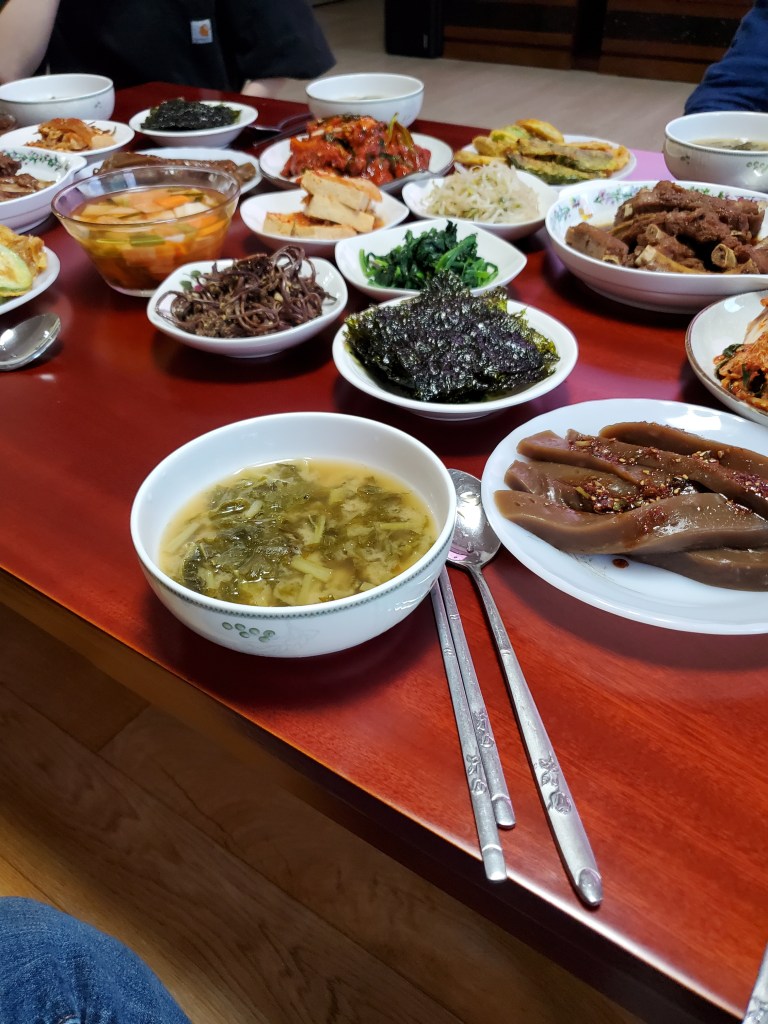
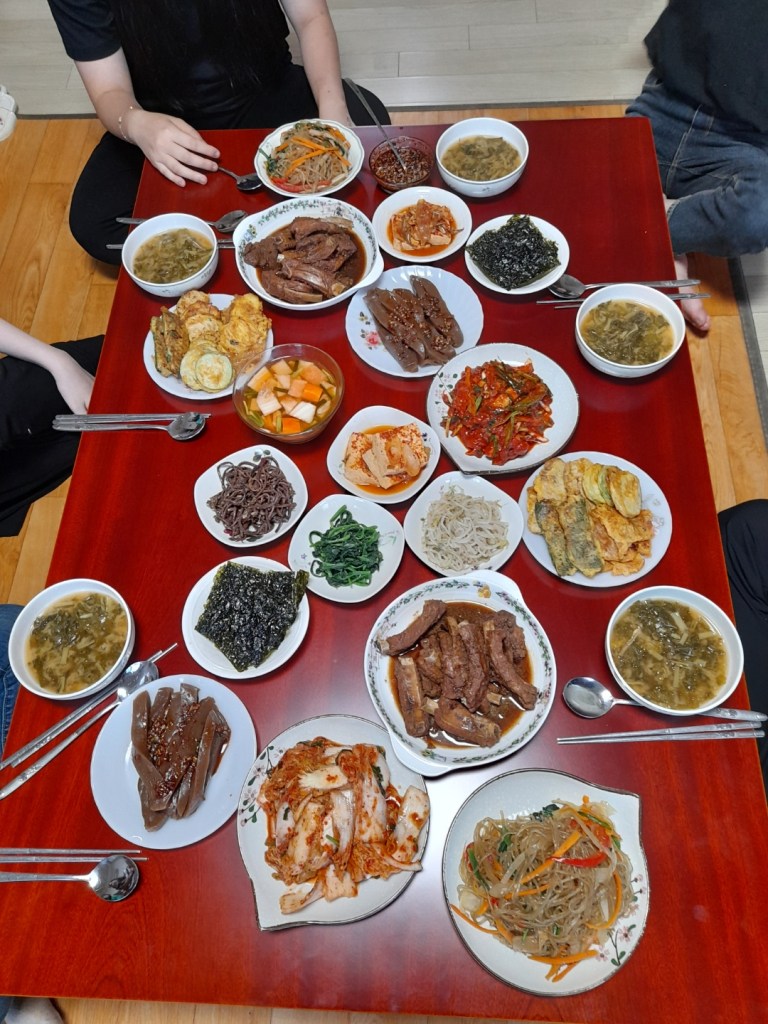
After returning to my uncle’s home we had a delicious dinner. As you’ll see in the photos below, there were many side dishes (banchan 반찬), soup, and rice on the table. This is very typical of a Korean meal.
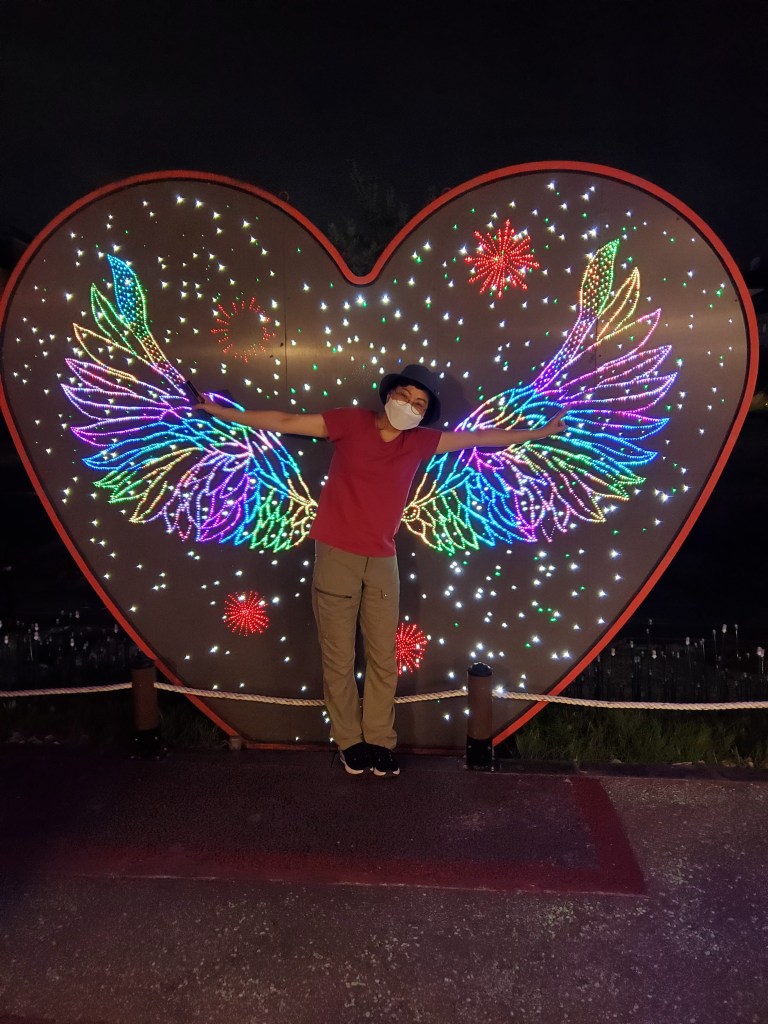
After dinner, we enjoyed a walk around Byeollae-Dong, visiting the popular “cafe street” nearby.
DinnerCute fifth auntCafe StreetLeft to Right; Me, fifth aunt, Eomma
After returning to my uncle’s home we all retired fairly quickly, after showering and preparing for bed. My uncle and his wife kindly let my friend and I share their room.
The next day the family got up early in order to prepare for Chuseok. Unfortunately it was raining, so we were unable to do Seongmyo 성묘 (visit to ancestral graves. However, there was plenty of things to do to prepare for Charye 차례 (ancestral memorial service) including the feast to set on the table for the ancestral offering. Because of how complex and long the proceedings are for Charye, it is common for families to start very early.
Traditionally, Korean families pass the ceremonies through the eldest living male. In this case, my uncle performed the ceremony and we provided the offering to my deceased maternal grandfather. He performed gangsin 강신 which involved lighting incense, pouring liquor, and bowing.
Next we did chamsin 참신 to greet our ancestors. My uncle invited eomma and I to perform that step with him, which was very cool and I felt extremely honored to be included. Keeping our left hands atop our right, we bowed together twice. As my ancestors and my birth family had never really gotten to know me, and didn’t necessarily even know of my existence, this inclusion was especially meaningful. It was like I got to greet our ancestors, with my uncle and eomma introducing me to them.
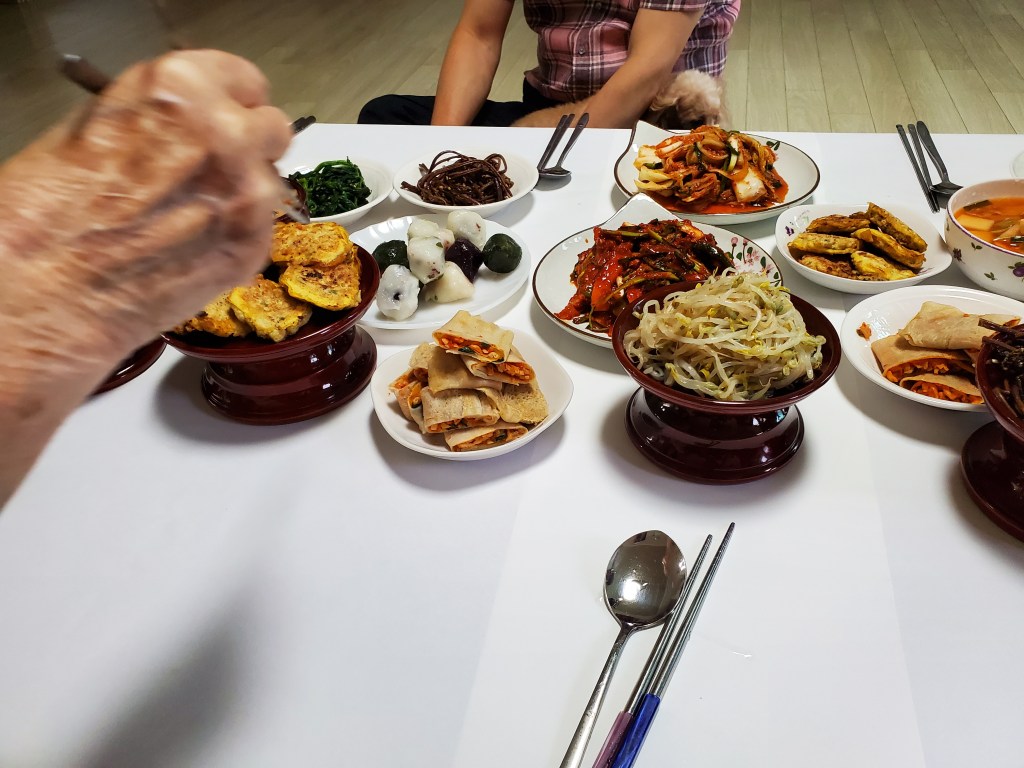
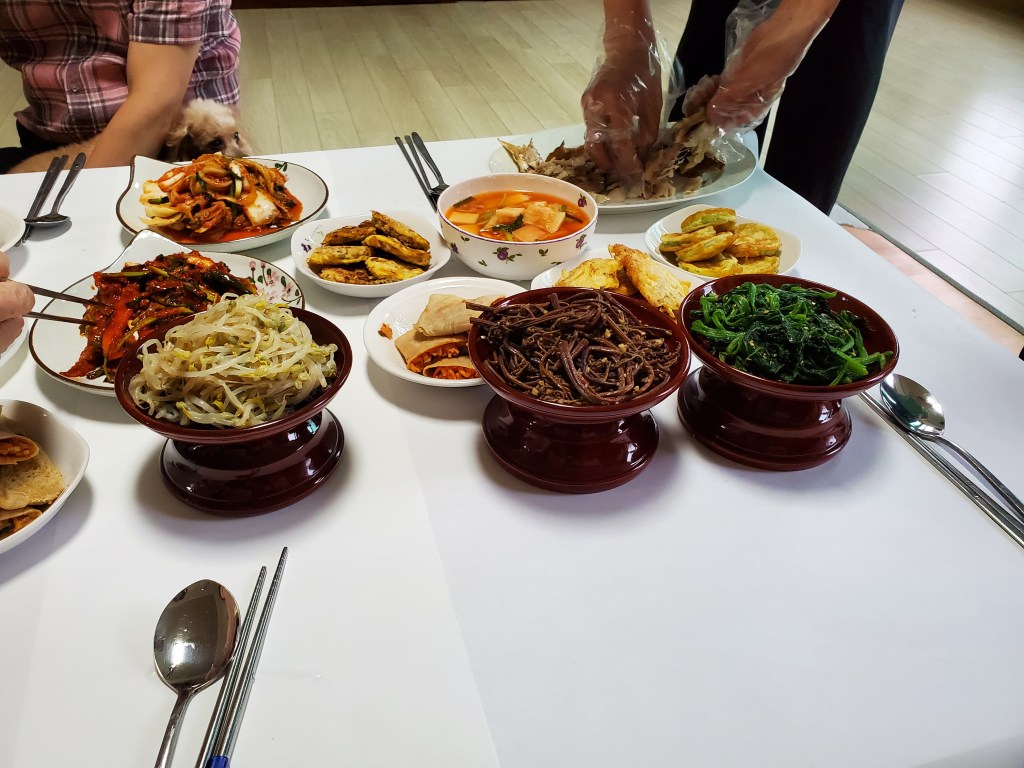
After all of the proceedings were through and the ancestors had received the offerings, we all partook in the feast. Similar to dinner the previous night, there were many dishes, soup, and rice. Some of the foods, however, were traditional to Chuseok. Everything was delicious. It also happened to be my uncle’s birthday, so we included a little celebration for him.
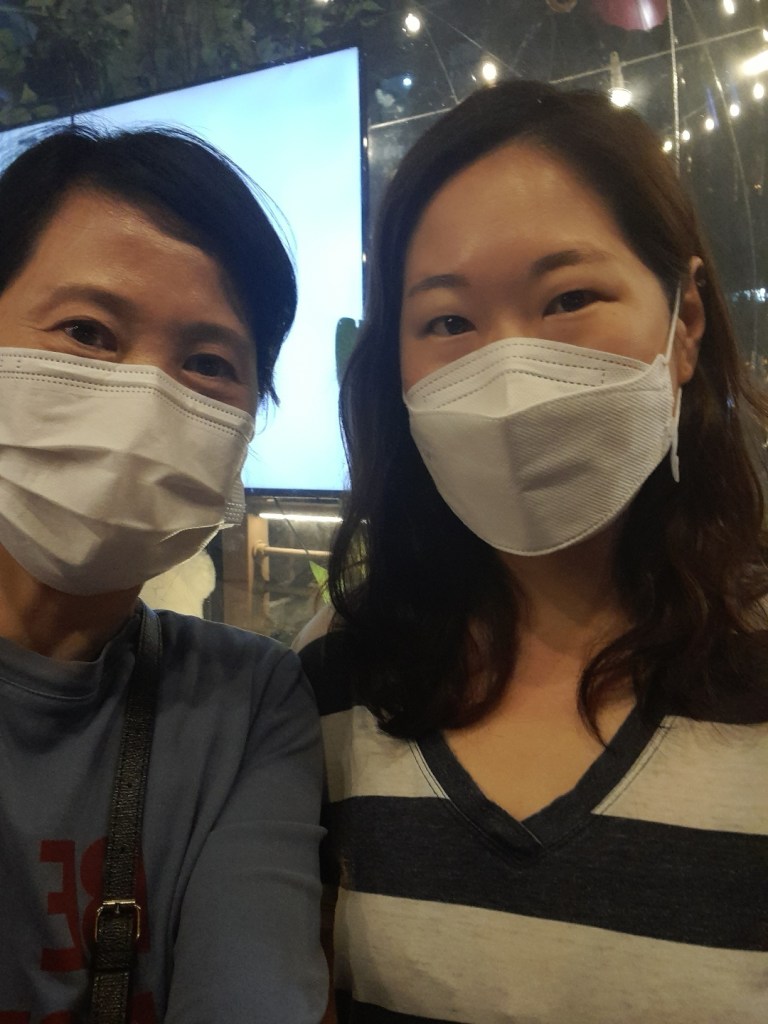
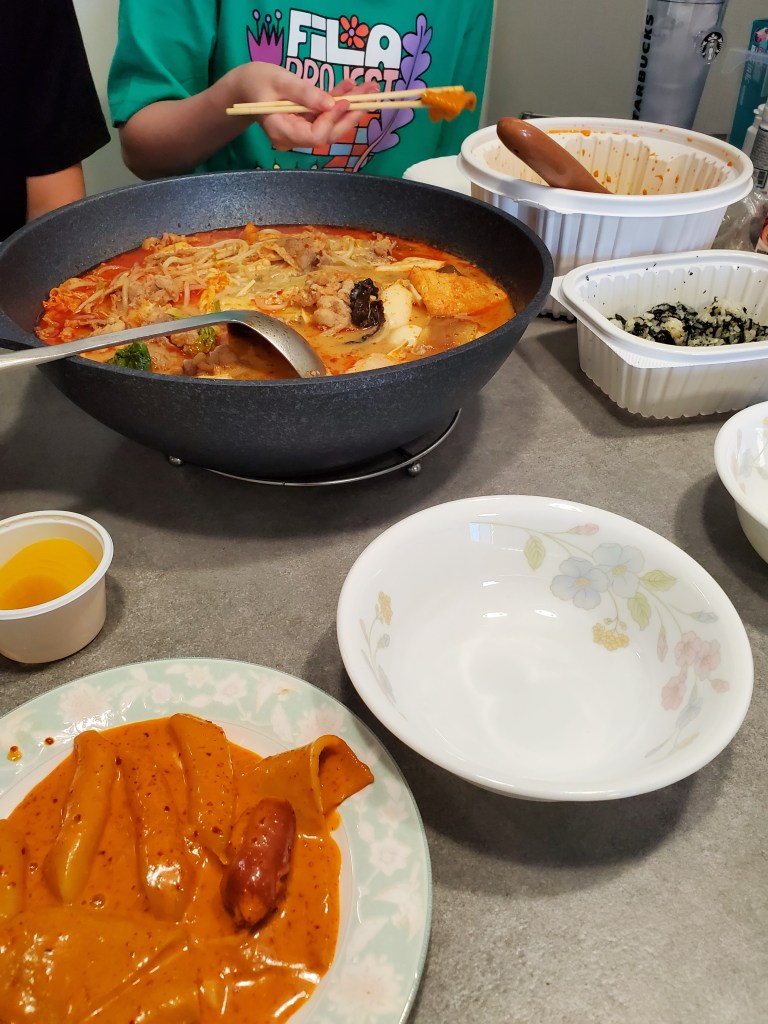
Similar to the previous day, we went back down to cafe street and walked off some of the meal. Afterwards, eomma, my younger sister, fifth aunt, fifth aunt’s daughter, my KAD friend, and I returned to eomma’s home in Nowon-Gu to relax, to enjoy even more food (rose tteokbokki, which is a cream and cheese version of tteokbokki), is ridiculously tasty and popular in Korea right now).
My KAD friend and meEomma and meKAD friend, fifth aunt, and meYounger sister, me, and eommaTasty dinner back in Nowon-Gu
Anyway, this turned into a rather long post! I didn’t capture everything here, but wanted to share as much as possible about how I spent Chuseok.
I consider myself very lucky to have been given the opportunity to participate in Chuseok, to be able to share the experience with my KAD friend, and for my birth family to embrace me as family in the way that they did. It was all a bit overwhelming since I’d just arrived in Korea the day before, hadn’t yet gotten my bearings, and was still in the fledgling stages of being physically with my birth family. I think, too, because of how “fast” everything was proceeding, I didn’t have time to balk or even process (something which caught up to me later, which I might touch on in this blog). But, because everyone was so open, caring, and willing to try, the challenges (physical, emotional, communication, culture) were surmountable.
I was, and am, starkly aware of how fortunate I was to be one of the few KADs to not only “find” or “be found by” birth family, but also to be able to come to Korea and, furthermore, to be embraced and included by everyone in the way that I was.
For those KADs whom embark on a similar journey, or just folks interested in visiting Korea as a tourist regardless of Korean heritage, I suggest that you accept any opportunity that comes to you if someone invites you to participate in Chuseok if you are able (physically, mentally, emotionally).
Thanks all for reading! Next up, I will be talking about my continued journey, visiting more maternal birth family in Daejeon with my eomma and fifth aunt.
It has been a while since my last blog post about the paperwork required when planning a trip to Korea (at least during pandemic times). You can find that post here KAD Life: Planning a Trip to Korea – Part 2 – Paperwork.
Since then, I have successfully traveled to Korea, lived in Seoul for about a month and a half, and returned to the USA. I had an amazing experience and, despite all of the ups and downs, I feel it was a pinnacle life experience as a KAD and as myself individually. So, I want to do what I can to document and share my journey with all of you.
I did a lot while in Korea and have tons of material to cover. So, I’ll be slowly updating the blog and Instagram (@learningtobekorean) as I find time.
For this first post, I am focusing on my experience flying and arriving in Korea!
I flew out of SFO at 11:55pm on September 17, 2021 on Korean Air. I was super paranoid that I’d forget some important piece of paperwork or that things would go wrong because of flying internationally during Covid, so I arrived multiple hours early. Thankfully, the airport was not overly busy and, because all my paperwork was in order and I had taken the extra step of getting TSA PreCheck approved, I whisked through security ridiculously quickly. 대박이야! Awesome!
Because I didn’t want to have terrible jetlag, I pretended like it was already Korea time. (Korea is 14 hours ahead of the Pacific Time Zone in the USA, so my 11:55pm flight time was 3:55pm Korea Time). Since I had a few hours to wait, I had a small meal and a coffee (like it was lunchtime), did some laps around the airport, practiced a little Korean, and generally tried not to think too hard about things, haha.
If anyone is worried about jetlag, I recommend the app Timeshifter (https://www.timeshifter.com/the-jet-lag-app). I used it and found it helpful. I was recommended serotonin as well, but did not take them for my trip to Korea from the USA.
Boarding was reasonably quick despite most of the process being in Korean. Everyone’s negative Covid tests results were reviewed before they could board the plane, which added a little time.
The plane itself was pretty empty. Some people had entire middle sections to themselves and could fully stretch out and sleep. There were bottles of water, blankets, pillows, some minor toiletries, earphones, and slippers provided on each seat. Everyone pretty much took off their shoes immediately and stored them, wearing only their socks if their feet were up or wearing the slippers to travel in the cabin or anywhere their feet would touch the ground.
There were a couple of food and beverage services during the flight. There seemed to be both Korean and American/Western food choices. I didn’t eat or drink much as I did not want to potentially impact my jet lag or intake too much sodium over the long flight. But what I did eat (the Korean choices) were tasty.
It is worth noting that while there were options for everything in Korean and English, most things on the flight to Korea were Korean first, with English second. This included how the pilot and flight attendants would communicated. Most of the folks on my flight appeared to be Korean speakers and followed Korean etiquette. The flight attendants understood and spoke English, so if you cannot communicate in Korean you will still be okay. 🙂
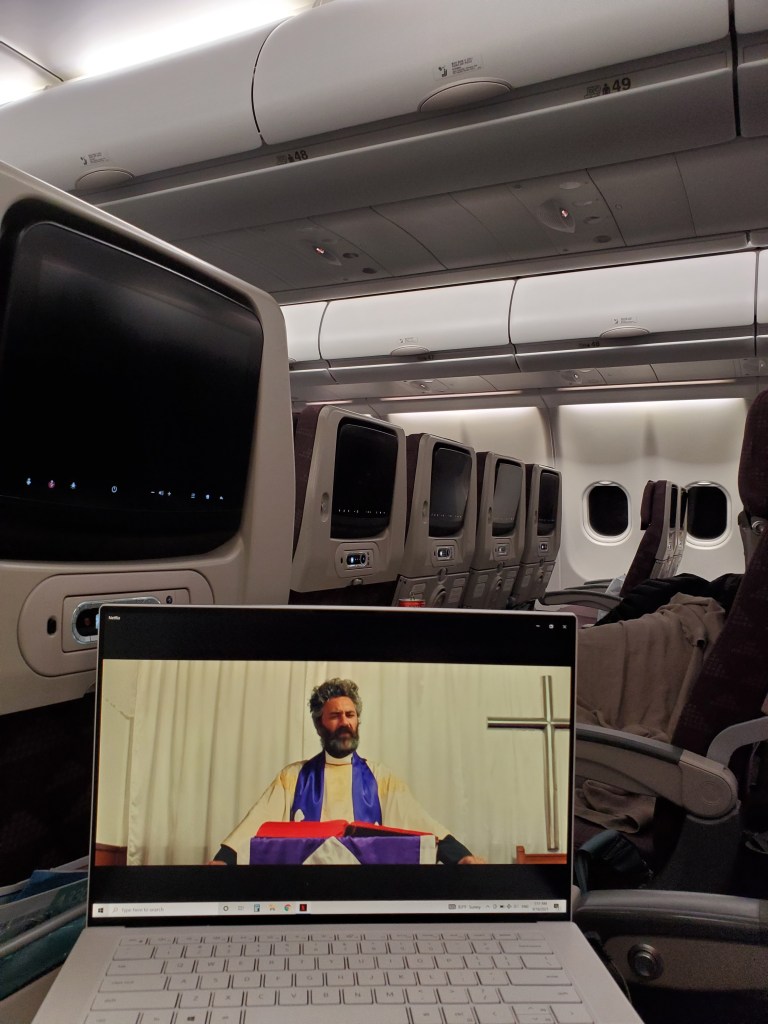
Dorky selfie as I leave home to head to the SFO airportAirport was quite emptyWaiting for boarding at SFO. Masks mandatory.Made it on the plane!Watching a movie while on the flight. Plane was quite empty and I had the side row to myself.Descending into Incheon.Plane view of the city descending into Incheon Airport.
I tried to sleep on the flight for the last handful of hours so that I’d be reasonably rested for the 5am arrival on September 19 at Incheon. That said, all of the things I thought I’d do on the flight (practice Korean, watch Korean shows, get some sleep etc.) I actually did very little of. I think I was too anxious, excited, thoughtful to do anything productive.
I hadn’t realized how important or meaningful the trip was to me, despite all of the lead up and work I’d put in. The relationship with my birth mother over the preceding year, the studies in Korean language and writing, continued discovery and integration of Korean culture in my life… . I feel like I was so focused on the action and task requirement in getting everything set up that when I got on the plane, and had nothing to do but sit and wait, the magnitude of the trip snuck up on me. The unspoken hopes I had for the visit, the meaning of rediscovering the land and the culture where I was born, the opportunity to explore a missing part of myself and who I might have been or could possibly still be, meeting biological family, wanting to be as open minded, accepting and explorative while still caring for and supporting myself and my journey… . All of these latent thoughts, either intentionally suppressed so as not to give them too much weight, or overridden by the needs of “tasks” and “to-dos” had space to rise up during the flight. I had not expected it. Ultimately, I slept terribly hahah.
Thankfully I planned ahead and, knowing that my birth mother and some of the family were planning to greet me at the airport when I arrived, I packed a light change of clothes, toiletries and makeup and made myself presentable before we descended and landed in Incheon. Because of how spotty the experiences and stories about what happens to people arriving in Korea from an international flight during Covid, I didn’t want to assume that I’d be able to find a bathroom or stretch my legs after deplaning.
I am glad that I thought to get ready on the plane rather than waiting as the process after deplaning to get through multiple checkpoints (Covid, immigration, customs) was extremely long, confusing, and did not allow any breaks.
Waiting in line after deplaning in Incheon. Yes, that is baby shark playing to the right over and over, but with self care instructions 😛
Before you descend and deplane, you should be given paperwork to fill out that you will need for your first checkpoint at Incheon. However, if you do not get the paperwork (which happened to me), you have to wait in line to get to the first security checkpoint, realize you don’t have the paperwork, go find the paperwork (nearby but out of line at the front), and then get back in line to get to the first security checkpoint again. What a pain!! So, GET THE PAPERWORK and fill it out (on the plane or get it from the first checkpoint) before getting in line and save yourself some hassle. It is likely that the line you find yourself in will be extremely long, so plan accordingly.
During this time you also have to download and install the Korean Self-Check app. There will be signs throughout the halls at Incheon which you will see as you wait in line to the first checkpoint with information (although it will be in Korean).
Once you get to the first checkpoint there will be someone who does a quick look at your paperwork, waves you on to another person who will do a deeper look. From there more stations exist that can help you with things like correctly installing the phone app, before you move onto the second checkpoint.
Waiting in line at the second checkpoint; for non-Korean citizens/foreigners
By the time I made it to the second checkpoint it had been about an hour and forty minutes from deplaning. At this stage I had picked up and filled out more paperwork (I kept finding kiosks with more paperwork, but was completely unsure which, if any, I needed to fill out. There wasn’t really anyone to ask, so I just picked up and filled out anything that seems related and wasn’t a duplicate of what I already had). You can see that everyone in line with me had literal packets of paperwork in hand to share with the folks working at the Incheon airport. If you have all of the paperwork that I’ve mentioned in previous posts, as well as the paperwork that you get along the way in Incheon, you should be fine.
After getting through the second checkpoint, the third checkpoint (getting in line and then being waved through a gate attendant), gathering your baggage at the claim, and getting through the fourth checkpoint (customs) should be relatively quick. As a note, it is worthwhile to review what you cannot bring into Korea with you as you will have to declare imports (which will be seized from you and your bags searched should you declare something that is not allowed). Beef/meat especially seems to be a nono, so don’t bring things like beef jerky even if it is meant as a gift to someone you are visiting.
I finally made it out of Immigration/Customs around 7:45am. In total, from time of deplaning, it took me about 3 hours to make it into the actual Incheon airport after landing. Granted, this was in September of 2021. I also had quarantine exemption (How To: Apply for a Quarantine Exemption to Visit Family as a KAD) which meant that I did not have to go through the process for going from the plane to a quarantine facility. It is possible this process will be longer, or shorter, or easier, or harder depending on your particular travel details. 🙂
When I finally made it into the Incheon airport, I got caught up in a flurry of texts and calls with my birth family who did not know where I was. None of them speak English, so it was very hard to communicate where I was so that they could meet me. I finally found a very helpful attendant at a help kiosk whom spoke enough English that she understood the situation and kindly spoke with my aunt. It turns out, they had gone to a different terminal and were waiting there to greet me. The attendant told me that my birth family wanted me to wait where I was, and that they’d come to the terminal where I was to meet me.
Help Desk kiosk. The attendant spoke/understood some English.
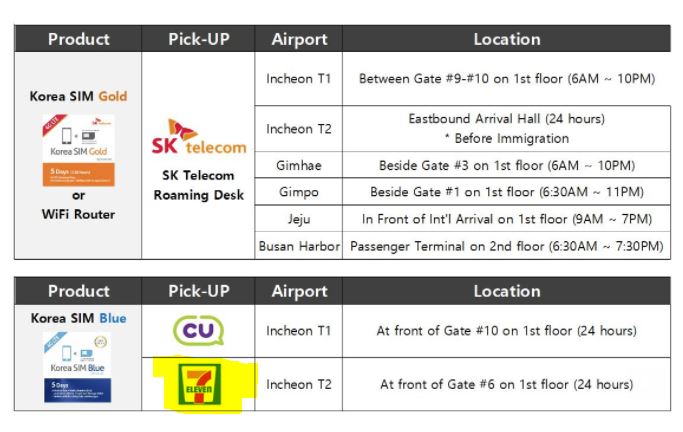
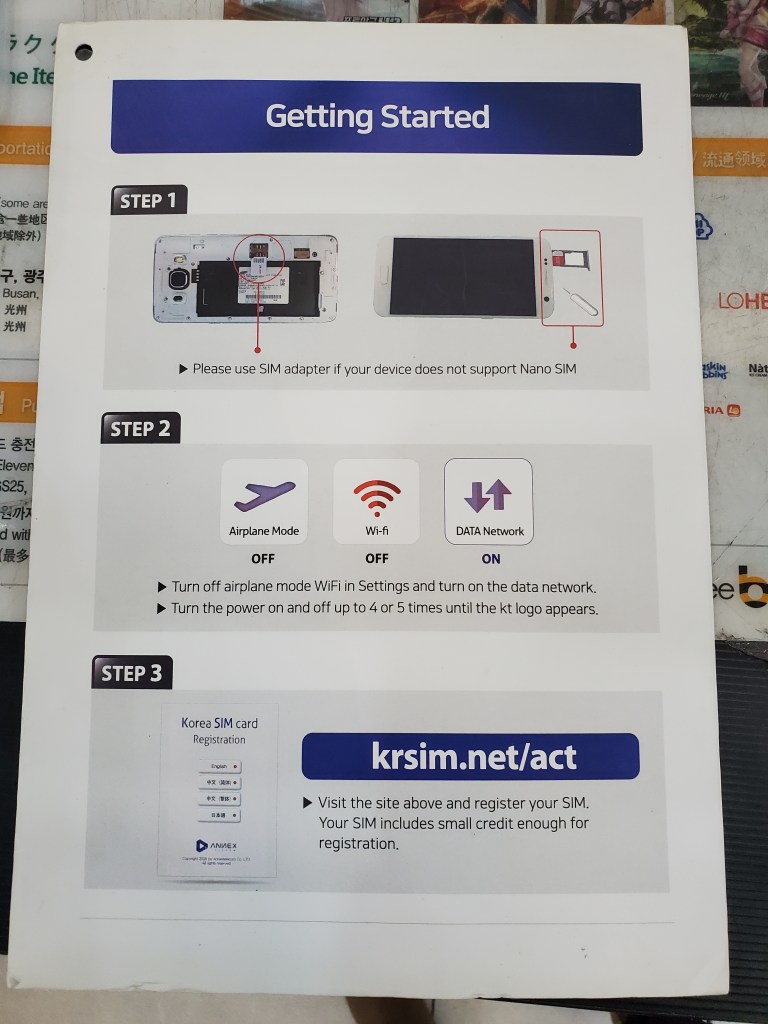
It took a while for them to track down my order (nobody spoke English, so we fumbled through using gestures and my beginner’s Korean). But, I was able to obtain and install my Sim relatively painlessly as I waited for my birth family to find me.
Where to pick up a pre-ordered SIM card SIM card installation instructions
After sorting out the Sim card, I returned to kiosk and sat nearby. I really wasn’t sure what to expect, I wasn’t sure whom would be meeting me, or when they would arrive.
After some time passed, I turned around to look out the large windows behind me. I saw three women running full tilt down the sidewalk gesturing wildly at each other. One was holding a sign and another was holding flowers. I thought to myself “that must be them”. Moments later they were running down the terminal hallway and I was immediately embraced by one sobbing woman, talked at excitedly and embraced by another, while the third stood quietly nearby holding a bouquet of sunflowers. The sobbing one was my third aunt. The excited happy one was my fifth aunt. The quiet one was my birth mother. (As a note, you do not call an elder by their name in Korea. So, I called my aunts by their Aunt titles and my birth mother Eomma.
I felt immediately cared for and welcomed. It felt like they had all been waiting to meet me for a long time. I don’t know how long they had waited at the terminal for me that morning, but it seemed like none of that mattered to them and they were just glad to see me.
With little fuss the three women took my bags (which were quite heavy because I’d packed gifts) and walked me to a waiting car. Each took turns touching me and holding my hand. A man got out and he quickly stowed my luggage. He was my only uncle. (I called him 삼촌/sam-chon). We all got in the car and off we went!
Uncle dropped us off at my birth mother’s apartment in Nowon-gu to spend some time together and to eat lunch. The lunch was delicious and was a precursor to the Chuseok holiday (like Thanksgiving in the USA), which started the next day (Sept 20-22). There were many dishes and my birth family made sure I ate well. It was very comfortable and we spent time quietly conversing however we could.
My younger birth sister (a 25 year old pharmacy student) lives with my birth mother. So, I got to meet her for the first time too.
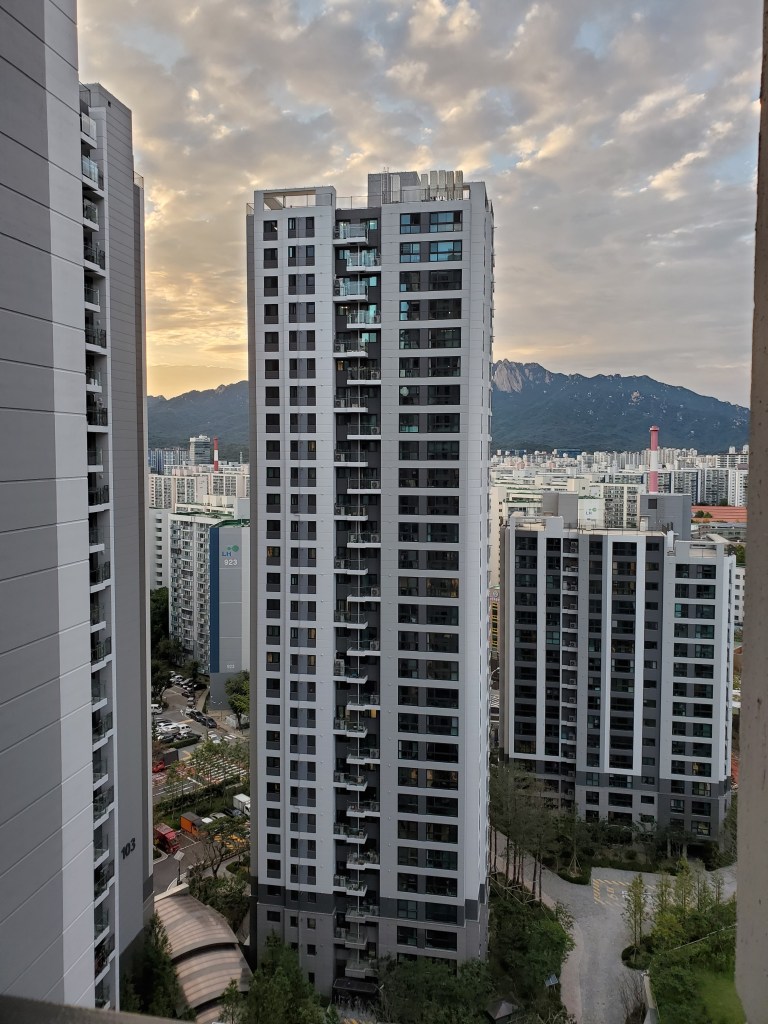
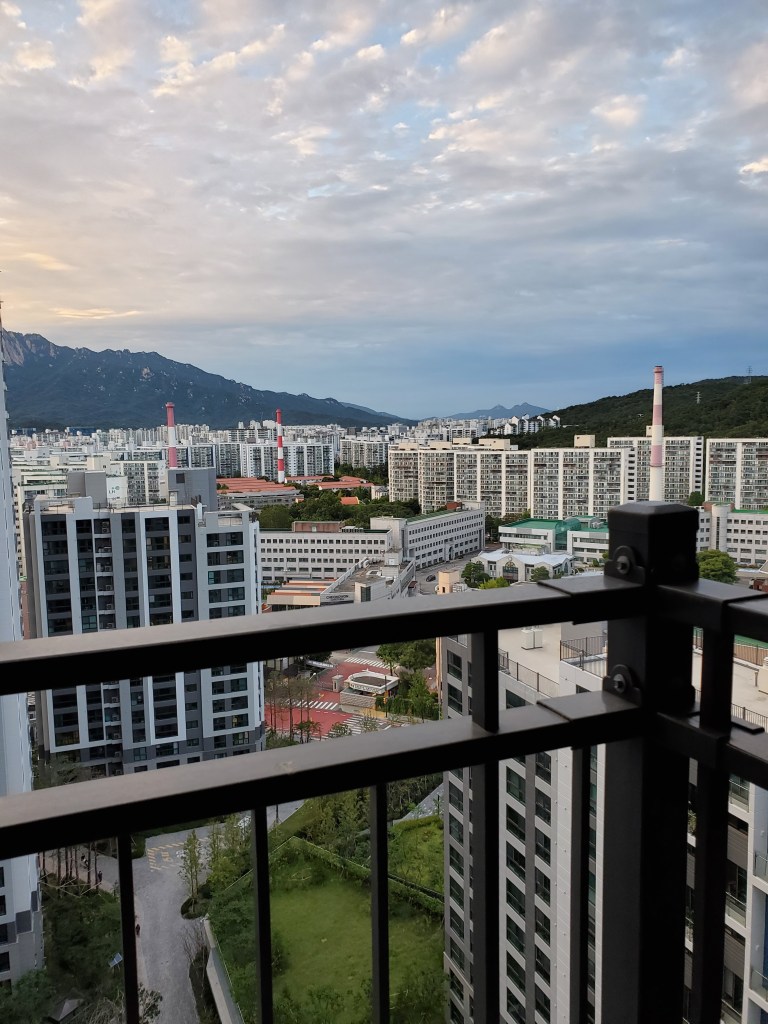
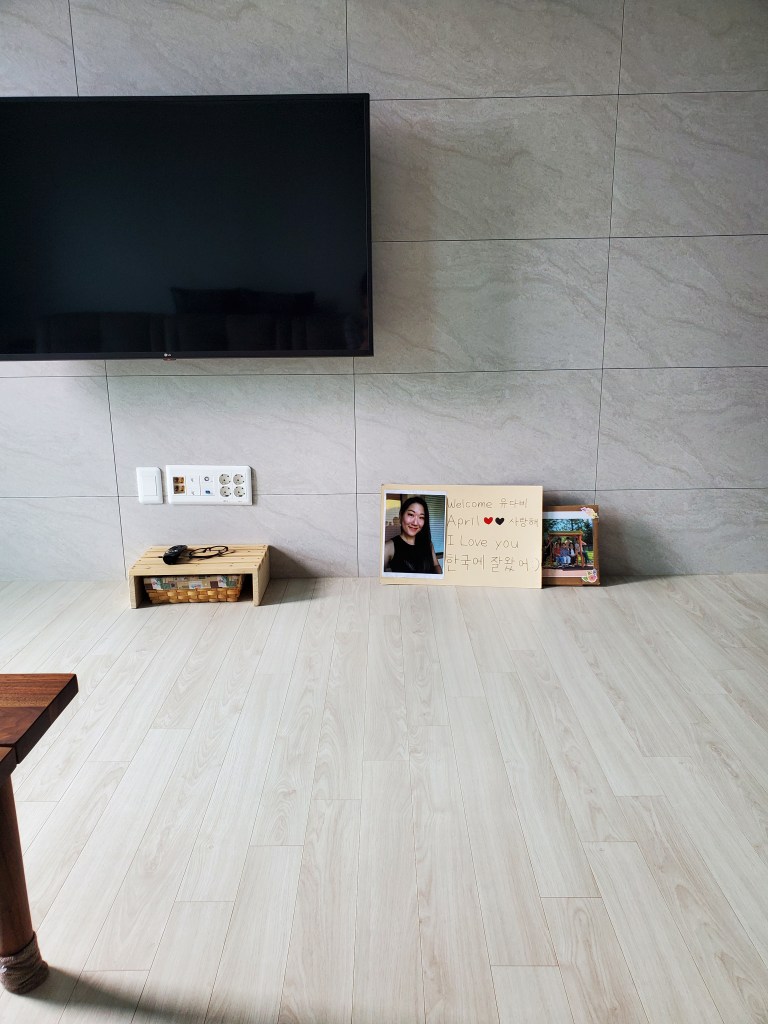
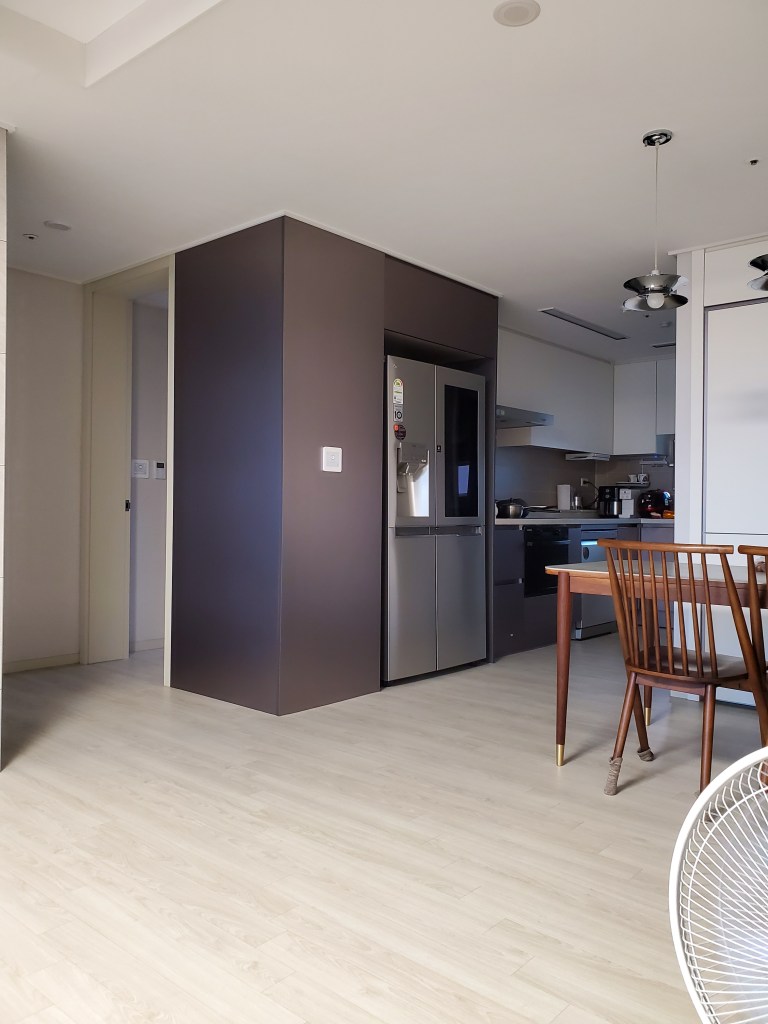
View of Nowon-GuView of Nowon-GuView from Nowon-Gu apartmentLiving room with the sign my younger sister made for meView of kitchen
After eating, my aunts left for the day. My birth mother suggested that I take a shower, rest, and get settled. Apparently she had planned for me to stay with her that night, which I had not realized. While I’d had arrangements at an apartment in Itaewon for the entirety of my time in Korea (about 50 minutes away by subway), I decided to stay at her home and check-in at the apartment when it made sense at a later date.
She helped me figure out getting the first of two Covid tests that were required as a part of my quarantine exemption (one within the first 24 hours of arrival in Korea and another about a week later). We walked over with my younger sister that afternoon to the nearby Covid testing site, which was set up outdoors via a series of tents. It was quite quick because I had paperwork that showed I needed a Covid test as part of the quarantine exemption. I showed it to the administrator, they gave me a vial with a sticker that had my information on it, I got in a short line to go to a booth with a nurse, they administered the test, and off I went!
As a note, the Covid tests in Korea are more painful/brusque than the ones in the USA. They take a throat and a nose swab. The nose swab is very deep. If you aren’t prepared for it, it is a bit of a rude surprise.
After that we walked back to her home in Nowon-gu and spent the rest of the evening relaxing, resting, and eating dinner. She suggested I shower and go to bed relatively early, which I was grateful for as I was rather exhausted from the travels as well as my first full day in Korea.
Freshly showeredYounger sister nappingBirth mother taking a phone call
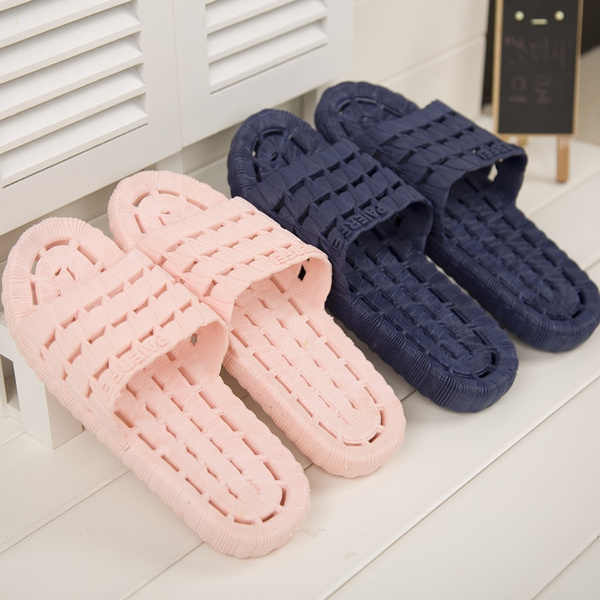
I was too tired to take any pictures of the bathroom, which I regret. Bathrooms in Korea are different than in the USA for the most part. The entire area is intended to get wet. There is likely no shower curtain to separate the bath/shower from the rest of the room. Most Koreans seem to keep the shower head separate (handheld, not attached). Koreans also tend not to have a trash bin in the bathroom and use very small towels (think hand towels). In Korea, people also have bathroom slippers specifically meant to be used in the bathroom only. This is all fine and I learned to really appreciate and love many things about the bathing experience in Korea. That said, if you find yourself showering in Korea and have expectations for an American bathroom experience, I’d suggest you be open minded. Make sure you use the bathroom slippers, have a plan for where to put your trash (for me it was dental floss and daily wear contacts), and know that you will only have a small towel to dry with (that should be used once and then laundered). It is considered polite to clean up after yourself in the bathroom, scrubbing and rinsing the surfaces with the little mops/sponges many people keep.
Bathroom slippers
I was definitely mentally and physically spent, so not particularly elegant or thinking quickly as I experienced my first shower in Korea at my birth mother’s home. I have no idea if I used the correct products on the correct places haha! Thankfully I bumbled through and passed out nearly immediately after my birth mother bade me goodnight.
I have probably missed some details about my flight to Korea and my first day in Seoul. It was all a whirlwind and happened about 6 months ago. But, I tried to cover some of the main things that came to mind about my journey there. If there is anything in particular that you are curious about, please feel free to ask or comment and I’ll do my best to be responsive.
As mentioned in my previous post “KAD Life: Planning a Trip to Korea – Part 1 – Desire”, I purchased a ticket to go to Seoul in September of 2021. It will be my first time returning to Korea since I was adopted internationally.
Since then, possibly because of Covid-times, I’ve spent countless hours tracking down the files I will need to travel to Korea. This includes some optional documentation that I’ve opted to pursue because of certain preferences I have (for instance, applying for Quarantine Exemption which you can read about in my post “How to Apply for Quarantine Exemption as a KAD”).
As a note, this list is a running list of any and all “paperwork” (files, documents, tickets, reservations, subscriptions) that I’ve gathered for my trip to Korea. They are in no particular order, but the top 6 are bare-minimum requirements. Not all of these are “needs”, some are preferences. My goal in sharing them is so that anyone else planning a trip to Korea has a consolidated list that they can consult as a place to start or even just as a mid-planning sanity-check.
List of Paperwork for a Trip to Korea: 1. Plane ticket & boarding pass (I went with Korean Air). Some folks suggest have a proof of your flight back, too, if doing a round-trip. 2. Valid passport and/or license for additional identification 3. K-ETA travel visa (https://travel.state.gov/content/travel/en/international-travel/International-Travel-Country-Information-Pages/SouthKorea.html#ExternalPopup) 4. Negative Covid test (PCR issued within 72 hours of departure) – at least 1 physical copy in English and/or Korean 5. Proof of Covid vaccination 6. Korean contact information (names, addresses, phone numbers) 7. Quarantine exemption (How To: Apply for a Quarantine Exemption to Visit Family as a KAD) – 4 physical copies 8. F4 visa (https://goal.or.kr/f-4-visa/) 9. American contact information (names, addresses, phone numbers) 10. Lodging reservation (proof of reservation, location, dates, contact) 11. Traveler’s insurance (I went with Travel Guard) 12. Cell phone plan (I went with a Sim card) 13. Transportation (T-money) 14. Currency (Credit card, debit, Korean won) 15. International driver’s license
I hope that this list of paperwork for a trip to Korea is helpful! I’ve found that planning for my trip has been a lot of research with many threads of action all over the place. For myself, I’m planning to have all 15 things from this list prepared before take-off. However, each person is different and while I find comfort in extra-prepared-ness and things like future-proofing, not everyone will find value in the same things.
I hope that any KADs reading and preparing for their first trip back to Korea find this to be a useful post!
As I mentioned in a recent post, I am planning to make my first trip to Korea since I was sent out of country to be adopted. My flight departs the USA in September 2021. This post is meant to outline the process that I’m navigating specific to the current rules and the timeline of my visit. These are subject to change in the coming weeks, months, and years.
Because of the global pandemic, South Korea implemented a 14 day mandatory quarantine (for most people, in a governmental facility at the expense of the traveler) for anyone entering the country. Very recently it was announced that, as of July 1st, vaccinated foreigners traveling to South Korea could apply for exemption from the mandatory 14 day quarantine.
According to Son Young-rae, an official with the Central Disaster Management Headquarters, “The new policy will apply only to certain people such as citizens and foreign residents, as well as those coming to visit family, or for the purpose of business, academics or public interest”.
I have connected with my biological mother. Because of this, I am applying for quarantine exemption as a fully vaccinated person to visit my immediate birth family in South Korea.
For the purposes of clarity, South Korea has specific requirements to be considered a “fully vaccinated person” or “immediate family”.
Fully Vaccinated: The applicant should complete the both COVID-19 vaccinations in the same country if the dose is 2 and 2 weeks since the last dose should have passed before travelling. – Only vaccines that are approved by WHO such as Moderna, Phizer, Yansen, etc are acceptable. – If the applicant gets the first dose in one country and second dose in another country, it is not acceptable. – You are eligible to apply for a quarantine exemption certificate on the 15th day once all the required doses have been administered.
Immediate Family: The applicant should visit their spouse or their immediate family (e.g. grandparents, parents, sons, and daughters) or the immediate family of their spouse (e.g. parents in law). – Visiting siblings, uncles, and aunts are not eligible.
Please note that I cannot provide any insights into the process or requirements as a KAD applying for quarantine exemption as a Visa holder, a Korean/dual citizen, or for the purpose of business, academics, or public interest. The steps and information I provide in this blog post are only as it relates to my experience.
Steps to Apply for Quarantine Exemption:
Find your local Consulate General of the Republic of South Korea’s website.
If you’re not sure what you need to do to apply, email the Consulate General of the RoK (or call them or set up an appointment). In my case, I wasn’t exactly sure of what I needed to submit for a family visit, if there were specific papers I had to fill out, or the correct process and timeline to do so.
There was no specified email for people regarding quarantine exemptions, so I emailed sfkcg0404@mofa.go.kr, consularsf@mofa.go.kr and koreavisa1@mofa.go.kr.
I used a descriptive subject for my email as requested by the Consulate General of RoK instructions. “Vaccine Quarantine Exemption_NAME_DATE of Departure”.
Update 07/29/2021; the SF Consulate now has an email to submit your Quarantine Exemption application to sfqec@mofa.go.kr. The other email koreavisa1@mofa.go.kr can be used questions.
Start gathering the required documents
Valid Passport – Scan your valid passport
Quarantine Exemption Application – This is a filled out copy of the Quarantine Exemption Application as provided to you by your local Consulate General of the RoK. For me, that was a document called “English Forms_Quarantine Exemption Application(Family visit).pdf”.
Agreement to the Terms and Conditions – Attached to the previous Quarantine Exemption Application form.
Pledge of Authenticity – Attached to the previous Quarantine Exemption Application form.
Copy of your Vaccination Card – Depending on what you were given by wherever you got your vaccination, this might differ. I included a copy of my little, paper “COVID-19 Vaccination Record Card” in addition to the official “COVID-19 Vaccination Record” print-out supplied to me by the local hospital where I was vaccinated.
Government-issued document to prove family relationship with the immediate family member that the applicant is visiting – This can be difficult for an adoptee to prove. Update 07/29/2021; After MUCH communication and running around, I have gotten confirmation from the SF Consulate that what I have collected “look good”. Therefore, if you’re a KAD working on gathering documents to prove family relationship, it’s likely that you will be okay if you submit something similar to the following. See number 5. with today’s update.
The government specifically asks for a Korean family relationship certificate (가족관계증명서) or a Korean family registry document (제적등본). You can ask your immediate biological contact to apply for a Korean family relationship certificate. There is a section in the family relationship certificate that states that the information must reflect the information in the original Family Relation Register. Unless your family registered you, it is unlikely that you will have access to a usable document as a KAD.
I supplied the Consulate all of my supporting documents including a redacted “Initial Social History” form, “Extract of Family Register”, “Application for Certificate of Appointment to Guardian of Minor Orphan in Orphanage”, “Statement of Consent to Overseas Adoption” in addition to a number of extra documents in Korean/한글. I also supplied them the DNA test report that confirmed my direct relationship to my birth mother.
The Consulate let me know that none of these counted as establishing direct family relationship and weren’t admissible. Thankfully, I have the unredacted copy of my “Initial Social History” form that included my birth mother’s name which one one of the reasonings for my previously submitted documents not being admissible. I am still waiting to hear back about whether or not the unredacted copy is enough to establish direct family relationship, or if I’m out of luck.
Update 2021-07-09: The Consulate General of the Republic of South Korea says that I (and possibly other KADs) need a completed and approved Family Relationship Certificate (가족관계증명서) AS WELL AS an unredacted adoption agency document or birth certificate that states the full birth parent’s name to be considered for Quarantine Exemption. Apparently this is because the 가족관계증명서 might not include the adoptee’s name if they were not recognized by the family and/or are not on the official family registry. The Family Relationship Certificate must be issued within 3 months of the Quarantine Exemption application.
Update 2021-07-29: I ended up getting into contact with NCRC (https://www.ncrc.or.kr/ncrc/main.do) to request help obtaining the Family Relationship Certificate (가족관계증명서) that my local Consulate insisted I must have to apply. They were not responsive for multiple weeks, but eventually replied after I emailed them 4 times.
They told me that the Consulate was wrong and that what I needed was the Adoptee-Birth Family Relations document (입양인 친가족관계 확인서). They also made sure to mention that the documents required may vary depending on the jurisdiction of the consulates (i.e. each KADs required paperwork might be different regarding proof of family relationship).
Further Info on the NCRC Paperwork: According to the NCRC, before the Adoption Special Act was revised, it was not mandatory for birth parents to report their child’s birth in order to put them up for adoption. Therefore, most KADs born before the revised Act were adopted with an orphan registry and not a family registry. Therefore, the Family Relations Certificate (가족관계증명서) that the Consulate requires doesn’t prove family relationship. The Adoptee-Birth Family Relations document (입양인 친가족관계 확인서) is NOT a legal certificate. It’s simply a document that the Korean Ministry of Health and Welfare and the Ministry of Foreign Affairs agreed to accept for the purpose of KADs/orphans/etc. applying for self-quarantine or quarantine exemption.
In order to get the Adoptee-Birth Family Relations document (입양인 친가족관계 확인서) I texted my birth mother to ask her to please contact NCRC. I also asked NCRC to contact her to ensure they communicated. They were able to get the document and sent it to me to include in my application PDF.
Update 2021-07-29: After getting the Adoptee-Birth Family Relations document (입양인 친가족관계 확인서), I pulled together my PDF and applied to the Consulate for Quarantine Exemption even though I knew I’d be rejected for applying before my application period (for me I can apply on September 3rd, 2021). I noted to them that I’m a KAD and wanted to make sure that what I submitted would be admissible. They told me everything I included “looked good”. But, I needed to also include a new document called a Certificate of Entry and Exit (출입국사실증명) for further proof of family relationship.
The Certificate of Entry and Exit (출입국사실증명) must be requested by the birth family that the KAD is visiting. In my case, that’s my birth mother. In order to get this document, she had to go to her local district office (주민자치센터). She then emailed me the certificate, which I sent to my local Consulate to confirm was acceptable. They said that it is “sufficient” and that I must include it in my application PDF when I apply in September.
Update 2021-07-29: SO! What files am I submitting in my final Quarantine Exemption as a Vaccinated Adoptee visiting Immediate Family in Korea for the “6. Government-issued document to prove family relationship with the immediate family member that the applicant is visiting” requirement?
Adoptee-Birth Family Relations document (입양인 친가족관계 확인서) – Obtained through NCRC and my birth mother
Adoption Certificate from my Korean agency ESWS (동방사회복지회) – Obtained through ESWS
Positive DNA Test Report – Obtained through ESWS DNA test via DowGene Co., Ltd. It MUST state the “alleged mother”‘s full name, the “child”‘s full name, date of test, test results, and be fully officiated.
Extract of Family Register – Obtained through ESWS (for most adoptees this will be the orphan registry not a family registry)
Application for Certificate of Appointment to Guardian of Minor Orphan in Orphanage – Obtained through ESWS
Statement of Consent to Overseas Adoption – Obtained through ESWS
Certificate of Entry and Exit (출입국사실증명) – Obtained through birth mother. Again, I have direct contact with her and asked her to get this for me. She had to go to her local district office (주민자치센터), apply, get the certificate, and email it to me.
Flight itinerary – This should be as simple as sharing your flight confirmation and itinerary details after your purchase your tickets from your airline.
As a note, the rules stipulate that the itinerary must originate in the region that your Korean Consulate of the RoK covers. So, for me, my Korean Consulate is in San Francisco. Therefore, my itinerary must show that I am departing to Korea from northern California.
Combine all of your necessary application documents into one PDF and submit it to the local Consulate General of the RoK. For me this looks like the following…
Email sfqec@mofa.go.kr titled “Vaccine Quarantine Exemption_AprilESchmidt_2021-09-17” (Vaccine Quarantine Exemption_NAME_DATE of DEPARTURE). Make sure to include the combined PDF. (Note: ZIP or compressed files will NOT be accepted. Don’t use them)!
You have to submit your Quarantine Exemption request during the appropriate time period stipulated by your Consulate General. If you do not, the Consulate will automatically reject the request. The time window is one week (7 days) starting 10 days before your departure date. For example, if you’re departing from the USA to Korea between July 19th and July 25th, you must submit your Quarantine Exemption request July 9th through July 15th.
The Consulate will try to email you your Quarantine Exemption Certificate (if approved) within 24 hours of your departure at latest.
Additional Note: My local Consulate will be changing their application process from email to their “Consular Services 24” website (https://consul.mofa.go.kr/) starting July 30th, 2021. I’m not sure if other Consulate Generals have a website or do their application process through email, so be prepared for your process to look different accordingly.
As noted above, once all of the steps above are completed (assuming you are granted an exemption) your Consulate General will email you your Quarantine Exemption Certificate within 24 hours of your departure to Korea.
As such, you will need to print out a minimum of 4 copies of your Quarantine Exemption Certificate. Digital copies might not be accepted.
Your Quarantine Exemption Certificate is only valid for 1 month from its issuance. If you apply early, and they send you your certificate more than one month before your departure or arrival date(s), it will not be valid.
You can only use your Quarantine Exemption Certificate once. After that, you will need to reapply.
You cannot modify your Quarantine Exemption Certificate. Only your Consulate General can do that.
You must have your Quarantine Exemption Certificate before you enter Korea. You cannot apply, or receive it, once you’re already on Korean soil and still have it be applicable.
Regardless of your Quarantine Exemption Certificate, you must bring a negative PCR Covid-19 test result issued with 72 hours of your departure from the USA (or local area) to Korea.
Real-time Reverse Transcription Polymerase Chain Reaction tests are required by the Korean government. Starting April 2021, NAATs, LAMP, TMA, SDA, NEAR and other PCR tests are also accepted until further notice. So, make sure to check if the rules are the same before getting your Covid-19 test pre-departure.
Negative test results must be shown in physical paper form! So, print them out.
The test results must show the passenger name matching their passport, date of birth (or passport number), type of test, test date, test result, date of issuance, and the name of the testing site. I’ve also heard that the name and title of the person who issued the test must be included. I’m not sure how accurate that is, but plan to get that information to be safe.
Special Step: Apply for K-ETA if you do NOT hold a Visa!
Currently, travelers from 21 countries and regions can enter Korea without a visa. The United States of America is one of these countries. However, if entering without a visa, you have to apply for a K-ETA.
The information you need to apply for K-ETA should overlap with files you’ve gathered for your Quarantine Exemption application. It’s general stuff like passport information, the zip code and street address of the place you’ll be staying in Korea, contact information etc. The one thing I wasn’t prepared for was a photo similar to a passport picture. The photo dimensions are rectangular, not square, and must be no bigger than 700 pixels high and 100 kb total. I suggest preparing a photo before applying to ease the application process.
For me, applying and getting approved took less than 24 hours. This is a pretty quick and painless process compared to everything else!
I applied for Quarantine Exemption to the San Francisco Consulate General of the Republic of South Korea on Friday, September 3rd 2021. As of Tuesday, September 7th 2021 I was issued a Quarantine Exemption Certificate. Yayy!!!
I hope that the information provided so far is helpful should you be starting your own process.
읽어주셔서 감사합니다. 사랑해요! (Thanks for reading, I love you!)


















 Learning to be 한국인